

The Bank of Sudan Has Liberalised the Exchange Rate for Export Proceeds — But Who Will Liberate Exports?
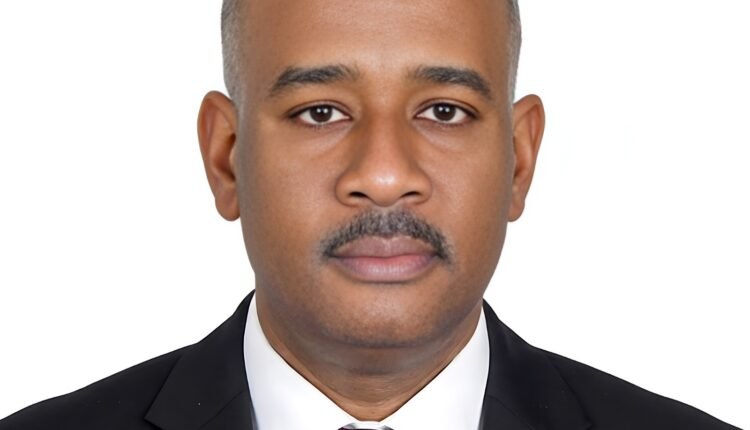
Mohannad Awad Mahmoud
Central Bank of Sudan Circular No. 16/2026 deserves to be viewed as more than a technical adjustment to exchange-rate policy. It gives banks greater flexibility to adjust exchange rates during the day and to purchase export proceeds at their announced rates in line with supply and demand, while allowing them to refer to the Central Bank when they cannot purchase such proceeds.
This step matters because it addresses one of the most serious problems in the foreign-exchange market: the gap between the rate offered by banks and the rate available outside the banking system. When an exporter or foreign-currency holder can obtain a higher price in the parallel market, they divert resources away from the banking system. However, greater pricing flexibility gives banks a real opportunity to compete with the parallel market and attract export proceeds and remittances into official channels.
Dr Osama Al-Tayeb of Omdurman National Bank explained the circular’s essence clearly. He noted that banks can buy foreign-currency resources based on supply and demand and adjust rates during the day, while the Bank of Sudan may step in as a buyer, after coordination, if banks cannot purchase the proceeds. Omdurman National Bank also announced its readiness to offer the best rates for remittances and foreign-currency payments to those who wish to use its services.
But the more important question is: where will the foreign currency the banks are expected to compete over actually come from?
The Bank of Sudan can make dollar purchases more flexible, but it cannot create dollars by issuing a circular. Foreign currency comes from an economy that produces and exports; from gold that enters official channels; and from remittances sent by Sudanese abroad who find better exchange rates, services and confidence in the banking system than in the parallel market. The success of Circular No. 16, therefore, will not be determined within the Central Bank alone, but by the ability of all state institutions to increase the real supply of foreign currency.
Dr Osama pointed out that encouraging gold exports and removing the obstacles that drive gold into smuggling could raise official exports to between 200 and 300 kilograms per day, which, in his view, could generate significant proceeds to close a large part of the foreign-exchange gap.
The issue is not gold production alone, but making the official route more attractive than smuggling: competitive prices, faster procedures, guaranteed payment, and coordination between the Bank of Sudan, the Ministry of Minerals and the bodies responsible for economic security. Smuggling cannot be tackled through enforcement alone; it can only be effectively reduced when official export becomes the more economically rewarding option.
Yet Sudan cannot build its currency’s stability on gold alone. The country has sesame, gum arabic, groundnuts, cotton, livestock, cereals, and other commodities capable of generating sustained foreign-currency earnings, provided production and export costs are reduced.
This is where the Ministry of Finance assumes responsibility. There is little point in pursuing a monetary policy designed to attract export proceeds. At the same time, fees, levies, transport charges and handling costs continue to raise the cost of Sudanese goods until they lose their ability to compete. What is required is a genuine review of the cost of exporting—from production to the port.
The Ministry of Agriculture, meanwhile, has responsibilities that begin long before a commodity reaches the port. Increasing export proceeds requires a clear production map, financing for farmers, inputs delivered at the right time, the selection of crops in which Sudan enjoys a competitive advantage, and linking production to target markets. The question is therefore no longer simply: How much have we planted? It is also: What have we planted, how much has it cost us, and to whom will we sell it?
Then comes the Ministry of Trade, which must move in the same direction: increasing exports and improving their competitiveness in a manner that expands the foreign-currency resources flowing into the banking system.
The same applies to remittances from Sudanese abroad. The circular creates an opportunity to bring a greater share of these transfers back into banks and exchange bureaux, but competition is not based on the exchange rate alone. Sudanese expatriates want speed, simple procedures and, above all, confidence.
And here we arrive at the heart of the matter:
Monetary policy can attract dollars into the banking system, but it cannot produce them. The real economy generates dollars.
For this reason, the Bank of Sudan’s circular should not remain an isolated banking policy. It should become part of a national programme to increase Sudan’s foreign-currency resources.
What is needed is continuous coordination between the Central Bank and the ministries of finance, trade, agriculture and minerals, as well as commercial banks, exporters, customs authorities, ports and economic-security bodies. This should not take the form of merely protocol-driven meetings, but of practical and continuous monitoring of three essential questions: What are we exporting? How much of the export proceeds is entering the banking system? And what obstacles continue to prevent an increase in supply?
The true success of the circular will not be measured by the dollar exchange rate tomorrow or the day after tomorrow. Rather, it will be measured by the extent to which the gap between the banking market and the parallel market narrows; by the increase in the volume of export proceeds and remittances entering the banks; and by the economy’s ability to generate a sustainable supply of foreign currency.
The Bank of Sudan’s circular is a positive and bold step, but in the end, it has merely opened the door.
The Bank of Sudan may improve the way dollars are purchased, but the decisive question remains: how do we produce the dollars we want to buy?
Shortlink: https://sudanhorizon.com/?p=17413