

A Fundamental Shift in the United States: Reading the Implications of the Election of “Anti-Israel” Candidates
Ramadan Ahmed
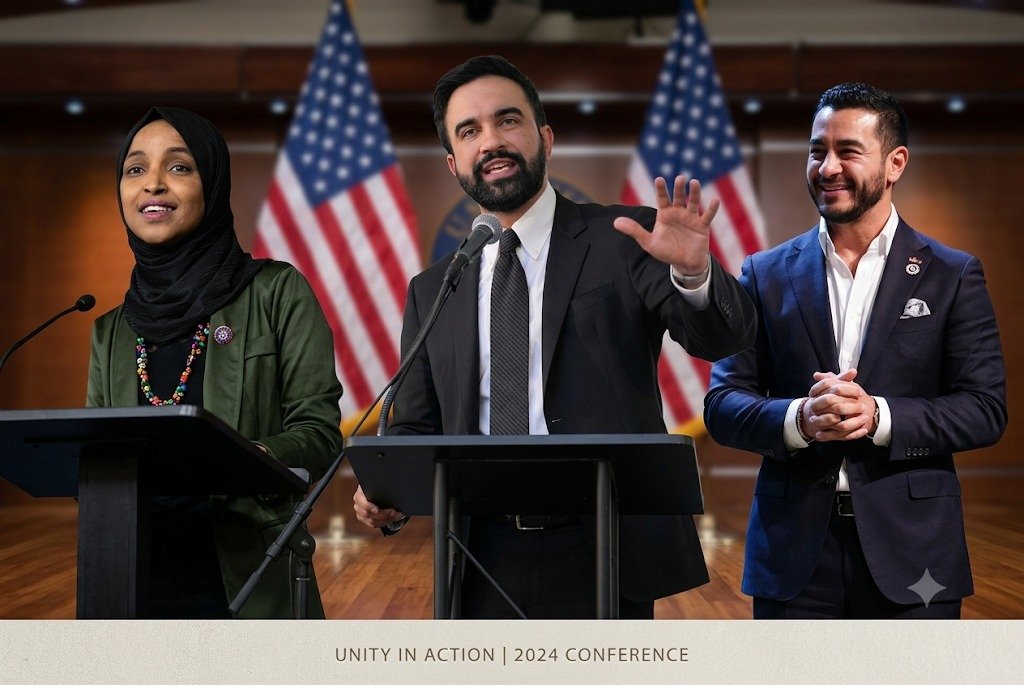
The election of Dr Abdul Rahman Al-Sayed to the United States Senate for the state of Michigan on 5 August 2026 represents the latest chapter in a series of profound transformations that may be described as a rare political and social realignment in American history. His victory follows the success of other candidates, aligned with the political platform of New York City Mayor Zohran Mamdani, in Senate primary elections. What distinguishes all these successful candidates is their adoption of a platform opposing the war in Gaza and supporting Palestinian rights. This suggests that the traditional criteria for political success in the United States have undergone a significant shift—from the customary pledge of unwavering support for Israel to positions that are more critical of Israeli policies and more sympathetic to the Palestinian narrative.
This transformation extends beyond foreign policy. It also encompasses a critique of neoliberal capitalism, with its emphasis on extreme individualism at the expense of collective responsibility. The Democratic Socialists, whose influence is now growing, advocate values of social solidarity, beginning with the family and the local community, in contrast to policies that marginalise vulnerable groups. This article traces the roots of this political shift, examines the objective conditions that made it possible, and considers its potential implications for the Arab world.
New Media: The Power of the Word Confronts the Lobby
There is little doubt that social media—particularly TikTok and YouTube—has played a pivotal role in reshaping American public opinion. While traditional media remained largely subject to the influence of pro-Israel lobbying groups through financial and political pressure, many mainstream journalists were reluctant to cross established editorial boundaries, resulting in television coverage that often reflected a predominantly one-sided narrative.
The rapid rise of the Chinese-owned platform TikTok over the past two years introduced the concept of the “citizen journalist”, enabling events to be broadcast directly from the field without editorial gatekeeping. This fundamentally challenged the monopoly over the dominant narrative. The change coincided with the events of 7 October 2023 and the subsequent war in Gaza, during which disturbing images circulated widely on TikTok and YouTube. These images left a profound mark on the American public conscience, particularly among younger voters and first-time electors.
Alongside this development, independent YouTube channels emerged as leading voices in alternative journalism, increasingly eclipsing established media organisations. These independent journalists built substantial audiences by adhering closely to events on the ground and maintaining distance from institutional pressures, thereby earning the trust of millions. Among the most prominent figures are Tucker Carlson, once regarded as an icon of the American conservative right, Candace Owens, Piers Morgan, Mehdi Hasan, Christiane Amanpour, Dave Jorgenson, and others. In some cases, their audience figures have exceeded those of major television networks such as CNN and Fox News, producing an unprecedented transformation in the American media landscape.
The Defeat of “America First” by “Israel First”
Donald Trump’s victory in the 2024 presidential election, achieved under the slogan “America First” with a record voter turnout of approximately 68 per cent, reflected a profound shift in American public sentiment towards relative isolationism and a greater focus on domestic priorities rather than overseas engagements, particularly those perceived as serving Israel without delivering clear benefits to the United States.
However, according to this perspective, Trump committed a major strategic error when he responded to pressure from Israeli Prime Minister Benjamin Netanyahu by launching military action against Iran on 28 February 2026, in what became known as the “Twelve-Day War.”
In a video statement released in February 2026, Netanyahu declared:
“This combination of forces enables us to do what I have longed to do for 40 years—to strike the terrorist regime with a crushing blow.”
These remarks, which appeared to suggest that the conflict served long-standing Israeli objectives rather than immediate American national security interests, created considerable controversy. According to the author, they triggered a dramatic shift within the American media, including conservative outlets. Some commentators argued that nearly 90 per cent of American media coverage turned against Trump, including organisations previously regarded as broadly supportive of him, such as Bloomberg and certain Christian conservative platforms.
Trump also reportedly lost the backing of some of his most influential conservative media allies, foremost among them Tucker Carlson. In a widely discussed interview with the United States Ambassador to Israel, Mike Huckabee, Carlson questioned comments attributed to Huckabee suggesting that he would not object to the incorporation of parts of Jordan, Iraq, Saudi Arabia, Lebanon and Egypt into Israel, in accordance with the biblical concept of “Greater Israel”. According to the article, these remarks generated widespread controversy in both the Middle East and the United States and contributed to a decline in public support for Israel. Opinion polls cited by the author suggest that around 60 per cent of Americans had become opposed to Israeli policies towards Gaza and Iran.
Unprecedented Official Criticism: Vance Highlights Israel’s Isolation
The shift was not confined to the media but also reached the highest levels of government.
In a rare public statement, United States Vice-President J.D. Vance criticised Israeli leaders for attacking the agreement reached with Iran, saying that they should not be criticising “the only powerful ally” they still have in the world. He urged them to “wake up and recognise the reality of the situation.”
According to the author, this acknowledgement by one of the highest-ranking figures in the American administration—that the United States remains Israel’s only major international supporter—constitutes a significant moment. In his view, it reveals Israel’s growing diplomatic isolation and signals a departure from the traditional American discourse that has long asserted Israel’s unconditional moral right to defend itself.
What Does This Mean for the Arab World?
Recent developments suggest that unconditional support for Israel may, in future American elections, become a political liability rather than an electoral asset—a reversal of a convention that has prevailed for decades.
What, then, does this mean for the Arab world?
In essence, this transformation may represent a historic window of opportunity, though not one that guarantees success automatically. It presents Arab states with an opportunity to rebalance their international relationships and reduce excessive dependence on Washington. Rather than waiting for the emergence of a new dominant power and aligning themselves accordingly, Arab countries—provided they can unite and make prudent use of their human and natural resources—could fill the emerging strategic vacuum and assume a more independent and influential role in international affairs.
There is, however, another side to this development. While a decline in American influence may be welcomed by many Arab societies that have long objected to Washington’s regional interventions, it may also generate serious concerns among certain Arab governments. Some may face renewed domestic pressures, particularly if citizens perceive governments as becoming increasingly repressive out of fear of another wave of popular uprisings akin to the Arab Spring.
The coming period could therefore witness levels of internal political tension not seen for more than a decade, as governments seek to manage the consequences of a changing international order—either through political reform and greater openness or through stricter security measures, depending upon their respective circumstances and calculations.
Conclusion
The United States as we have known it is changing, perhaps permanently.
For the Arab world, this represents a defining moment. It may either become an active participant in shaping the emerging international order, or remain subject to its uncertainties and transformations.
Shortlink: https://sudanhorizon.com/?p=16693