

Our Political Parties Are Coup-Makers
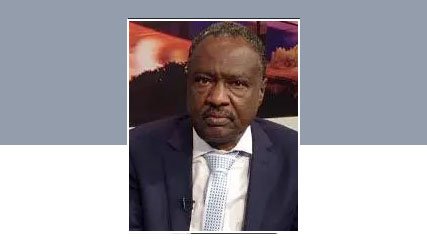
Rashid Abdel Rahim
As we bid farewell to July, we must pause at one of its most notable events to examine an important chapter in the history of Sudanese party politics.
Some Sudanese political parties attempt to surround themselves with an aura of legitimacy by claiming to be democratic, opposed to military rule and hostile to authoritarian government. Yet a closer look at the events of July reveals that these parties have themselves been authoritarian, dictatorial and militaristic, and that each has been involved, in one form or another, in a coup or an attempt to seize power by force.
July witnessed two failed coup attempts. The first was the left-wing and Communist attempt of 19 July 1971, which we discussed previously. The second took place on Friday, 2 July 1976.
Khartoum awoke that morning to the sound of gunfire from various weapons and to the sight of soldiers and commanders in civilian clothing spreading through the city.
During the opening hours, the movement seized Khartoum Airport through armed men, some of whom spoke English. It also took control of the central telephone exchange, which at the time managed communications within Sudan and with the outside world, thereby isolating the capital.
The attacking forces captured the Military Hospital and closed the three bridges in the capital, enabling them to control movement within Khartoum and access to and from the city.
By midday, the capital appeared to be in the hands of forces about whom its residents knew almost nothing, except that they had taken control of movement throughout the city.
The May regime then resorted to a clever stratagem that reversed the balance of power. It announced and spread the message that mercenaries had attacked the Sudanese capital. In doing so, it secured the support of all units of the Armed Forces and won considerable public sympathy.
This narrative mobilised the army against the attacking forces, which were later identified as belonging to the National Front. By evening, it had become clear that the Front had trained its members in Libya, sent them to Khartoum, and organised and directed the assault on the capital.
The army quickly regained control of all sovereign, military and public-service sites, including the General Command of the Armed Forces, the airport, the radio station and the central telephone exchange.
By the afternoon, information had emerged indicating that the attempted takeover had been organised by the National Front, which opposed the May regime. The Front was led by Sadiq Al-Mahdi of the Umma Party, Sharif Hussein Al-Hindi of the Democratic Unionist Party, and Othman Khalid Mudawi of the Muslim Brotherhood.
As happened during every attempted coup, our neighbourhood, Al-Burri, became a scene of events accompanying the military movements.
During the earlier Communist attempt, soldiers fled from the General Command towards Burri Al-Mahas. In this attempt, some participants escaped from Khartoum Airport towards Riyadh and Nasir Extension.
As the fugitives approached members of the public, one man shouted that they were mercenaries who had been at the airport. Crowds surrounded them until military forces arrived and took them into custody.
The man who recognised them and alerted the crowd was a Sudan Airways pilot who lived in Nasir Extension.
Some young men who had been playing football in the neighbourhood grounds also recognised one of the participants as someone who had lived in the bachelors’ houses occupied by graduates of the University of Khartoum.
A number of those involved in the seizure of the central telephone exchange also fled along the Nile. Residents saw them crossing the river.
The National Front operation was led by Brigadier Mohammed Nur Saad, an intelligence officer who had received training in Germany and later served there as a military attaché. After retiring, he settled in Germany and married a German woman.
The Umma Party summoned him to lead the operation. He was a courageous and daring man, and the May regime sentenced him to death following the failure of the attempt.
One reason for the failure of the 2 July operation was that its fighters did not know the locations they had been sent to occupy. They had to ask for directions to the General Command, the various military units and the radio station.
Another cause of failure was the delayed arrival of forces that had been expected to reach Khartoum early, familiarise themselves with the locations and study their plans on the ground.
It was widely rumoured that the delay resulted from corruption in the purchase of old vehicles instead of new ones. The vehicles subsequently broke down or were delayed in the vast desert.
The second July attempt came to an end, confirming that the Umma Party, the Democratic Unionist Party and the Muslim Brotherhood had planned and executed the operation.
The Umma Party and the Democratic Unionist Party had been at the forefront of Sudan’s parliamentary and party-based democratic experience. Yet they were unable to resist the temptation to seize power through a coup, and they joined the ranks of all the parties that had attempted to reach government by force.
It is therefore appropriate to say of all Sudanese political parties:
“Let the one among you who is without sin cast the first stone.”
Shortlink: https://sudanhorizon.com/?p=16564