

A Swedish Company Under “Circumstantial Accusation” of Aiding in the Trade of Organs from Detainees Held by RSF. The Company Failed to Comment.
Sudanhorizon– Mohamed Osman Adam
Members of the Rapid Support Forces (RSF) have been repeatedly accused of committing numerous violations, ranging from dragging people through the streets and depriving them of their rights to arbitrary arrests based on ethnicity and tribal affiliation. Ethnic cleansing and rape are among the most serious offenses, while genocide is the most heinous.
Most of these violations and atrocities have been documented by RSF members themselves, both audio and videos. Western and international human rights organizations and investigative journalists have found it relatively easy to confirm these allegations. Therefore, establishing their validity requires only an “international political decision.” Until then, the RSF will remain under a heavy hand in the “carrot and stick” equation, perhaps the evidence and cases are intended for use in a later stage of developments in Sudan and the wider region.
However, the crimes that have remained in the stage of circumstantial accusations until now are the forced and coercive “blood donation” from civilian prisoners and the removal of human organs without their consent, which are then sold or used, it makes no difference. Recently, accusations have surfaced against the militia of operating an organized human organ trafficking network within the “Degres” and “Shala” prisons in the Darfur region of western Sudan.
This accusation was included in a memorandum submitted by the Permanent Mission of Sudan to the United Nations to the Security Council and Secretary-General António Guterres, the details of which were published by the Sudanese News Agency (SUNA).
The mission stated that the memorandum documents “serious violations” of international humanitarian law against more than 21,000 detainees and prisoners of war in Degres prison in Nyala, South Darfur, and Shala prison in El Fasher, North Darfur, both detention centers under the control of the Rapid Support Forces.
The mission added that detainees are subjected to “unlawful detention, torture, extrajudicial killings, and denial of medical care—practices that amount to war crimes and crimes against humanity.”
The memorandum also noted that the Sudanese government had received “deeply disturbing reports” of “organized trafficking” of human organs within a Rapid Support Forces (RSF) prisons. According to these reports, foreign medical personnel, believed to be from Colombia and Serbia, have been suspected of harvesting organs from some detainees.
The reports added that victims are selected from among detainees belonging to the Sudanese Armed Forces and joint forces under the pretext of their release, before being transferred to foreign elements operating in Nyala, where their organs are harvested. Their bodies are then buried within the infantry division headquarters in an attempt to conceal forensic evidence.
The memorandum stated that the Justice Commission of the Darfur Regional Authority appealed to the United Nations and international human rights organizations to intervene urgently to provide medical care for the detainees and to press for the disclosure of evidence related to these allegations.
The mission reported that the Rapid Support Forces (RSF) are holding approximately 19,800 detainees and prisoners of war in Degres prison in Nyala. It added that the detainees include members of the Sudanese Armed Forces (SAF), civilians from El Fasher, police officers, members of the General Intelligence Service, medical personnel, civilians from various professions, and more than 500 women. The mission stated that the detainees are living in “catastrophic” humanitarian and health conditions and are subjected to systematic torture.
This was followed or coincided with reports from a military source in Khartoum claiming that they had seized shipments of insulated refrigerators during the RSF’s withdrawal from Khartoum last year. The report also stated that indicators and evidence widely circulated in the Sudanese media, attributed to a “military source handling the case,” point to the involvement of the UAE-backed RSF in an organized human organ trafficking network overseen by foreign individuals.
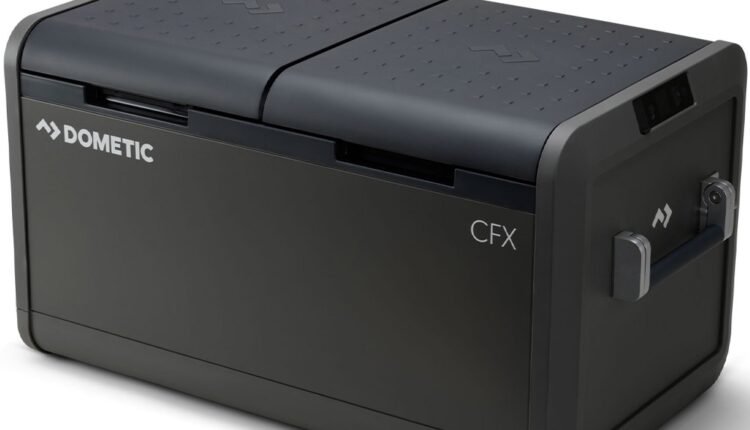
Local media outlets published photos of the boxes used by the militia in these operations, reporting that information confirms the organs are stored in low-temperature medical refrigerators after being treated with preservative solutions, following forced blood transfusions performed on detainees. They are then transported by a specialized company to the city of Nyala.
The boxes and refrigerators are manufactured by the Swedish company Domitik, which operates in the region through a single regional office in the Middle East, based in the United Arab Emirates.
The source stated, “We have conclusive evidence of the involvement of the UAE-backed Rapid Support Forces militia in the human organ trade, along with several other countries, and we have submitted this evidence to international judicial authorities.”
Tracing the name of the company (Domitek Medical Systems) and its specialization confirmed that it does indeed manufacture these refrigerators in Sweden, headquartered in Stockholm. These are the same refrigerators that were in the possession of the UAE-backed Rapid Support Forces (RSF). They are used for transporting blood and biological samples and for preserving human organs intended for transplantation. These high-tech boxes and refrigerators, which the Sudanese Armed Forces do not possess, remain the primary evidence in this case.
Based on this, the news website “Al-Muhaqqiq,” through its sister site “Sudan Horizon,” sent an email to Domitek Medical Systems – Technology for Life, at the address it has designated for inquiries and customers wishing to verify its products or obtain information about it. This email included phone numbers and email addresses. The email requested a comment on the accusations of involvement in the Sudanese war and how these advanced medical devices and equipment ended up in the hands of a militia accused of war crimes and crimes against humanity.
But the company did not respond directly, and after 96 hours, neither “Al-Muhaqqiq” nor “Sudan Horizon” received any response from the company’s office in the Gulf region, particularly in Abu Dhabi. The company, which is a company Swiss-based organization, based in Stockholm, have failed to respond to our inquiries regarding the Sudanese government’s accusations that the Rapid Support Forces (RSF) operate an organized human organ trafficking network within the prisons of Degris and Shalla in the Darfur region of western Sudan, and that they used the company’s equipment in this crime.
But based on past practices against civilians, women, children, and the vulnerable, these accusations will remain valid until proven otherwise.
Shortlink: https://sudanhorizon.com/?p=16466