

Who Is Thinking for Sudan?
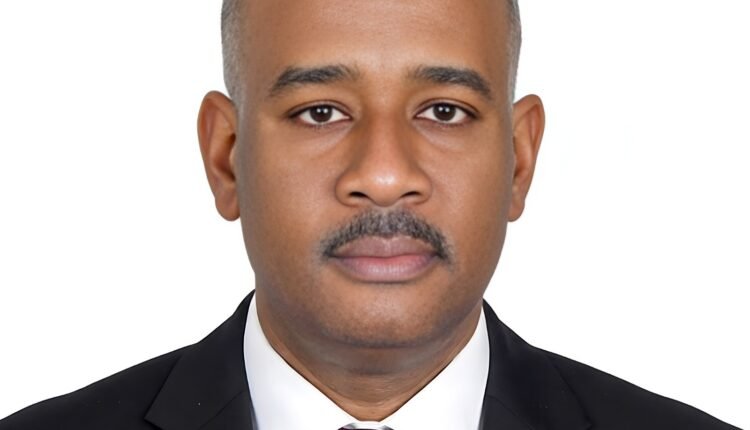
Muhannad Awad Mahmoud
We have ministries that manage the economy… but we do not have an economic brain.
The question may seem strange, but it is perhaps the most important economic question Sudan should be asking today:
Who decides what Sudan should produce?
The answer, unfortunately, is: no one.
The answer may sound harsh, but it reflects a reality we experience every agricultural season.
To this day, Sudan does not possess an accurate and up-to-date agricultural database capable of informing the State, before the beginning of each season, what farmers intend to grow, how much land will be cultivated, and what volume of production can be expected.
Nor is there an institution responsible for determining which crops Sudan should expand and which it should reduce, according to global market demand or the country’s comparative advantages.
In practice, the decision is left entirely to individual farmers.
A farmer grows whatever succeeded in the previous season, whatever his neighbour planted, or whatever he believes will generate the greatest profit.
Yet he does so without accurate information about global demand trends, production levels in competing countries, which markets are expanding and which have begun to contract.
Agricultural production therefore often becomes the product of individual guesswork when it should be the outcome of national economic planning.
When prices collapse, markets are lost, or exports decline, meetings are convened, committees are established, and officials begin searching for explanations.
But the real problem is that we entered the agricultural season without a vision.
This is not merely an agricultural problem. It reflects the way Sudan’s entire economy is managed.
We produce first and then search for markets.
We build factories and then ask who will buy their products.
We export raw materials and then wonder why our revenues do not increase.
When we lose a market or commodity prices collapse, we begin looking for explanations.
Countries that have achieved major economic transformations begin from the opposite direction.
They study global markets, analyse demand trends and monitor competitors.
They then determine what should be produced, how it should be produced and to whom it should be sold.
Only after that do they direct investment, financing and production.
And this brings us to the real question:
Who is thinking for the Sudanese economy?
We have the Ministry of Finance, the Ministry of Agriculture, the Ministry of Trade and Industry, the Central Bank of Sudan, and numerous authorities and councils.
Yet there is no single national institution dedicated to anticipating the economic future, collecting information, analysing markets, studying global transformations and converting all of this knowledge into policies and decisions.
Successful countries do not leave their futures to chance.
In Japan, companies do not wait until they travel abroad to discover markets for themselves.
The Japan External Trade Organization (JETRO) studies global markets, analyses opportunities and provides companies with accurate information about demand, competitors, regulations and investment opportunities before they make their move.
The Japan International Cooperation Agency (JICA) then links international cooperation with economic development, financing projects and facilitating the transfer of knowledge and technology in ways that serve Japan’s broader economic vision.
In South Korea, the Korea Trade-Investment Promotion Agency (KOTRA) played a central role in opening international markets to Korean companies, while the Korea Development Institute (KDI) provided economic research and foresight that helped successive governments make decisions based on knowledge rather than reactions.
Singapore, meanwhile, built its success on knowledge before resources.
Enterprise Singapore monitors markets and helps companies expand internationally, while the Economic Development Board (EDB) leads the country’s strategy for identifying the industries that will drive the economy over the coming decades—not merely the next year.
The common denominator among these experiences is not the names of the institutions, but the underlying idea.
Each of these countries possesses an economic brain that monitors the world on behalf of the State, reads the future before it becomes the present, and provides decision-makers with information rather than impressions and alternatives rather than slogans.
In Sudan, by contrast, information remains scattered among ministries, universities, chambers of commerce, exporters and international organisations.
There is no single institution that collects this information, connects the different pieces and transforms them into a national economic vision.
As a result, we continue to repeat the same mistakes.
We expand crop cultivation because its price rose the previous year. Everyone plants it, and prices subsequently collapse.
We abandon a crop because its price declined, only to see its value rise again the following season.
We enter markets without studying them and leave others without understanding why we lost them.
The problem is not a shortage of experts.
There is no shortage of resources.
It is not even a shortage of ideas.
The problem is that we do not have the institution capable of transforming all of these assets into decisions.
Sudan therefore does not need another ministry or a larger government bureaucracy.
What it needs is a National Centre for Economic and Market Foresight, working directly with the Council of Ministers and bringing together experts in economics, agriculture, industry, trade, data and technology.
Its mandate should be to study global markets, analyse demand trends, monitor competitors, identify emerging opportunities and issue regular reports that help both government and the private sector make the right decisions at the right time.
Such a centre should not produce reports merely to be filed away in archives.
It should provide early warnings before crises emerge and answer practical questions such as:
What should Sudan grow next year?
Which industries deserve investment?
Where are the emerging markets?
How can Sudan retain its existing markets?
Which products should be exported as raw materials, and which should be processed domestically?
For decades, Sudan has repeated that it is a country rich in land, water, livestock and minerals.
But the world no longer measures the wealth of nations by what they possess beneath the ground. It measures them by what they possess within their institutions.
Japan is not richer than Sudan in natural resources.
Singapore is not larger than Sudan in geographical area.
South Korea is not more fertile.
Yet all of them possess something Sudan still lacks:
Institutions that think before they decide.
The most important economic question facing Sudan, therefore, is not:
What is the exchange rate of the dollar?
How much will we export this year?
How much sesame or gum arabic will we produce?
The real question is:
Who is thinking for Sudan?
Because a State that does not possess an institution capable of reading the future will remain trapped in managing the crises of the present while others shape the future.
The greatest threat facing Sudan’s economy is not the shortage of resources.
It is the absence of an economic brain capable of transforming those resources into wealth.
Shortlink: https://sudanhorizon.com/?p=15828