

A Tale
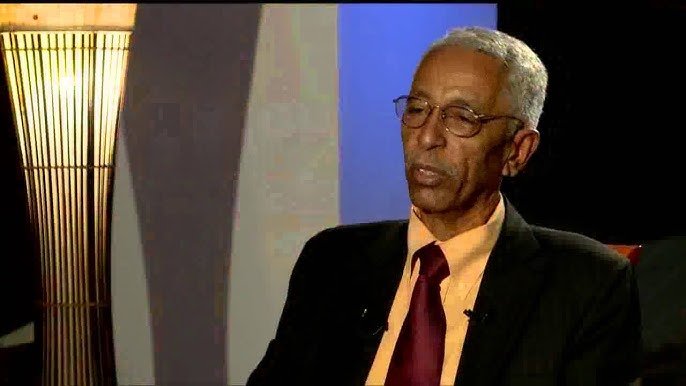
Dr. Al-Khadhir Haroun
He said: We gathered around our grandmother, Bint Amouna, Abdel-Hafiz, Shaima, Noura, and myself, Sayed Ahmed Al-Makki, son of Naeema, her daughter, on a moonlit night, sipping cups of tea with burnt ( hot) milk and a pile of bright orange-colored dumplings topped with powdered sugar! It’s a sweet dish, often called by different names across the Arab world, but with a single, delicious, and delightful taste. We, the grandchildren, had all come from cold lands, having emigrated there in the prime of our youth, seeking refuge in the gentle Sudanese winter of early November, a winter still in its infancy.
I spoke about the Netherlands, Shaima and Noura spoke about other European countries, and Abdel-Hafiz spoke about Canada. We all lamented the harshness of life in those places, both morally and in terms of the challenges of preserving the identity of our sons and daughters. We lived in constant fear that one day a girl might bring a boyfriend home, or even a mistress she might bring, after the children had grown up and we had become old, worn-out elders, with no recourse but to remain silent in the homes we had acquired through sweat and tears. Otherwise, the police would come spurred by a ring on the phone from a girl or a boy, and we would unleash a torrent of unimaginable horrors, especially for our grandmother, Bat Amouna, who remained silent, straining her failing ears, which had been working for ninety years until their strength finally gave way. They then resorted to modern aids, such as artificial hearing aids.
Bat Amouna, for those who don’t know her, memorized a quarter of Surah Yasin—that is, a portion of the Quran, from Surah Yasin to Surah An-Nas, a quarter of the thirty chapters of the holy book—under the tutelage of her grandfather, Sheikh Hamed, nicknamed “Bahr Al-Musawwar” (the Red Sea), due to his vast knowledge. It was the largest sea they knew after the Nile. She was the only literate woman in the entire region and knew what the radio broadcast in classical Arabic was saying. She never traveled far from her village except to the capital, Khartoum, and once for Hajj and a visit to Mecca. She didn’t find much rest in Khartoum with her sons and daughters, even though she had arrived on that train, the one the singer described as racing the wind—perhaps it did in its glorious past. She enjoyed a fleeting moment of companionship with its passengers and relished the diversity of places and people. She murmured the ancient wisdom behind travel and exploration, even though her own world was limited to her village in the Sudanese countryside and Khartoum, saying, “Indeed, if you travel far, you’ll see much!” This wisdom echoes Al-Shafi’i’s eloquent verses on the benefits of travel. Perhaps she was lost in thought as we discussed worlds she had never even considered. When our conversation turned to the hardships of life in our adopted country and the stark contrast in temperament between us and a world that has lost its mind, where men marry men and women marry women, she erupted like a madwoman, clinging to her familiar phrase, one we’ve known since childhood and which we know represents the ultimate expression of her frustration and rejection of what is said: “Allah’s will be done!” She said, and I quote her words here: “We lived in our remote village with toil, sweat, and hardship, but with happiness and contentment. I used to gather firewood, fetch water daily from the river, prepare food, and milk the livestock. Your grandfather (Hawayat Allah) would cultivate corn, wheat, barley, millet, and cotton for spinning in his small field, enough to sustain us throughout the year, with a surplus. We would eat three times a day and night until we were full, all in the warmth of our family and tribe, praising and thanking God.” And you, there you are, traversing the horizons east and west on airplanes for the same reason: to eat three meals a day, just as we did in our impoverished countryside, and to feed the offspring of a monstrous race of humans who won’t hesitate to expel you if you fail tomorrow, or call the police on you if you utter a word that displeases them. How wretched you are! And she concluded angrily, “Allah’s will be done!”
We said, “We thought of returning for good, Grandma, but this accursed war broke out, leaving us no shelter in our cities, and we have no choice but to stay where we are.”
Noura said—and Grandma loved her and her boldness in expressing herself, a boldness that disregarded the feelings of those targeted by her arrows, yet she still called her bland and sharp-tongued—”Even this poor, safe haven, the devils among men and jinn have decided not to leave us!” “You neglected it the day you secretly slipped away from it for no reason, so they coveted it, God’s choice!” said Bat Amouna, standing upright and gripping her crutch as she headed towards her bed.
Shortlink: https://sudanhorizon.com/?p=14814