

A Choice Between Teaching and Dancing!!
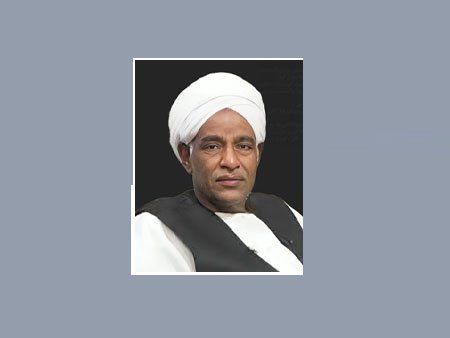
Mahjoub Fadl Badri
The headmaster of the girls’ school in Shendi could not reconcile himself to the idea that one of his teachers should also be a singer performing at the town’s social occasions while his pupils danced to his songs. Summoning him one day, he said:
“Hussein, either you teach these girls, or you make them dance.”
The teacher in question, Mr Hussein Ali Mohamed Taha, better known as Hussein Shendi, later recalled that moment as a turning point in both his artistic life and his musical career. A native of the village of Al-Dweimat, he neither abandoned singing nor gave up learning and teaching. Yet it was not singing alone that earned him his reputation. He became known for the richness of his voice, his handsome appearance, his wit, the charm of his speech, and his pleasant company.
His family home stood next to that of our late sister, Hawa bint Abbas, the wife of the late Taj Al-Sirr Mohamed Saleh Hilali, in Northern Qashlaq, Omdurman. Through this proximity, we came to know the family well. At that time, Hussein had not yet found his way to the media, particularly radio. In those days, Radio Omdurman shaped the cultural consciousness of Sudanese society through its songs and messages. People gathered around its broadcasts as it carried them through worlds of creativity and social life.
The radio’s role was not confined to spreading joy across Sudan through music and celebration. It also bore the burden of conveying sorrow through announcements of deaths and national tragedies. Our generation, if it forgets every other news bulletin, will never forget 21 February 1968, when the station abruptly interrupted its programmes and began broadcasting Qur’anic recitations. Speculation spread among listeners until the announcement came:
“The nation has today been struck by the loss of His Eminence, the noble Sayyid Ali Al-Mirghani…”
Few listened to the remainder of the announcement. The shock was too great for his countless followers. Not only did the radio schedule change that day and in the days that followed, but the routines of ordinary people changed as well. Grief spread throughout the countryside. Farmers left their fields, shepherds abandoned their flocks, and all who could travelled to take part in the funeral. It was a vivid demonstration of the central role radio played in people’s lives.
For this reason, seizing the radio station became the first essential step in the success of any coup, from the proclamation of General Ibrahim Abboud on 17 November 1958, right through to the statement carried to the station by Yusuf Izzat Al-Mahiri, adviser to Hemedti, on 15 April 2023. Had that announcement been broadcast, many things might have turned out differently.
It was through this most influential media platform in Sudan that Hussein acquired the nickname “Shendi” and that his spirited patriotic songs became widely known for his melodious, captivating voice.
It therefore came as a surprise to many admirers—myself included—when news spread on social media that Hussein Shendi had completed the memorisation of the entire Holy Qur’an. To me, that was the real headline.
The artistic circles in which Hussein Shendi has spent his life are not generally environments that encourage such an achievement. Rehearsals, performances often dominate their routines, and the settling of disputes among colleagues—matters that can sometimes distract from the higher purpose of art itself.
In earlier times, our elders referred to male singers as “suyyaa’”—a term meaning idlers or wastrels—because singing by men was considered inconsistent with dignity and social standing. Later, during the post-Haqeeba era, the title “Ustadh” (Professor or Master) began to replace such attitudes. The first singer widely known by this title was Ustadh Hassan Attia, and the honourific subsequently became attached to many of his contemporaries and successors.
At a time when some semi-famous performers compete for Emirati dollars, we find a distinguished artist, Ustadh Hussein Shendi, completing the memorisation of the Book of Allah. Given his beautiful voice and the many recordings preserved in the archives of Radio Omdurman and other media outlets, one cannot help imagining that he may one day feel inspired to record the Holy Qur’an in his own voice.
Anyone who perseveres in memorising the Qur’an discovers both joy and benefit from further study of the sciences of recitation and tajweed. Such pursuits would enrich his artistic journey in a manner that earns acceptance from Allah and prayers of appreciation from people.
Had the school headmaster still been alive today, he would surely have rejoiced in the distinction attained by his former teacher, Hussein Shendi. As narrated by Umar ibn Al-Khattab, the Prophet (peace be upon him) said:
“Indeed, Allah elevates some people through this Book and lowers others through it.”
We pray that one day we may hear an announcer on Radio Omdurman say:
“And now we listen in reverent silence to a blessed recitation from the Holy Qur’an by Sheikh Hussein Shendi.”
Such an achievement is not beyond this diligent artist, nor is anything difficult for Allah.
May Allah accept your acts of worship, Sheikh Hussein, and rejoice, for the one who masters the Qur’an will be in the company of the noble and righteous scribes, as the Prophet (peace and blessings be upon him) said.
May Allah accept your efforts and grant you success.
Shortlink: https://sudanhorizon.com/?p=14502