

Dialogue Without Clarity?
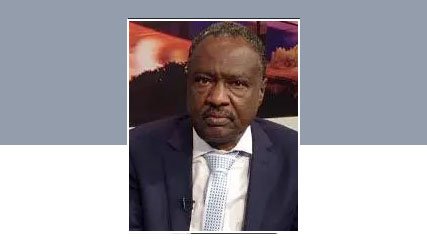
Rashid Abdul Rahim
On more than one occasion—and indeed many times—General Abdel Fattah al-Burhan, Chairman of the Sovereignty Council, has announced the prospect of a Sudanese dialogue. At times, he has outlined some of its features, stating that it would take place inside Sudan, would not adopt projects imposed from abroad, and that the rebel militia and those who support it would not be parties to it.
But who, then, are its participants?
And when will it take place?
Al-Burhan has answered that it is imminent and will involve the “people who have suffered the pain”.
Yet this response only deepens the ambiguity and raises further questions.
A dialogue “with the participation of those who have suffered the pain”—but which other parties will participate alongside them? And who exactly are these people? What pain are we talking about? The pain of war? Or the pain caused by those who have sold out the nation?
Then there remains the crucial question: when will this dialogue take place?
No one appears to have an answer except President Al-Burhan, and perhaps members of the Sovereignty Council and the military leadership.
The failure to definitively settle the dialogue issue creates uncertainty. The first institution likely to be affected by this uncertainty is the government itself, because it is directly influenced by whatever outcome the dialogue produces, which may well determine its end.
This government is too fragile to organise or manage a dialogue of such significance.
No dialogue can take place—or succeed—without clearly defining its objective. There is a substantial difference between a dialogue intended to reach consensus on a new government and one designed to establish a constituent assembly that would pave the way for general elections.
Any dialogue that does not ultimately lead to a stable, elected government is likely to do more harm than good.
The war from which we have suffered may itself become the pathway to a more stable future. We have paid dearly for it in lives, livelihoods, wealth, and years lost. Yet we have also gained experience and a greater ability to distinguish between competing choices.
The Sudanese people’s choice will be between those who took up arms to kill them and those who took up arms to protect them; between those who aided the aggressor and those who confronted him.
The choice will not be between those who can deliver prosperity and those who cannot.
Rather, it will be between those who safeguard lives, freedoms, and the nation’s cultural and social values, and those who betray them; between those who pursue the interests of tribe, family, and region, and those who uphold the values of the nation and the wider community.
The exclusion of the rebellion and its supporters is not motivated by fear that they represent a political force capable of winning the people’s confidence, nor because they pose a serious threat to the existence of the state or the current system of government.
The rebellion no longer possesses such capability. Indeed, it was weak from the outset and impoverished in both intellectual and political terms. Its military strength has now been shattered, leaving it with little of consequence. As for the political forces that support it, particularly the alliance known as Sumoud, their strength and foundations depend largely on external backing. The end of the war will reduce and weaken the ability of outside actors to interfere in Sudan’s affairs.
Sumoud will also face the anger of all those who suffered at the hands of the Rapid Support Forces. Many have lost family members, seen their homes destroyed, had their property looted, and watched their farms and livestock devastated.
For the dialogue to succeed—whenever it takes place and whatever form it takes—there must be complete candour regarding its objectives, its mechanisms, and the parties who will participate in it.
Shortlink: https://sudanhorizon.com/?p=14350