

Where is the political landscape in Mali heading following recent attacks there?
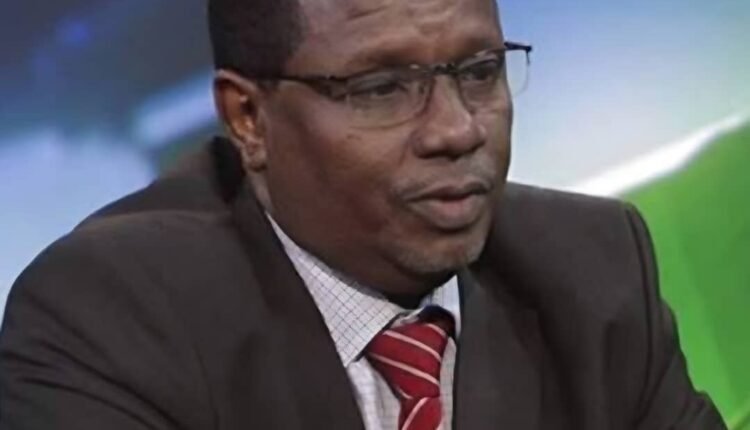
Ambassador Atta Al-Mannan Bakhit
On April 26th, the Malian government and people were taken by surprise by the most dangerous and violent coordinated attack since the military junta seized power in 2020. This attack was led by an alliance of convenience between the National Movement for the Liberation of Azawad (MNLA) and the Group for the Support of Islam and Muslims (JNIM). The attack was widespread, stretching from the north of the country to the outskirts of the capital, Bamako, and achieved remarkable results in a short period. In the north, the MNLA gained complete control of the strategic city of Kidal, expelling government forces and Russian Africa Legion fighters who had controlled the city since 2022. Meanwhile, JNIM stormed the heavily fortified Malian army base in Kati, near Bamako. A suicide attack resulted in the assassination of Defense Minister and the second most powerful figure in the military junta, Sadio Camara, along with a large number of military personnel and civilians.
The organized attack succeeded in completely paralyzing the ruling military junta, to the point that its head, General Assimi Goïta, remained in hiding for three days before appearing on state television to announce that the situation was under control and to call on Malians to stand together in solidarity and unity.
Many expected the military junta to fall and that the country would enter a new cycle of instability. However, those familiar with the political situation in Mali understand that this violent attack will not topple the military junta. Indeed, the attackers themselves did not even consider this possibility, as the limited military and political capabilities of the two allied movements would not enable them to control the situation in the country.
Where is this alliance of convenience leading?
This is not the first time that the various Azawad liberation movements have allied themselves with armed Islamist groups in Mali. They formed an alliance in 2012 and achieved significant military gains in the north before French forces intervened and liberated the cities they had seized. The alliance dissolved not because of French intervention, but because of its inherent weaknesses. The two movements’ goals and central issues were entirely different. The National Movement for the Liberation of Azawad (MNLA), under its various names, is a purely political movement that emerged before Mali’s independence. It demands the independence of the Azawad region in northern Mali, home to several tribes, most notably the Tuareg, Arabs, and Fulani. The MNLA had previously signed several agreements with successive Malian governments. In contrast, the Group for the Support of Islam and Muslims (GSIM) is an armed Islamist revolutionary group that seeks to control the entire country and impose an Islamic system based on Sharia law. The group has adopted jihad and armed struggle as its means to achieve its goals and has never signed any agreement with the government.
Therefore, the alliance between the two sides was primarily an agreement of convenience. However, each side gained significant advantages from this alliance. The MNLA succeeded in liberating Kidal, the Tuareg capital, from government control and established its complete dominance over the city. While the Nusra Front succeeded in demonstrating its long and powerful reach, extending to overrun the country’s most important military stronghold, it has thus confirmed that it is not an easy adversary. But did the government benefit from this devastating attack?
Yes, the government did. What doesn’t kill you makes you stronger. Firstly, it benefited by continuing its policy of purging the Malian army of officers opposed to the ruling council, as investigations proved that the massive attack on the heavily fortified Kati military base could not have been carried out without the assistance of elements within the army. The greatest benefit, however, was the firm stance taken by the Economic Community of West African States (ECOWAS), which condemned the attack. The group issued a strongly worded statement of condemnation and rejection of what happened in Mali, even though Mali has not been a member of ECOWAS since 2014. ECOWAS emphasized that regional security is indivisible, meaning that Mali’s security is part of the security of the entire region.
This was an important development that moves ECOWAS a step closer to reconciliation with the G5 Sahel countries, a movement led by Togo and Benin, among others.
Significant Developments in the Landscape:
Given the above, the situation within Mali and the region as a whole is poised for significant developments in the coming period. Undoubtedly, ECOWAS’s firm stance against the attack on Mali has its reasons and will have repercussions. The reasons stem from the fact that the activities of armed Islamist revolutionary groups have transcended the three Sahel countries—Mali, Burkina Faso, and Niger—and have spread into other countries in the region, with attacks by these groups reaching Senegal, Sierra Leone, Ivory Coast, Ghana, and Benin. This is a worrying development. This has prompted ECOWAS to emphasize that the security of the region is indivisible, indicating that ECOWAS may officially begin engaging with the Sahel rebel group and strengthening security coordination with it. This would signify the beginning of the end of the estrangement and the hardline stance that ECOWAS adopted towards these three countries when they announced their withdrawal from the Economic Community in 2023. This means that ECOWAS will effectively recognize the Sahel group as a distinct entity, more out of fear than desire.
The second significant development relates to the internal financial landscape, where Jama’at Nusrat al-Islam wal-Muslimin (JNIM) remained isolated from the official opposition in Mali and was a pariah entity, despite its undeniable presence. This isolation stemmed from the group’s lack of a clear political platform that could serve as a basis for dialogue. It remained an armed movement relying solely on force to achieve its objectives. However, following its successful attack on the Malian army headquarters, JNIM surprised everyone by announcing a noteworthy political stance.
The group issued a direct appeal to all opposition factions in Mali to unite and coordinate their efforts to overthrow the military junta. JNIM expressed its willingness to participate in this dialogue and held talks with opposition political figures, the results of which have not been disclosed. Meanwhile, the Coalition of Forces for the Republic (CFDR), the largest opposition coalition led by the widely popular Islamist leader, Oumar Diko, seized upon this opportunity.
Diko quickly seized the opportunity, affirming his readiness to coordinate with the group to overthrow the military junta and establish a republican system. While a significant gap remains, this development is itself important. It will give greater momentum to the opposition and may open the door to dialogue between the military junta, armed groups, and other stakeholders, paving the way for a new phase in the long political struggle since independence, aimed at achieving security, development, and lasting peace in Mali.
It is in everyone’s interest, both within Mali and throughout the region, to embrace the option of inclusive internal dialogue. The history of political conflict in Mali since independence confirms that relying on the weapons of external powers, whether Western or Eastern, will not achieve just peace and stability. Direct and open dialogue with all Malians is the only solution to the country’s problems, which have multiplied since independence.
Shortlink: https://sudanhorizon.com/?p=14097