

Al-Safanna Returns to the ‘State of ’56’
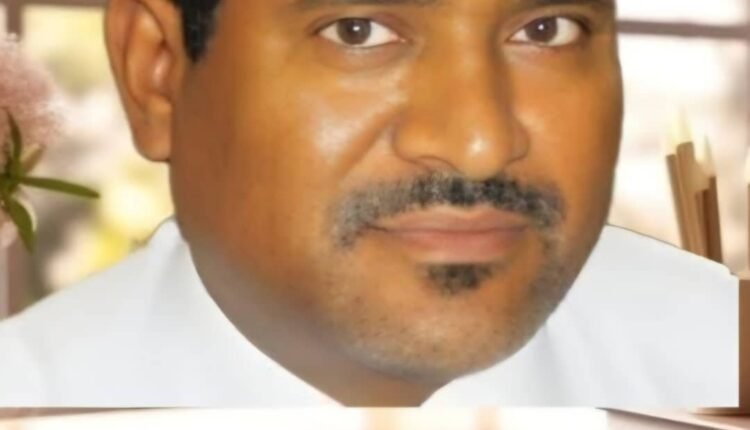
Dr Hassan Mohamed Salih
Ali Rizqallah, widely known as “Al-Safanna,” announced on Monday, 11 May 2026, his defection from the Rapid Support Forces. He declared: “I stand with the Sudanese people—in the west, east, north and south—and as of today I am no longer part of anything called the Rapid Support Forces.”
1. The Announcement
Al-Safanna appeared in a short video on Facebook announcing his departure from what he described as the “camp” of the Rapid Support Forces and his alignment with the “camp of the Sudanese people.”
He removed his cap during the video to prove his identity—suggesting he was not an artificial construct. This appeared to allude to ongoing speculation about the status of Mohamed Hamdan Dagalo (“Hemedti”), with some claiming he is no longer alive. Those appearances attributed to him are artificial.
Al-Safanna stated that he had not joined any other faction and promised that “what lies ahead will be better.”
2. Background: The Mustariha Incident
Many observers and military figures attribute the خروج of commanders from the RSF—and the defection of some to the Sudanese Armed Forces—to the storming of Mustariha, the birthplace of Musa Hilal, leader of the Revolutionary Awakening Council.
The incident, which occurred between February and March 2026, reportedly resulted in:
the displacement of around 850 people
destruction of the settlement through drone strikes and ground assaults
3. Escalating Internal Conflict
The attack on Mustariha was seen as a continuation of tensions between the RSF and Musa Hilal. After sidelining him and appointing a loyal figure from his own Mahamid tribe as Nazir, the militia escalated to a direct assault—allegedly aimed at eliminating him and his sons.
The article’s underlying concern was that Musa Hilal sought to take full control of the RSF and redirect it politically and militarily. His public declaration of support from Mustariha for the Sudanese Armed Forces, led by Abdel Fattah al-Burhan, reinforced these fears.
4. Strategy Shift: “Fragmentation”
Following the Mustariha events and Hilal’s relocation to Khartoum, he reportedly did not abandon his strategic goal of removing the Dagalo family from leadership of the RSF. Instead, he shifted to what the article describes as “Plan B”: dismantling the RSF gradually rather than all at once.
This approach involves encouraging defections from within, particularly among members of the Mahamid tribe. Examples cited include:
Al-Nour Mohammed Ahmed Qubba
Al-Safanna himself
field commanders in Bara, South Kordofan, and Blue Nile
5. Toward a New Alignment
The dominant theme among defectors has been a “return to the homeland,” as expressed by Qubba, and a “return to the Sudanese people,” as declared by Al-Safanna.
The broader objective attributed to Musa Hilal is the reconstitution of a border guard force under a new designation—whether as a “military” or “revolutionary awakening.”
This ambition is framed in the context of existing armed movements aligned with the army, including:
Minni Arko Minnawi and his faction of the Sudan Liberation Movement
Gibril Ibrahim and the Justice and Equality Movement
These groups, often associated with non-Arab Darfuri constituencies, are described as part of the “joint forces” supporting the army. Hilal’s aim, according to the text, is to fill what is seen as a gap created by the RSF rebellion—particularly the reduced participation of Arab tribal elements in the military landscape.
This effort would also align with the army’s stated policy of integrating all auxiliary forces into the national military after the war.
6. Broader Tribal Dynamics
The article suggests that Hilal’s efforts will not be limited to the Mahamid. Cooperation with other tribal leaders is seen as essential, including figures such as Mahmoud Musa of the Mahariya—who reportedly fled to South Sudan after tensions with the RSF.
The piece argues that coordination among tribal administrations could:
draw members away from the RSF
reframe their cause as one of national loyalty rather than family or external influence
reduce reliance on foreign actors, notably the United Arab Emirates, which the article claims exerts influence over the RSF
Conclusion
According to this perspective, the RSF has lost the legitimacy of the slogans it once used—such as democracy, anti-regime reform, and the concept of the “State of ’56.” The article argues that a return to older institutional and tribal frameworks may reshape Sudan’s political landscape, even invoking the idea of a “parliament of tribal leaders” reminiscent of 1954.
It concludes that the current trajectory signals the end of a particular phase in Sudan’s conflict—framing it as the closing of one chapter and the opening of another.
Shortlink: https://sudanhorizon.com/?p=13757