

Egyptian Source to Al Jazeera Net: We Have Forces in Four Gulf Countries
Cairo — Agencies
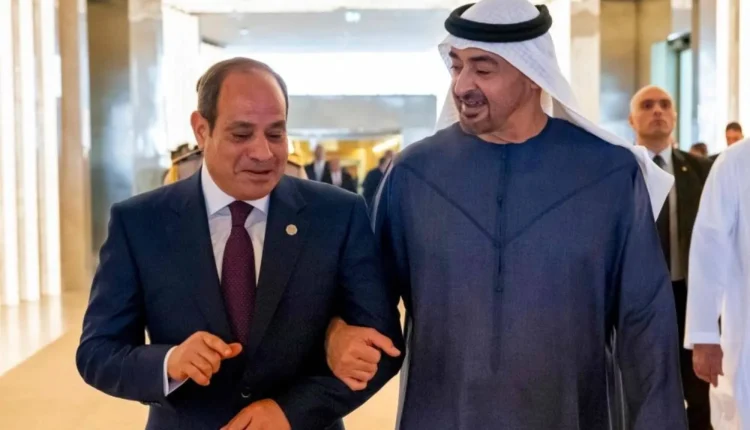
Abdel Fattah el-Sisi’s visit to the United Arab Emirates on Thursday marked the first official announcement of Egyptian forces being stationed there. This came after media debate and exchanges among social media activists following the outbreak of the US–Israeli–Iranian war and the subsequent targeting of Gulf states by Tehran, amid questions regarding Egypt’s level of support.
During the visit, UAE President Mohamed bin Zayed Al Nahyan was seen alongside his Egyptian counterpart inspecting what was described—according to a statement by the UAE Ministry of Defence—as a “detachment of Egyptian fighter jets” stationed in the Emirates.
A well-informed Egyptian political source, close to decision-making circles and speaking on condition of anonymity, revealed that the UAE is not the only Gulf country currently hosting Egyptian forces and equipment specialised in supporting its security. The source confirmed that “there are currently Egyptian forces in four Gulf states as part of Cairo’s long-standing policy of supporting the Gulf.”
Regional Considerations
The same source told Al Jazeera that these forces have been present since the first week of the war, and that Cairo proactively offered its support to Gulf countries without waiting for a formal request.
He explained that Egypt had opted for silence rather than publicising the move, due to regional sensitivities and strategic balancing, as well as its parallel diplomatic role—engaging in mediation efforts and transmitting messages among various parties to de-escalate tensions and reach a political resolution. This reflects Egypt’s standing, built on strong relations and mutual trust with all sides.
Regarding the debates on social media and criticism directed at Egypt by some Gulf commentators, the source noted that, from the outset of the war, official relations between Cairo and Gulf states have remained highly positive, with full coordination and understanding among leaders and officials.
He added, however, that there had been some dissatisfaction in Gulf circles over what was perceived as Egyptian public sympathy towards Iran. Egyptian officials, he said, have repeatedly clarified that public sentiment in Egypt does not equate to support for Tehran, but rather reflects opposition to the Israeli role in the region.
Defensive, Not Offensive
On whether the images of Egyptian fighter jets in the UAE could affect relations between Cairo and Tehran—especially as Egypt seeks to play a mediating role alongside Pakistan, Turkey, and Oman—the source emphasised that Egypt’s presence in the four Gulf states is primarily intended to send political signals of support rather than to engage in the conflict.
He stressed that this aligns with Cairo’s policy of avoiding escalation and preventing the widening of the conflict, adding that “the presence is defensive rather than offensive.”
“Iran Understands”
For his part, an Iranian diplomatic source, also speaking anonymously, commented on the joint appearance of the Egyptian and Emirati presidents inspecting the forces. He said that Tehran is already aware of such support, noting that “Iran fully understands the nature of Egypt’s relationship with its Gulf partners.”
He added that Tehran’s focus is on countering support provided to the United States and Israel in their war against Iran, stressing that his country recognises that Egypt is not involved in any offensive action against it.
The Iranian official further revealed that high-level communications between Cairo and Tehran remain ongoing, aimed at exchanging views and supporting diplomatic efforts to resolve the crisis.
Earlier, President el-Sisi affirmed—according to an official statement—Egypt’s solidarity with the UAE under current regional conditions, reiterating Cairo’s support for the UAE’s security and stability and its firm rejection of Iranian attacks on its sovereignty. He stated, “What affects the UAE affects Egypt.”
El-Sisi also described such attacks as a “blatant violation” of international law and the United Nations Charter, warning that they represent a dangerous escalation threatening regional and global stability, and emphasised the need to intensify diplomatic efforts to resolve the crisis through dialogue.
Shortlink: https://sudanhorizon.com/?p=13652