

“Look…”
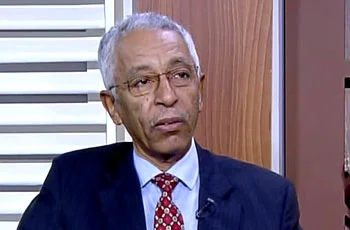
Dr Al-Khidr Haroun
The word appeared in a phrase from an old primary reading book used by the older generation—the writer’s peers. I chose not to use the full phrase as the title of this reflection because it is open to insinuation and mockery, which is not my intention. Especially since God Almighty has warned those who indulge in such behaviour, and—beyond that—it may be twisted by the disingenuous away from its intended meaning, reducing the entire argument to a misleading headline. This, after all, is one of the oldest forms of distortion, now amplified by the proliferation of tools and media—both beneficial and malicious forms of artificial intelligence—which we aim here to shed light upon and warn against.
Having navigated the pitfalls of the title, let me present the phrase and its story in full:
The phrase came from a story titled “Pharaoh and His Lack of Sense!”—accompanied, if memory serves, by an illustration of Pharaoh strutting among his subjects as naked as the day he was born. The story tells of a great Pharaoh who conducted a long, deliberate campaign of brainwashing—perhaps over decades—until he eventually claimed to be the supreme lord, asserting that rivers flowed beneath his feet. The people believed him—or at least most did, while others pretended to believe out of conformity or fear.
Thus, he emerged naked, convinced that the people would see him adorned in royal splendour—clothed in garments encrusted with gold, silver, and precious stones, perhaps even imagining peacock feathers crowning his head.
Leaders, presidents, and organisations have done the same in every age and place—until arrogance reaches such heights that they begin to deify themselves. And so, the conditioned eyes of the masses could not see his nakedness. But a small child, whose mind had not yet been shaped like the others, saw the truth and cried out before the grand procession:
“Look! Our king is naked!”
The story, of course, originates from the Danish tale The Emperor’s New Clothes by Hans Christian Andersen. In it, an emperor obsessed with fine clothing is deceived by two impostors who promise him magical garments visible only to the intelligent and worthy. Those who could not see them, they claimed, were unfit for their positions. Thus, the phrase became a metaphor for blind social conformity—even in the face of obvious falsehood.
Psychologists have documented similar phenomena in which perception itself is disrupted. In one experiment, a respected academic—known for seriousness and intellectual depth—was asked to sing before an audience. When later questioned, the listeners denied that he had sung at all. This is a form of cognitive distortion that suspends the senses.
Such phenomena may be linked to what psychology describes as sensory overload or shock—states that can cause temporary paralysis of perception, or what is termed cognitive paralysis.
But the condition I wish to address here is not temporary—it is enduring. It is the state the world has lived in since the retreat of European colonialism: a hardened framework of Eurocentrism that claims to explain everything—history, politics, culture, and art. Civilisation, we are told, began in Greece; philosophy in Europe; law and administration with the Romans; the modern state, the Industrial Revolution, and the Enlightenment all in Europe—culminating in the Universal Declaration of Human Rights and international law. As though the rest of the world had been nothing more than a chaotic wilderness inhabited by people without heritage or order.
Today, cities are deemed “civilised” if their centres boast glass skyscrapers and paved roads lined with greenery—yet no one asks about the slums nearby, where millions live in hardship just kilometres away.
It would seem that Thomas Hobbes may have been right in his bleak view of human nature. For even after the proclamation of universal rights and the founding of international institutions, the global system granted five states veto power—an arrangement reminiscent of Animal Farm by George Orwell, where some are “more equal than others”.
Through such imbalance, nations have been violated, resources plundered, and injustice perpetuated. Yet people continue to turn to this so-called “international family” seeking justice—even as it fails them.
The paradox is stark: some nations are permitted to possess weapons of mass destruction—nuclear, biological, chemical—while others are forbidden. And astonishingly, the world largely accepts this contradiction without protest.
Even more troubling is how modern communication—while freeing people from passive reception—has trapped them in echo chambers, reinforcing their own views and deepening divisions. Studies have shown that when individuals are exposed to opposing perspectives, their views often moderate—but such exposure is increasingly rare.
We now live in a fluid world where post-World War II concepts—both genuine and manipulative—are being shaken. This instability carries risks, but also an opportunity: to free ourselves from illusions and rebuild international relations on fairness, balance, and mutual respect.
For Sudan, the matter is urgent and real. We have lived the horrors of war—not as abstraction, but as lived trauma. Families driven from homes, lives shattered, dignity violated. These are not metaphors—they are scars.
And yet, despite all this, the world often watches from afar—issuing statements, holding conferences, sometimes even fuelling the conflict indirectly.
We, as civilians, did not ignite this war—but we bear its fire.
If there are those capable of ending it in a way that preserves dignity—without submission or humiliation—we are ready. But we will not surrender to deception, nor be lulled by the language of an “international family” that watches suffering without meaningful action.
And if those in authority choose diplomacy and engagement, as wisdom sometimes requires, let them do so—provided they also fulfil their duty to end this destructive rebellion.
As Al-Jahiz once recounted in The Misers: a miser invited a man to dine out of courtesy, only to protest when he accepted—“An invitation of words, not food!”
Perhaps, in these troubled times, such “verbal invitations” have become all too common.
Shortlink: https://sudanhorizon.com/?p=13451