

UN Official Calls for Recognizing Sudanese People’s Central Role in Shaping Their Own Peace
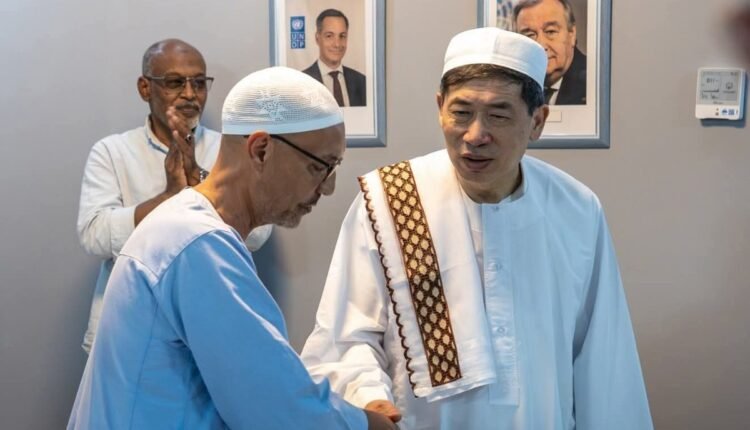
Sudanhorizon – Mohammed Othman Adam
A senior UN official has called for greater recognition of the Sudanese people’s pivotal role in shaping internal peace, emphasizing that local efforts are playing a critical role in reducing violence despite the ongoing conflict.
Haoliang Xu, Assistant Secretary-General of the United Nations and Associate Administrator of the United Nations Development Programme, said Sudan is currently witnessing a noticeable decline in violence. However, he stressed that this reduction is driven by local actors rather than formal negotiations. While mediation initiatives have multiplied, a genuine political breakthrough remains distant, raising concerns about growing frustration.
The UN official warned against the prevailing pessimistic view that peace can only be achieved through a comprehensive national ceasefire agreement between the main armed parties, noting that such assumptions overlook realities on the ground.
Xu pointed to grassroots initiatives and the ability of Sudanese communities to communicate despite the war. He explained that in the early months of the conflict, while international efforts focused on brokering humanitarian truces, local communities quietly negotiated their own arrangements. Tribal leaders, religious figures, youth networks, and community members stepped in to mediate—often at great personal risk—facilitating local ceasefires, non-aggression agreements, humanitarian access, and safe escape routes for civilians.
He noted that these efforts rarely make headlines but have saved lives and continue to this day, even amid deep societal fractures. Years of conflict have entrenched polarization, eroded trust, and intensified grievances. While a national agreement may halt large-scale fighting, it alone cannot repair the social fabric. Even if a peace deal were signed tomorrow, Sudan would still be far from achieving genuine peace—making local peacebuilding indispensable.
As an example, Xu highlighted events in Zalengei, Central Darfur, where trained youth peacebuilders, alongside elders and respected community figures, intervened when fighting broke out in 2023. They helped evacuate civilians from frontline neighborhoods, protect hospitals, share safety information with communities under bombardment, and engage armed actors through trusted mediators. These efforts contributed to a local ceasefire that lasted several weeks, saved lives during intense urban fighting, and enabled the delivery of humanitarian aid and essential services.
He added that similar dynamics are currently unfolding across Darfur, where local peace committees and mediation structures—led by tribal leaders and youth groups—are working to de-escalate tensions, negotiate resource-sharing, and maintain a minimum level of coexistence. These efforts often occur without external recognition and involve significant personal risk.
Despite divisions caused by frontlines, political affiliations, and territorial control, these actors continue to exchange information and maintain communication in a context where most other channels have collapsed. This shared identity as peacebuilders, Xu noted, forms a bridge that will be crucial for the success of any future peace process.
In an article published by The New Humanitarian, Xu described this as the true form of progress in Sudan’s war—not dramatic breakthroughs in distant capitals, but incremental gains in small communities: a road that remains open, a clinic that continues operating, or a dialogue that does not descend into violence. However, he stressed that these efforts remain under-recognized and under-resourced.
Xu argued that this situation is illogical, noting that investing in local peacebuilding is relatively low-cost and yields proven results. It builds on existing capacities rather than reinventing the wheel, complements high-level mediation, and reconnects political processes with realities on the ground. It also ensures that political agreements are not made in isolation but are rooted in real conditions.
He concluded that for international efforts to remain effective in today’s crises, they must acknowledge the central role of the Sudanese people in shaping their own peace.
Shortlink: https://sudanhorizon.com/?p=13159