

The Illusion of Victory: A War Without a Winner… and Slow-Burning Settlements
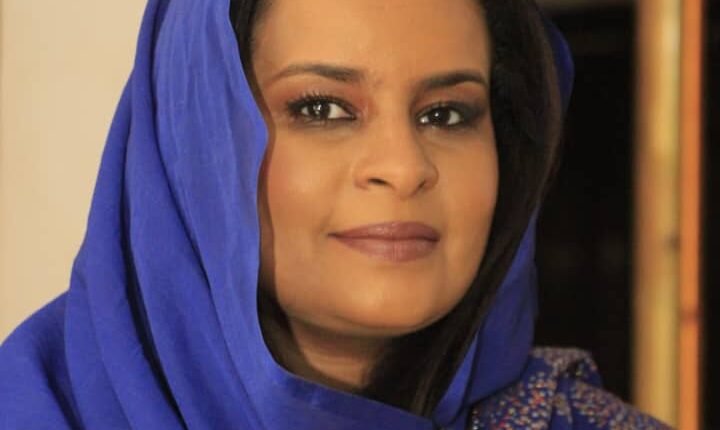
Dr Mayada Siwar Al-Dahab
Within the framework of this analytical series examining shifts in the region’s conflicts, this article follows on from a previous reading titled Israel Loses, Iran Expands, and America Wavers.
However, what followed the ceasefire compels a more precise reassessment of what is unfolding both in public and behind the scenes.
Talk of “victory” in this war appears closer to a media narrative than to a field reality. Each side raises the banner of triumph, while the facts point to a more complex picture: uneven mutual losses, partial gains, and unresolved outcomes.
In our earlier reading, Israel appeared to have retreated somewhat, while Iran expanded its room for manoeuvre, and the image of the American role was shaken. Yet what followed the ceasefire was not a consolidation of this equation, but rather its gradual reconfiguration—carefully managed by the United States.
Today, the United States is moving to regain the initiative—not through direct confrontation, but through calibrated instruments of pressure. Restrictions imposed on Iranian ports aim to reduce the effectiveness of one of Tehran’s most significant leverage points: the Strait of Hormuz. The implicit message is clear: neutralise the Hormuz card before it becomes a decisive pressure tool.
In parallel, there is an emerging tendency to separate the Lebanese track from the broader conflict files—thereby limiting Iranian influence in the region and weakening one of its most important strategic arenas.
Lebanon: Between Sovereignty and the Risks of Vacuum
Hezbollah constitutes a central pillar of Iran’s regional influence. Accordingly, any reduction in its role affects not only Lebanon but also Iran’s standing among its allies, potentially eroding trust and weakening the cohesion of the so-called “axis of resistance”.
Yet this equation is layered with complexity. While weakening Hezbollah could open space for restoring sovereign decision-making, it may simultaneously create a security vacuum in a fragile environment. In the absence of its role as a forward line of defence against Israel, the risk of internal tension may rise rather than giving way to sustainable stability.
Israel: Tactical Gains, Strategic Limits
Israel is seeking to consolidate what it has achieved on the ground, through incursions into Lebanese territory. It attempts to impose a reality akin to a buffer zone—an extension of its movements in Syria and Gaza—and to present this as an achievement that can be politically leveraged following the repercussions of the 7 October attack on the Israeli domestic front.
Yet these gains remain partial, particularly given the failure to achieve the broader objective of fundamentally altering the structure of the regime in Iran.
Iran: Flexible Crisis Management
By contrast, Iran does not appear to be merely reacting; rather, it is actively managing the crisis. Its simultaneous approach of de-escalation and signalling escalation—particularly regarding the Strait of Hormuz, in parallel with the Lebanese ceasefire—reflects an effort to preserve its leverage without sliding into open confrontation.
This behaviour also opens the door to another interpretation: the possibility of undeclared understandings, or at the very least ongoing channels of communication, despite the publicly hardline rhetoric from all sides.
The Nuclear File: The Decisive Card
As some instruments of regional influence decline, the nuclear file remains one of Tehran’s most important negotiating assets. The debate is not about abandoning it, but about how it is used to manage political and economic pressure.
The experience of the Joint Comprehensive Plan of Action demonstrates that Iran tends to offer limited concessions in enrichment levels in exchange for economic gains and sanctions relief, without compromising the core of its nuclear programme.
Similarly, the negotiations preceding the “12-day war” indicated a degree of Iranian flexibility on enrichment, suggesting a willingness to reach understandings within certain limits—but without moving towards a complete or permanent concession.
At the same time, internal conditions in Iran impose clear pressures: a strained economy, damaged infrastructure, and losses at key levels of leadership. This makes any potential agreement more likely to serve as a temporary pressure-relief mechanism rather than a stable, final settlement.
Where Is the Trajectory Heading?
In light of these dynamics, three possible trajectories can be envisaged:
A provisional settlement:
The most likely in the near term is an undeclared understanding—in other words, a limited settlement managed behind the scenes.
Renewed escalation:
A return to tension through indirect confrontations or limited strikes, with Israel maintaining military options and Iran responding via regional instruments.
An undeclared understanding:
Continued de-escalation through back channels without formal announcement, while maintaining hardline rhetoric in public.
The most probable path is that of a provisional settlement, managed in practice through tacit understandings rather than a fully-fledged political agreement, with escalation remaining a tool of mutual pressure.
This assessment rests on several considerations: the high cost of decisive victory for all parties; the inability of any side to fully achieve its strategic objectives; and the need for time to reposition. It is also reinforced by the experience of the 2015 nuclear agreement, which showed that engagement between the parties often takes the form of partial arrangements rather than comprehensive solutions.
The Bottom Line
What we are witnessing today does not appear to be the end of a war, but the beginning of a more complex phase—one of “grey settlements”, with neither victor nor vanquished, but rather a fragile balance in which each side seeks to minimise losses and maximise gains.
All sides may declare victory…
But the clearer truth is this: no one has yet prevailed, and what will ultimately decide matters remains under negotiation.
To be continued…
Shortlink: https://sudanhorizon.com/?p=13007