

Human Rights Watch: RSF Commit War Crimes Against People with Disabilities
Nairobi – Sudanhorizon
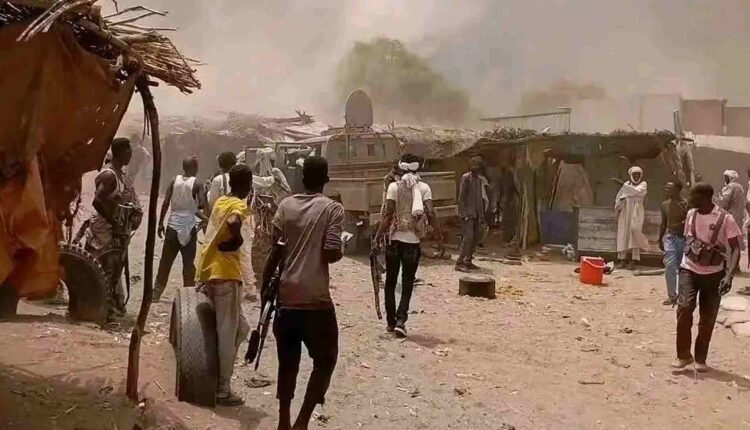
A report released Tuesday by Human Rights Watch quoted survivors and eyewitnesses as saying that the Rapid Support Forces (RSF) militia targeted people with disabilities solely because of their disabilities. The report also stated that the militia accused others with physical disabilities of being “wounded fighters,” mocked others, called them “crazy,” and told them they were “deficient.”
The international human rights organization emphasized that the targeted killing of civilians or others not participating in the conflict, including people with disabilities, constitutes a war crime, as does subjecting them to cruel, degrading, or humiliating treatment or similar abuses. When these acts are committed as part of a widespread attack against the civilian population, they may constitute crimes against humanity.
“The Rapid Support Forces treated people with disabilities as suspects, a burden, or expendables,” said Emina Čerimović, associate director for disability rights at Human Rights Watch. “We heard how some victims, particularly amputees, were accused of being wounded fighters and summarily executed. Others were beaten, abused, and harassed because of their disabilities, with fighters mocking them and calling them ‘crazy’ or ‘incomplete.’”
Čerimović added, “Human Rights Watch has been documenting abuses against people with disabilities in armed conflicts around the world for more than a decade. But this is the first time we have documented this type and scale of targeted abuses, including killings, of people with disabilities because of their disabilities.” Governments and the UN Security Council must act now to stop these crimes and ensure accountability.
A Human Rights Watch report called on the UN Security Council to take urgent action to prevent further atrocities in Sudan against civilians, including people with disabilities, by imposing sanctions on the Rapid Support Forces (RSF) leadership for committing these atrocities and demanding that the RSF’s backers, particularly the United Arab Emirates, cease their support.
The report stated that Human Rights Watch interviewed 22 survivors and witnesses from El Fasher between December 2025 and February 2026, including in-depth remote interviews inside Sudan and interviews with people with disabilities who fled to eastern Chad. The organization also interviewed eight disability rights activists from other parts of Sudan who described similar abuses committed by the RSF in other areas of the country.
A 33-year-old man who uses crutches due to a physical disability sustained in an explosive weapon attack in December 2024 said that RSF fighters detained him along with about 50 others, including women and children, as they tried to flee the city on October 26, and interrogated.
He added that RSF fighters also rely on skin color and accent to determine whether people are civilians or members or supporters of the Sudanese Armed Forces (SAF), which the RSF is fighting to control the country. He stated that RSF fighters used machine guns and AK-47 assault rifles to execute more than 10 people, most of them disabled, in front of him.
A 29-year-old nurse recounted witnessing RSF fighters kill a young man with Down syndrome, whom the fighters called “crazy,” a blind child, and a young woman with a physical disability who could not walk, as civilians fled on October 26.
Sudanese disability rights activists have documented other cases in which RSF fighters killed people. People with disabilities were targeted because of their disabilities.
Zainab Saleh, the former head of the Association of People with Disabilities in South Darfur, said she spoke with a father whose 14-year-old son, who had a physical disability, was executed on October 26 as they tried to flee.
Rapid Support Forces (RSF) fighters claimed he was “obstructing others.” She said the RSF fighters confiscated his wheelchair before executing him.
People with disabilities also faced other forms of abuse, often based on ethnic origin. A 31-year-old man, who was disabled in a bombing of the Nifasha market in El Fasher, recounted being beaten and whipped by RSF fighters while taking refuge at his uncle’s house after the city fell.
The fighters repeatedly accused him of being a soldier in the Sudanese Armed Forces or the Joint Forces, or a sympathizer, because of his disability and ethnicity, calling him a “Falangaya,” a derogatory term for non-Arab ethnic groups.
The report stated that members of the UN Security Council and the African Union Peace and Security Council should work together to ensure the deployment of a civilian protection mission in Sudan. Humanitarian organizations should also ensure that assistance is accessible and inclusive for people with disabilities, including the provision of assistive devices and targeted support.
Shortlink: https://sudanhorizon.com/?p=11654