

GERD: Between Tension and Containment… Has Egyptian Diplomacy Succeeded in Preventing a War over Water?
Cairo -Sudanhorizon – Sabah Moussa
Egypt continues its quiet diplomacy on this existential water issue, striving on all fronts to make the Nile a unifying factor for these countries through shared development, rather than conflicts that could ignite the already volatile region, plagued by internal disputes and struggles for influence.
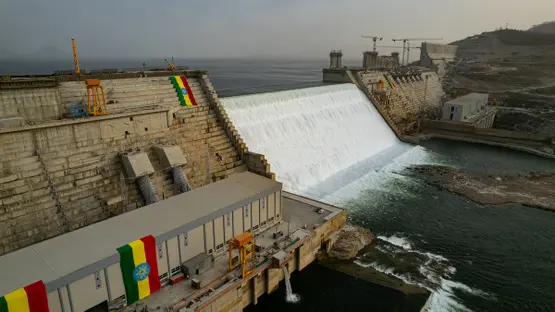
The Grand Ethiopian Renaissance Dam (GERD) crisis is no longer merely a technical dispute over the filling and operation of a water reservoir between Egypt and Sudan on one side and Ethiopia on the other. It has transformed into a multi-dimensional geopolitical conflict reflecting a reshaping of the balance of power in the region. Experts believe this dispute now revolves around three overlapping levels: Egyptian national security, Ethiopian developmental ambitions, and international competition for influence in the Horn of Africa.
Despite more than a decade having passed since the dam project began, the crisis remains unresolved, yet it has not erupted into military conflict. This tense stalemate reflects a balance of political power, but it does not eliminate the risk of future escalation.
National Security
Cairo, for its part, considers water security to be no less important than national security, given that Egypt relies on the Nile for approximately 97% of its water resources and possesses no viable natural alternatives. Any significant or sudden reduction in water flow could lead to a decline in agricultural and food production, severe economic and social pressures, and increased dependence on imports. This is precisely what has occurred with each filling of the Grand Ethiopian Renaissance Dam (GERD) by Ethiopia, without prior notification to Egypt or Sudan regarding the amount of water it intends to store and when. This has caused considerable disruption to Sudan’s dams and deprived Egypt of vast areas that could have been cultivated with water-dependent crops due to its lack of knowledge about the amount of water Ethiopia is storing. The absence of a legally binding agreement between the three countries, and the lack of agreement on filling and releasing the dam and exchanging information, remains a major crisis that continues to plague the downstream countries of Egypt and Sudan.
A Symbol of Sovereignty
In contrast, experts believe that the Grand Ethiopian Renaissance Dam (GERD) is no longer just a power station for Ethiopia, but has become a symbol of sovereignty and independence, a tool for leading East Africa, and a potential source of regional energy dominance through electricity exports. Furthermore, it has become a strategic bargaining chip with downstream countries. According to experts, the dam also strengthens Addis Ababa’s position as a rising regional power, especially given its population exceeding 120 million and its rapidly growing economy.
Soft Diplomacy
Some experts believe that Egypt is attempting, through soft water diplomacy, to neutralize the Nile Basin countries in this conflict by building mutually beneficial water-related development relationships. However, the interests of the eleven Nile Basin countries differ radically, and some lean towards Ethiopia to benefit from its supposedly cheap electricity, to show solidarity with the upstream countries, and to reject what they call the historical hegemony of the downstream countries. Therefore, some believe it is difficult for Egypt to rely on these countries because most of them adopt a pragmatic policy based on maximizing gains without explicitly siding with any party.
Consultations with Kenya
In this regard, Egypt and Kenya held high-level consultations in Nairobi, addressing ways to strengthen bilateral relations and elevate the strategic partnership between the two countries. They also coordinated positions on regional and international issues of common interest. Ministers from both sides participated in the talks, discussing the course of joint cooperation and developments in the Horn of Africa, the Red Sea region, and the Great Lakes region. They exchanged views on efforts to restore peace and stability, particularly in Somalia and Sudan. Both parties affirmed their commitment to the principles of sovereignty and territorial integrity in accordance with international law and the charters of the African Union and the United Nations. They agreed to intensify the exchange of visits and enhance cooperation in the fields of defense, security, counterterrorism, pharmaceuticals, and integrated water resources management. The two sides emphasized that the Nile River represents a vital link between the peoples of the basin countries, stressing the need to preserve it and ensure its sustainable use for mutual benefit. They also agreed to continue regular consultations on basin issues and strengthen cooperation within the framework of the Nile Basin Initiative, in a way that supports water security and the economic and social development of the region’s countries.
Linking it to interests
This statement suggests that water relations among the Nile Basin countries are no longer merely technical matters between ministers, but have become intertwined with political and economic interests. This is perhaps what Egypt frequently does during its visits to upstream countries, given the complexities of the agendas and the multitude of pressure points involved in water issues. The Grand Ethiopian Renaissance Dam (GERD) crisis has also taken on an international dimension, further complicating matters. It has become an arena of competition among major powers such as the United States, which seeks stability and the protection of navigation in the Red Sea; Russia, which aims to expand its security influence in Africa; and China, a major investor in the continent’s infrastructure. The UAE, which plays an investment role in the region and wields significant leverage in both escalating and de-escalating the crisis, cannot be ignored. The widening and multifaceted nature of the crisis has led Egypt to pursue diplomatic avenues, engaging with all regional and international forums to avoid a war that could drag the region into wider conflicts and threaten the security and stability of the area near the Red Sea, a strategic international waterway. This could potentially draw in regional and international powers to the conflict.
Shortlink: https://sudanhorizon.com/?p=11473