

Brothers at War
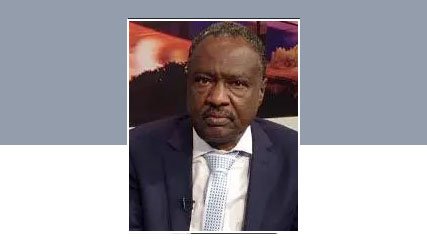
Rashid Abdel Rahim
The landline rang in my office at the Supreme Council for Peace. The caller introduced himself as “Wad Al-Saem”, a retired officer and a classmate of Brigadier Arok Thon. He left his telephone number. When I informed Arok, he was visibly delighted and immediately rang him, and the two of them began reminiscing about their days in the army and the battles between the Sudanese Armed Forces and the Sudan People’s Liberation Movement.
The essence of their friendly exchange was this: a force from the SPLM led by Arok had laid siege to a town. The army dispatched a unit commanded by Wad Al-Saem, tasked with breaking the siege. Fierce fighting took place between the two sides during the day, only to subside at night.
Wad Al-Saem, the army commander, managed to intercept the enemy force’s communications and discovered that its commander was none other than his old colleague, Arok Thon.
The two commanders then began exchanging friendly messages over the airwaves, each promising to defeat the other.
I told Arok and Wad Al-Saem that this remarkable exchange deserved to be heard by the Sudanese people. I immediately contacted Mr Hassan Fadl Al-Mawla, then Deputy Director of Sudan Television, who welcomed the idea. A special episode of the programme From Khartoum, Peace was arranged.
On the appointed day, however, Arok Thon was assigned to travel to Nyala to explain the peace agreement, and the Council Chairman, Mohamed Al-Amin Khalifa, firmly refused to excuse him from the mission.
I informed Mr Hassan Fadl Al-Mawla, who told me with a smile that there was no alternative but for me to “find one of your rebels”.
All attempts failed, and as the broadcast time approached, I suggested to Hassan Fadl Al-Mawla that my wife, Dr Salwa Hassan Siddiq, and I should appear instead, speaking about life as a married couple in the same profession.
During the programme, we recounted how we had found ourselves unemployed and without income when President Bashir came to power.
We devised a strategy: visiting relatives shortly before lunch so that we might be offered a meal, then staying for tea in the late afternoon, which would serve as our supper. We would arrive carrying a bag of bananas — the least expensive fruit.
President Bashir watched the episode. Because of his family connection to my wife, he would later joke to relatives: “The best thing we did during the change was to make Rashid and Salwa unemployed.”
Arok Thon was deeply imbued with the spirit of peace and firmly committed to it.
During a debate on Al Jazeera’s programme The Opposite Direction with Yasser Arman, Arman attempted to provoke him, saying, “The army killed your brother.” Arok replied calmly: “Our forces also killed President Bashir’s brother and Dr Hassan Al-Turabi’s brother. That is why we have come seeking peace — to stop the killing on both sides, so that our people may live in safety.”
I accompanied Arok on that trip, as he had made it a condition that I be included in the invitation.
On the flight, we were fortunate that the captain, Sheikh Al-Din Mohammed Abdullah — may God have mercy on him — invited us into the cockpit. Arok sat by the window as the plane crossed the desert. He was astonished by the vast emptiness below and said to me, “If we had rebelled in land like this, the government would not have struggled with us. It would have been enough to surround us with barbed wire, and the matter would have ended.”
In Doha, I witnessed the immense affection Sudanese expatriates had for Arok Thon. We received numerous invitations for lunch and dinner. Valuable gifts were left for us at the hotel. We had arrived in Doha with two suitcases; we returned with seven, filled with perfumes and clothing. Our hosts even paid the excess baggage fees so that the gifts could accompany us home.
Such was the affection Arok Thon inspired among Sudanese people. Owing to his wisdom, breadth of relationships, and political acumen, he had been a strong candidate for the position of Vice-President — a post then reserved for one of the southern leaders. But he departed too soon, returning to his Lord alongside a group of martyrs.
Shortlink: https://sudanhorizon.com/?p=11444