

Central African Republic: The Beginning of a New Era
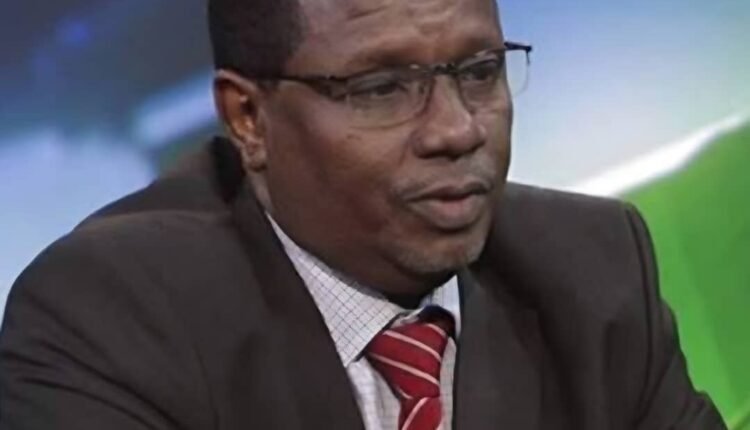
Ambassador Atta Al-Mannan Bakhit
The most significant political news for the people of neighbouring Central Africa at the beginning of this year was the official announcement by the Elections Commission of President Faustin-Archange Touadéra’s victory in a third term as President of the Central African Republic, following an important election held on the twenty-eighth of last month.
Although the event may appear routine—a president winning in an African country where democracy is often practised in form rather than in substance—it is far from ordinary for the Central African Republic and for those concerned with its affairs. It carries important implications that must be taken seriously and dealt with accordingly.
The first significance of the Central African elections is that, for the first time in the country’s history since independence, four elections were held simultaneously: presidential, legislative, regional, and local. The voting process took place calmly, with no notable violations or threats, and with the participation of many local parties and numerous observers. All of this confirms one very important reality: the return of security and stability to the country.
It is true that some regions of the country are still experiencing rebellion. However, when compared with the political and security situation since the Séléka group seized power in 2012, and the massacres that engulfed the country following bloody confrontations with the Anti-Balaka militias, the security situation has improved dramatically. This is progress worthy of attention and commendation.
The second significance, which deserves careful consideration, is that President Touadéra has firmly imposed himself on the country’s political scene and has become an unavoidable figure—something many observers of Central African affairs did not anticipate. This is because the man had no prior history of political activism. He was known as a successful academic: an outstanding mathematics lecturer at several universities who eventually became President of the University of Bangui. He could easily have spent the rest of his life far removed from the world of politics and its complexities.
He entered politics by chance when President Bozizé appointed him Prime Minister amid an escalating political crisis, a position he held for only a short time. In 2015, many sectors agreed on him as a “president of necessity” after the country had moved beyond the abhorrent phase of ethnic fighting. Perhaps they all saw him as pliable and easily removable once security conditions improved, as had happened to many before him. But the astute mathematics professor calculated correctly and confounded the expectations of all the indolent politicians. He won the 2020 elections, then amended the constitution in 2023 to make presidential eligibility open-ended, and now he has won this year’s elections, enabling him to remain in power until 2030, making him the longest-serving president in the Central African Republic’s history.
This is something that Emperor Jean-Bédel Bokassa, with all his symbolism, never achieved; nor did President Patassé, despite his populism; nor President Bozizé, despite his military background. Such are the decrees of God—He grants sovereignty to whom He wills.
All observers believe that it is in the country’s and the region’s interests for President Touadéra to remain in office until the end of his term. Any violent change would plunge the country back into a state of war, bloodshed, and instability with unpredictable consequences, in a region that resembles a powder keg.
The Central African Republic faces two principal challenges. The first is security and stability. It appears that President Touadéra will continue the military and political alliance with Moscow, which has proven effective in securing the country. Accordingly, the African Corps and Wagner-affiliated groups will continue their training of Central African forces and their engagement alongside them in field operations. Russia will remain a key security partner and will expand its activities in gold, diamond, and rare-metal mines to cover the costs of its military support. Rwandan forces will also continue operating alongside Russia.
On the other hand, the government will seek to engage with the remaining armed movements to persuade them to lay down their arms in accordance with the political arrangements guaranteed by the Khartoum Agreement, signed under the auspices of the African Union in 2018. The Khartoum Agreement remains the most important political framework for achieving security and reconciliation, compared with all previous agreements.
The second challenge facing President Touadéra and his incoming government is the task of development, reconstruction, and economic revival. This challenge requires partners other than Russia. To that end, President Touadéra may ally himself with anyone willing to cooperate in advancing development and reviving his country’s exhausted economy. He will pursue an open-door policy—but open doors, as the African proverb says, can also let in vermin. That is the crux of the matter.
Therefore, Sudanese political decision-makers must view relations with the important neighbouring Central African Republic through these two lenses: security and the economy. Each affects the other, and each is a means to the other. This is an important and urgent issue that must not be absent from the political decision-making kitchen and the engine of diplomatic action in Sudan. What is happening in the Central African Republic and other neighbouring countries directly affects Sudan’s national security—especially at a time when the world has entered a phase in which rights are obtained by the logic of power rather than by the logic of international law.
Shortlink: https://sudanhorizon.com/?p=10376