

Where Is Hemedti?
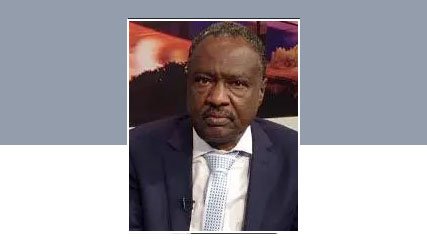
Rashid Abdel Rahim
Since 23 June, the commander of the Rapid Support Forces, Mohamed Hamdan Dagalo (Hemedti), has not appeared.
To be more precise, even the supposedly artificial intelligence-generated image of him has not appeared.
The question is important in light of major developments that directly affect him and his forces.
If we move beyond the observation that he is a man fond of speaking at length—and of reviving the names of Osama Abdallah and Ali Karti, which he repeatedly mentions in a way that betrays his resentment of them—the fact remains that he stands at the head of both the Rapid Support Forces and the so-called “Founding” government.
The requirements of addressing both entities have been underscored by major external and internal events that affect him and the structures he leads. Logic dictates that these developments call for him to speak about them—to his supporters, to the world, to his forces, and to the Sudanese public.
Externally, the Quartet has moved, and the United States has entered the Sudanese file forcefully—most notably at the urging of the Saudi Crown Prince, Mohammed bin Salman.
Saudi intervention has acquired particular importance for Sudan following the escalation of its disputes with the UAE in Yemen and Somalia.
The Rapid Support Forces have made a habit of raising major issues laced with falsehoods about supposed advances on key fronts. Claims were made about a rebel banking application and about possession of modern combat aircraft.
In both cases, the international system does not permit the existence of a banking application without a state, banks, and a central bank. Moreover, no rational person—even among the RSF—would place their money in a bank run by it, given that its predatory hand has already reached its own members and tribes, not just its enemies.
As for owning combat aircraft without possessing a state or an air force, this borders on the absurd—setting aside the fact that MiG-25 aircraft are extraordinarily expensive, costing over a billion dollars, in addition to the long training period required for pilots.
Internally, videos circulate of RSF soldiers—avid for filming—sending messages to their leadership and directly to Hemedti, without receiving any response.
A delegation of tribal leaders, headed by representatives of the Hawazma tribe, travelled to meet Hemedti or senior figures to obtain answers to urgent questions. They remained in Nyala for six months without being received by any official from the so-called Founding government or the RSF.
It is evident that the “government” claimed by the RSF exists only on WhatsApp and social media applications.
Meanwhile, the rebellion is suffering defeats and setbacks on the battlefield, and Hemedti’s calls for “clean fighting” have conspicuously disappeared.
It is not only the RSF that is living in confusion due to the absence of leadership. Its largest Sudanese political ally, “Somoud”, is also adrift. Its leadership is currently roaming Europe, having lost its bearings and failing to secure meetings with influential international powers. Instead, they drift between cultural centres and research institutes—meeting whoever is willing to be paid.
Even where such payments are possible, in countries such as Belgium and the Netherlands these institutions no longer wield meaningful international influence—let alone on Sudan, whose file is now handled internationally by the United States and Saudi Arabia.
Confusion has overtaken Somoud’s leadership. Hamdok seems to have forgotten his own assertion that the war is being run by internal actors, even as he searches abroad for an end to the war—far from those who are actually conducting it.
Has the “state” that produces AI replicas of Hemedti also vanished from the calculations of the Rapid Support Forces and Somoud?
Shortlink: https://sudanhorizon.com/?p=10704