

When Power Redefines Terrorism: Reading Washington’s Decision on Sudan
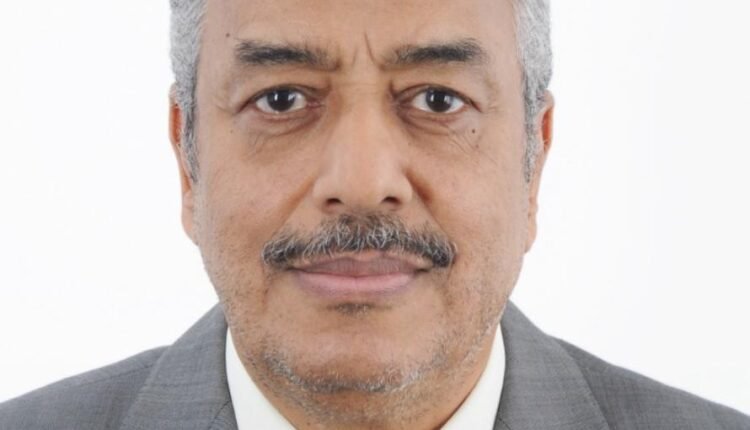
Dr Ismail Sati
Regardless of its historical accuracy or factual validity, the classification by the US Department of State of the Muslim Brotherhood in Sudan as a terrorist organisation reveals from the outset a misunderstanding of Sudan’s political reality and a methodological fallacy. The Islamic current in Sudan is complex and multifaceted, making it impossible to reduce it to a single label.
Attempting to describe this current simply as the Muslim Brotherhood is not merely an oversimplification—it represents a distortion of Sudan’s political and social reality. Beyond the issue of terminology, however, the decision raises deeper questions: about the politics that redefine terrorism to serve the interests of major powers, and about the narrative that reduces the Sudanese war to a single ideological framework while ignoring its real dynamics.
It is not surprising that the US Department of State would issue a designation classifying a particular entity as a Foreign Terrorist Organisation. As the dominant power within the international system, the United States naturally possesses the authority to issue such classifications.
The real question, however, does not concern the power to classify, but rather the logic that produces the classification:
Is it an objective legal description of violent behaviour, or part of a political narrative constructed to serve a broader conflict?
The recent decision regarding the Muslim Brotherhood in Sudan cannot be understood outside the wider context of the Sudanese war.
The conflict that erupted in Sudan is often interpreted in Western discourse through a simplified narrative describing it as “a war between two generals.” This narrative is media-friendly because it compresses the tragedy of an entire country into a personal rivalry between two military leaders.
The problem, however, is that this description does not accurately reflect reality.
What is taking place in Sudan—despite its internal complexities—contains elements of a deeper conflict: a regional struggle over the survival of the Sudanese state itself.
The Sudanese Armed Forces did not enter the war as a political adventure; rather, they found themselves confronting a parallel military force built outside the state’s structures. Regardless of who bears responsibility for its creation, this force gradually expanded until it became capable of challenging the national military institution.
This force did not develop in isolation. Over many years, a network of regional and international support emerged around it, providing financing, weapons, and political cover.
In this context, it becomes difficult to interpret the conflict simply as an internal struggle for power.
A more accurate interpretation may be that it represents a conflict between a state institution fighting for survival and a project aimed at dismantling the state, opening the door to the reconfiguration of Sudan in line with new regional and international power balances.
It is precisely within this context that the recent American decision should be understood.
The official statement links the Muslim Brotherhood in Sudan to violence against civilians and, midway through the announcement, introduces a claim that fighters from the Al-Baraa bin Malik Battalion received training or support from the Iranian Revolutionary Guard Corps.
Yet this assertion—appearing to reinforce the political narrative behind the decision—has so far been presented without any documented evidence or independent investigations to support it. In the absence of such proof, the linkage between Sudanese fighters and the Iranian Revolutionary Guard appears closer to a politically convenient assumption than to an established fact.
This claim also raises an important methodological question:
Why is attention focused on certain actors while the roles of more influential actors in the war itself are overlooked?
In complex wars, no single party monopolises violence. However, international politics often selects a particular angle of the conflict and magnifies it until it becomes the only official narrative.
Here, the political dimension of the concept of terrorism becomes evident.
From a legal perspective, terrorism is a specific concept related to the targeting of civilians for political purposes.
Yet in international practice—particularly when shaped by power—it often becomes a political instrument of classification, used to criminalise certain adversaries while overlooking similar practices by other actors.
This selectivity is not merely a moral issue; it directly affects the trajectory of conflicts.
When the Sudanese war is portrayed merely as a struggle between two generals, the most important question is obscured:
Who is arming and sustaining this war?
And when attention focuses on particular political actors as the source of the problem while leaving out networks of financing and regional support, the result is a deliberate distortion of the conflict’s structure.
From the perspective of systems thinking, which guides this analysis, wars are not isolated events but the outcomes of interactions among networks of power and interests.
The Sudanese war provides a clear example of this reality.
It is not merely an internal conflict, nor solely a proxy war. It is also an attempt to reconfigure the balance of power within the Sudanese state itself.
In such contexts, the targeting of the military institution becomes a central issue.
In fragile states, the army does not merely represent a military apparatus; it often serves as one of the final pillars maintaining the state’s cohesion.
For this reason, the collapse of national armies in several countries over the past decade has frequently preceded the state’s collapse.
It is within this framework that one can understand the political and media campaigns—promoted prominently by the United Arab Emirates and some of its allies—which repeatedly claim that the Sudanese army is merely “an army of the Muslim Brotherhood.”
Such a narrative does more than provide a political description of the army. In practice, it works to strip the national military institution of its legitimacy, paving the way for justifying its weakening or targeting.
When a state’s army is portrayed as merely the arm of an ideological movement, the entire conflict is redefined: from a struggle over the survival of the state into a struggle against a political organisation.
This is precisely where the danger of this narrative lies. It does not merely target a political faction but rather undermines the institutional foundation upon which the Sudanese state itself rests.
Viewed from this perspective, the question regarding Sudan changes fundamentally:
Is the war truly just a struggle for power between two generals?
Or is it a conflict over the dismantling of the central force holding the state together?
Amid this debate, the Sudanese Ministry of Foreign Affairs issued a statement responding to the American decision.
The statement reaffirmed Sudan’s principled condemnation of all forms of terrorism and violent extremism, without exception or selectivity. It further declared that any group committing war crimes, crimes against humanity, or grave violations of international humanitarian law in Sudan should be classified as a terrorist organisation.
However, this general formulation raised questions among some observers about whether the government was implicitly acknowledging violent practices attributed to forces supporting the Sudanese army. It also opened the door to doubts about whether the conflict was being reduced to broad generalisations without precise identification of the actors involved.
The statement explicitly designated the Rapid Support Forces (RSF) as a terrorist organisation, citing what it described as documented crimes, including mass killings of civilians and widespread violations of international humanitarian law.
This response undoubtedly reflects a Sudanese attempt to redirect international discussion toward the nature of the crimes committed during the war. Yet it leaves a crucial question unanswered:
Is such a response sufficient to protect Sudan’s narrative and political sovereignty?
In the contemporary international system, battles are not decided solely by weapons but also by the narratives constructed around conflicts.
When the international narrative of a war is shaped within the institutions of major powers, it becomes difficult for states experiencing the conflict to reshape their image within global consciousness.
Washington’s recent decision appears to form part of this battle of narratives.
Political classifications do not operate solely at the legal level; they also shape international perceptions of the conflict.
When a narrative frames one side as the sole source of chaos, it inevitably shapes how international actors position themselves in the war.
History, however, teaches us that the most dangerous mistake in complex conflicts is political simplification.
Wars that are misunderstood often drag on, and solutions built on incomplete narratives rarely lead to sustainable peace.
In the end, major powers may be able to label terrorism as they wish.
But this ability does not necessarily grant them the power to redefine reality itself.
Deep conflicts—such as the one Sudan is experiencing today—are not resolved through diplomatic statements but through the realities that emerge on the ground and through the capacity of societies to defend their state when confronted with the danger of collapse.
Ultimately, the question that will remain is not simply:
Who has Washington classified as a terrorist?
But the deeper question:
Does the world truly understand the nature of the war Sudan is fighting?
Shortlink: https://sudanhorizon.com/?p=12080