

When Free Speech Becomes False Representation: The Case of Sudan’s “Sumoud” Abroad
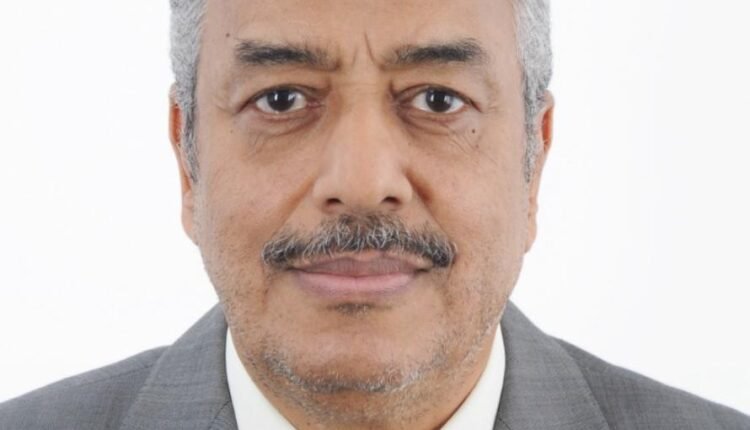
Dr. Ismail Satti
In recent months, a Sudanese group calling itself “Sumoud” has increased its overseas political activity through a series of foreign visits undertaken by several of its leading figures, including Abdalla Hamdok and Khalid Omer. These engagements have taken place across France, the Netherlands, Germany, the United Kingdom, and South Africa, where members of the group have appeared on political, academic, and media platforms.
During these appearances, “Sumoud” has consistently presented itself as a representative voice of the Sudanese people — despite having no electoral mandate, legal authorisation, or constitutional standing to make such a claim.
The most consequential of these engagements occurred in The Hague, where members of the group visited the Organisation for the Prohibition of Chemical Weapons (OPCW) and formally called for an investigation into the alleged use of chemical weapons by the Sudanese Armed Forces. These allegations were made without publicly verifiable evidence and without any legal authority to speak on behalf of the Sudanese state or its population.
This raises a broader and deeply relevant question for Western democracies:
Where does legitimate political expression end, and where does political misrepresentation begin?
Representation Is a Legal Status, Not a Self-Assigned Title
Under international law, political representation is not acquired through activism, travel, or media visibility. It derives from one of three sources:
• An internationally recognised government
• A democratically elected authority
• Or, in rare cases, a liberation movement granted explicit international recognition
Outside these categories, political actors remain just that — political actors, not representatives of a nation.
Measured against these standards, “Sumoud” has no legal standing to speak on behalf of Sudan or to claim to represent its people in international forums.
A Group Without a Mandate
The group’s internal composition further complicates the issue. “Sumoud” is made up of small Sudanese political parties and factions that have never secured a governing mandate through national elections. Even the frequently cited association with the historically significant National Umma Party does not resolve this legitimacy gap, as the individuals linked to “Sumoud” — including Fadlallah Burmah Nasir — remain contested figures within a party that is itself internally divided.
In short, “Sumoud” does not represent a political majority, a democratic consensus, or a unified opposition. Its claim to speak for “the Sudanese people” is therefore a political assertion rather than a democratic fact.
Listening Is Not Endorsement — But Confusion Has Consequences
Western institutions are right to engage with a broad range of political voices. Openness to dissent is a defining feature of democratic systems.
However, engagement should not slide into implicit validation.
When unelected groups are allowed to present themselves unchallenged as national representatives — particularly on official or semi-official platforms — it risks:
• Misleading public opinion
• Distorting foreign policy debates
• Undermining the principle of democratic legitimacy that Western systems themselves are built upon
This risk becomes acute when the claims involved are not merely political opinions, but serious international accusations.
Serious Allegations Require Standing and Evidence
Allegations involving chemical weapons are among the gravest in international law. They carry legal, security, and humanitarian implications far beyond domestic politics. Such claims demand:
• Credible evidence
• Clear legal standing
• And institutional accountability
When groups lacking mandate or authority advance such allegations through international mechanisms, they do more than target a government — they risk politicising institutions designed to uphold impartial justice.
This is not a question of silencing criticism. It is a question of protecting the integrity of international legal bodies from being drawn into political disputes driven by self-appointed representatives.
Why This Matters to Western Democracies
The issue at stake is not Sudan’s internal conflict alone. It is about standards.
Western democracies derive their legitimacy from elections, the rule of law, and accountability. Allowing unelected groups to claim national representation without challenge erodes these same principles abroad — and, by extension, weakens them at home.
Freedom of expression must remain protected.
But freedom of expression is not freedom to impersonate a people.
Shortlink: https://sudanhorizon.com/?p=10847