

What Dr Kamil Idris Should Have Said?”
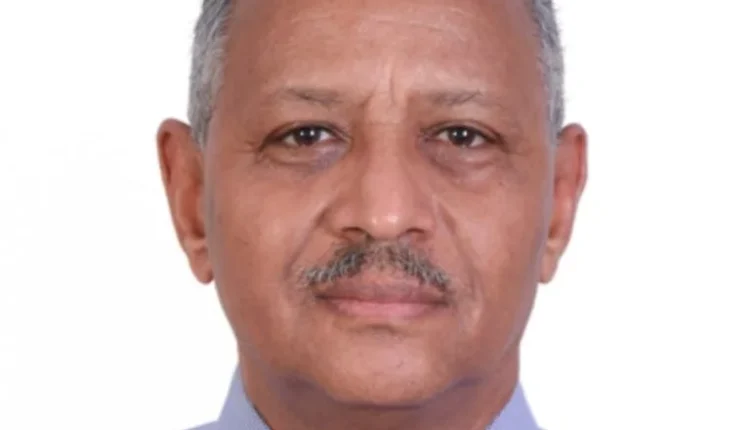
Al-Obeid Ahmed Murwih
On 13 December of this month, Sudan formally requested that the UN Security Council convene a session to discuss developments in the country. This request was not disclosed until only one day before yesterday’s session, when it appeared in a press bulletin issued by the Council itself.
Based on this fact, it can be said that, from that point onward, the Sudanese leadership had resolved to respond to the international Quartet’s proposal on 12 September for a humanitarian truce and ceasefire—but on its own terms. It decided to present this “special approach” to the Security Council, perhaps at the advice of Sudan’s friends within the Quartet itself, namely the Kingdom of Saudi Arabia and the Arab Republic of Egypt.
What concerns us in this introduction is the observation that Sudan had ample time to prepare the messages it wished to convey to the Security Council through the speech to be delivered by the Prime Minister, in which he would outline his plan for achieving peace. This was not only because Sudan itself had requested the session, but also because it had accumulated sufficient experience to know the narratives that certain states habitually present to the Council regarding the war that has been raging in the country for nearly three years. It also knows the types of procedural manoeuvres that states such as Britain routinely employ in dealing with Sudan’s requests before the Council and with cases raised by others.
The question therefore, is: did Sudan succeed in devising a prior scenario for how the session would unfold, and did it take the necessary precautions to present its case at yesterday’s open session in a manner that would remind the forgetful—and those who choose to feign forgetfulness—of the true nature of what has been happening in Sudan since April 2023? Or was what the Prime Minister presented less than what was required? And, fundamentally, what is the required standard against which this can be measured?
If we set aside what was said by the Russian and Algerian representatives—and, to some extent, the Chinese representative—among the Council members, and add to this exception what was said by the Egyptian and Turkish representatives who attended yesterday’s session as non-members, then all the other speakers from member states adopted the narrative of “two parties”. They portrayed the Sudanese Armed Forces as merely a “party” fighting another party, albeit with variations in how responsibility for violations and atrocities was apportioned between the two sides.
Yet the Prime Minister’s statement, which came shortly before the conclusion of the session, paid no attention to this framing. He did not wish to depart from the pre-written text, with its polished phrasing and rhetorical cadence, to say to these representatives: you contradict yourselves when you speak of the need to preserve Sudan’s sovereignty and territorial integrity while at the same time equating its national army—constitutionally mandated to safeguard sovereignty and territorial integrity—with a faction that was once part of it, then rebelled against it and transformed into a gang that practises killing and terror, and that has committed every conceivable war crime and crime against humanity.
He did not tell them that they are wrong to equate the legitimacy of a regular army acquiring weapons from any country with the flow of arms to a rebel militia through a specific state, in blatant defiance of relevant UN Security Council resolutions.
The Prime Minister did not choose to tell the US representative—who presented the Sudanese army as being ahead of the Rapid Support Forces in committing violations—that he would not respond to these hollow accusations against Sudan’s army, but would instead refer him to what has been documented by The New York Times, revealed by the Humanitarian Research Lab at Yale University, and stated by Dr Nathaniel Raymond regarding RSF crimes in Darfur.
Nor did he choose to tell the French representative that he should consult France 24’s investigations into European weapons that violate Security Council Resolution 1591 and flow into Darfur, and the latest investigative report published by Agence France-Presse on the routes of Colombian mercenaries from Bogotá to Darfur, in order to understand who the real “party” committing atrocities and violations is.
He did not tell the British representative that the companies recruiting mercenaries who commit atrocities in Darfur are registered in the capital of his country and operate their criminal activities from there—and that, if he wanted more details, he could read The Guardian.
The Prime Minister did not tell Council members that this very august body has failed, for eighteen months, to enforce its Resolution No. 2736 and compel the Rapid Support Forces militia to lift its siege of the city of El-Fasher. Nor did he say that it has failed for more than a month to deliver any form of assistance to the people of El-Fasher after RSF gangs entered the city. At the same time, its residents were being slaughtered before the eyes of the world—so much so that their blood was visible from satellites.
Nor did the Prime Minister tell members of the Security Council that the real perpetrator of all the crimes committed against Sudanese civilians has a representative sitting among them in that very chamber; and that this war, about which they speak of the need to end, could have been stopped two years ago were it not for the uninterrupted Emirati support to the Rapid Support Forces militia. This support has involved mobilising Sudan’s neighbouring countries to the west, south and east, using seas, airspace and land routes, and providing a range of advanced weapons and armies of mercenaries from Africa and Latin America.
When the Prime Minister spoke about integrating former RSF fighters as part of the plan he presented, he did not address the issue of the “foreign fighters”—the mercenaries brought by the United Arab Emirates to fight in Sudan through a complex network of companies, some of which are based in the UAE itself. Nor did he call for their prosecution, or for the prosecution of those who brought them.
The Prime Minister did not describe the war being waged by the Sudanese people and their army as a war of aggression, nor did he name the aggressors. He left the session without returning to the press briefing podium to answer the question he had declined to answer before the session—regarding the Emirati role—or to comment on the proceedings of a session whose organisers deliberately allowed the representative of the United Arab Emirates the final word, so that he could once again repeat his country’s worn-out claims about Sudan and its army, and lecture the audience about civilian rule and democratic transition.
This, to me, is what the Prime Minister ought to have said—not necessarily in the precise manner outlined above, but at least as key points. In my view, failing to address these issues in a session like yesterday’s is difficult to explain.
Shortlink: https://sudanhorizon.com/?p=9839