

What Comes After the Collapse of the RSF’s Political and Military Project? (1–2)
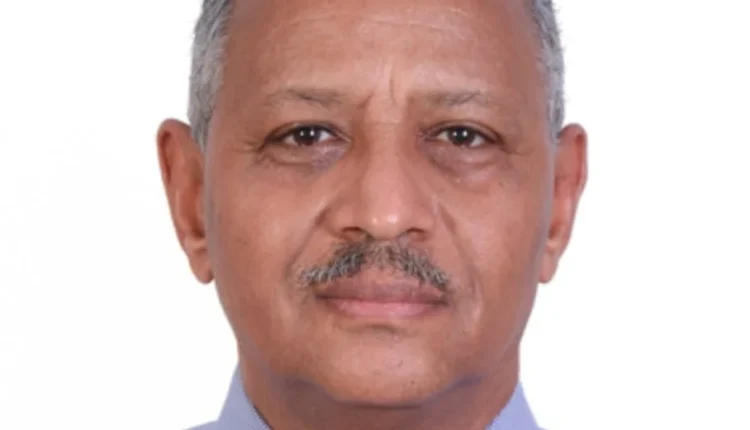
Obeid Ahmed Murawih
In late October 2023, I wrote an article published by Al-Araby Al-Jadeed entitled “The War of Intersecting Agendas in Sudan”. The article remains available online for anyone wishing to read it in full. In it, I attempted to examine the “identity” of the war that had erupted in Sudan and had, at that time, been raging for six months.
After providing some background on developments in Sudan following the fall of the Salvation regime, I concluded the article with two paragraphs which I believe are worth reproducing today, exactly as they appeared, to build upon them in this article:
“Perhaps, when we come to define the ‘identity’ of the war unleashed by the rebellion of the Rapid Support Forces, we will find that it constitutes an interconnected mixture of all these agendas combined. It includes an element of centre-periphery conflict, given the slogans adopted by the rebels themselves and their supporters. It is directly linked to the agendas of the civilian forces that formed the political incubator of the rebellion, including imposing secularism as part of defining the relationship between religion and the state. It is also part of the agendas of regional and international powers that have long openly declared their war against the Islamic system of government in Sudan, insisted on linking it to terrorism, devoted themselves to combating what is known as political Islam, and sought to politically, economically and socially engineer Sudanese society and restructure its institutions—even through military coups and rebellions. At the same time, it is a war driven by international and regional ambitions to control Sudan’s immense wealth and dominate its geopolitical position, using both to serve their agendas in international competition.”
“To put it more plainly, it is America’s war against the expansion of Chinese and Russian influence in Africa; Britain’s war to restore its influence in one of its most important former colonies after leaving the European Union; France’s war to settle accounts with Russia in the African Sahel and restore its dominance over its former colonies; the war of certain Arab regimes against political Islam in Sudan and their attempt to gain greater influence there; Israel’s war against the Khartoum of the Three Noes; and the war of Sudanese secularists and liberals against Islamic trends in their country. It is a war of intersecting agendas, mixing all these and other elements. But it is certainly not a war to restore civilian rule, nor a war to establish democracy in Sudan.”
The essence of these two paragraphs, reinforced by events and statements during the more than three years that followed the outbreak of the war, is that when the Rapid Support Forces attempted to seize power on 15 April 2023, their project was not merely local, but also regional and international. In planning, the “project” drew on an accumulated body of experience—both successful and unsuccessful—from international powers that had devoted themselves to combating what they call “Islamic extremism” and “political Islam”.
These powers confronted the outcomes of the Arab Spring revolutions, turning them into nightmares and extinguishing the dreams of peoples who had aspired to freedom, liberation from authoritarian rule, freedom from Western domination, and independence from mortgaging their destinies and resources to colonial powers and their agents. The evidence for this is extensive, but I do not wish to dwell upon it here lest I move too far from the subject of this article.
It had been clear to every observer of Sudan’s political scene, from the earliest days following the military coup led by the generals of the Salvation regime in April 2019, that the external powers controlling the political chessboard in Sudan—foremost among them the United States and Britain—had settled upon the idea that the actual ruler of the country should be the commander of the Rapid Support Forces. In their view, he alone could dismantle the structure of the former regime and the institutions of the post-independence state of 1956, including the Sudanese Armed Forces.
He would then, according to this view, be able to re-engineer the country’s political, economic and social conditions and construct a Sudanese model drawing upon the lessons of American failures in Afghanistan and Iraq—countries invaded by the United States, whose governments were overthrown in the name of combating terrorism and establishing democracy, only for events there to end as everyone knows.
Perhaps one lesson from those failures was that the Abu Dhabi leadership should assume responsibility for managing the project of transformation and control in Sudan, acting on behalf of the external powers for whom overthrowing the Salvation regime had long been a primary objective. This would have been based on Abu Dhabi’s perceived success in leading the “counter-revolution”.
Because the mobilisation preceding the overthrow of the Salvation regime, and the slogans instilled in the masses who longed for change, centred on freedom, peace, justice and democratic transition, efforts were made from an early stage to portray the Rapid Support Forces and their leadership to the public as the force capable of guaranteeing the transition and transformation. They were also presented as representatives of the “periphery” within the temporary power-sharing arrangement.
Accordingly, civilian forces opposed to the Salvation regime were mobilised under the banner of the Forces of Freedom and Change to take the lead and promote the project. Meanwhile, the Rapid Support Forces remained a state within a state, particularly after their direct subordination to the Sudanese Armed Forces was abolished.
The offices and residences of the “Commander” became places of pilgrimage for diplomats and envoys, sometimes for co-ordination and sometimes simply for reconnaissance. This continued even while he spent months away from Khartoum and beyond the reach of state institutions whose loyalty was regarded with suspicion, as happened when he remained for three months in the city of El Geneina.
Thus, the Rapid Support Forces were no longer merely a force supporting the transition. They had become a political actor whose capabilities continued to expand to the point of threatening to engulf the entire state and redirect its compass in a manner fundamentally different from all previous transitional experiences in Sudan.
Militarily, reliable accounts agree that the original plan of 15 April 2023 was a swift coup, meticulously prepared and reviewed only days before its implementation during Hemedti’s visit to Abu Dhabi, where he remained for more than ten days and, towards the end of his stay, met the President of the United Arab Emirates, Sheikh Mohamed bin Zayed, and his National Security Adviser.
The signs of a potential confrontation had not been concealed beforehand. Abdul Rahim Dagalo’s statements and warnings to Burhan, along with remarks by Hemedti to diplomats and politicians who met him, confirmed the signs of a potential confrontation, suggesting that Burhan must implement the Framework Agreement or be “handcuffed”—or even killed.
But events took a different course. The plan for a swift coup failed, and the army’s headquarters and military garrisons withstood the surprise attack. Meanwhile, civilian landmarks and government premises in the capital were seized, including the Republican Palace, the Prime Minister’s Office, and the radio and television headquarters.
The plan therefore shifted to an attempt to defeat the army in its own strongholds and seize its military bases—a story everyone followed day by day, indeed hour by hour.
By the end of the war’s first year, only four of Sudan’s eighteen states—River Nile, Northern, Red Sea and Kassala—were entirely free of RSF military presence. All other states were either wholly or partially under RSF control. For this reason, the rebel militia’s leadership and its supporters among local political forces spoke with complete confidence that capturing the remaining Sudanese army garrisons and defeating the army was merely a matter of time.
When they said this, they were aware of the scale of the military and logistical supplies reaching the Rapid Support Forces. At the same time, they knew an undeclared blockade had effectively been imposed on the army as it struggled to obtain even the minimum quantities of weapons and ammunition needed to enable its garrisons to withstand the daily attacks they faced.
Yet despite its military superiority during the first year of the war and its continued image as the party capable of imposing its political will through military force, the RSF’s portrayal of itself as a defender of civil rights and public freedoms began to collapse within the first days and months.
Before people had recovered from reports of looting, robbery, kidnapping, enforced disappearance and killings allegedly inflicted upon large sections of Khartoum State’s population by RSF forces, they were shocked by reports of massacres targeting the Masalit in El Geneina and Ardamata. They watched live footage of the killing of the Governor of West Darfur, Khamis Abakar.
The United Nations Fact-Finding Mission documented the killing of hundreds and the displacement of tens of thousands, alongside testimony concerning the ethnic targeting of civilians.
Over time, the image of the Rapid Support Forces changed from that of a force supporting transition and democratic transformation into that of a brutal force accused of committing every type of war crime and crime against humanity.
As a result, Sudan experienced what the author describes as the world’s largest displacement and refugee crisis, with more than 13 million Sudanese fleeing areas controlled by the Rapid Support Forces, either to areas controlled by the Sudanese army or outside Sudan.
Public resentment against the RSF and against the political forces that mobilised their resources and devoted their expertise to defending it grew steadily. Indeed, prominent figures associated with these forces reportedly began avoiding public places where ordinary Sudanese were present in large numbers.
Nor did ordinary Sudanese stop there. Many mobilised themselves in support of the Sudanese Armed Forces, either by taking up arms alongside them or by supporting their position through media and political platforms inside and outside Sudan.
The Rapid Support Forces’ political losses did not end there. Because of the atrocities attributed to them, their alleged crimes came under increasing scrutiny from major international newspapers, television networks, global monitoring bodies, human rights organisations and United Nations agencies.
The RSF increasingly became a force shunned by others and gradually began to lose trust and sympathy, even within the communities in whose name it claimed to be fighting and whose rights it purported to seek. This was particularly so after those communities themselves suffered devastation and destruction, and large numbers of their sons and young people were killed, leading many, in the author’s view, to conclude that the leadership of the rebel militia had been selling them illusions.
To be continued…
Shortlink: https://sudanhorizon.com/?p=17383