

The UAE: Wealth and the Flash of Influence — Why Did It Fail in Sudan?
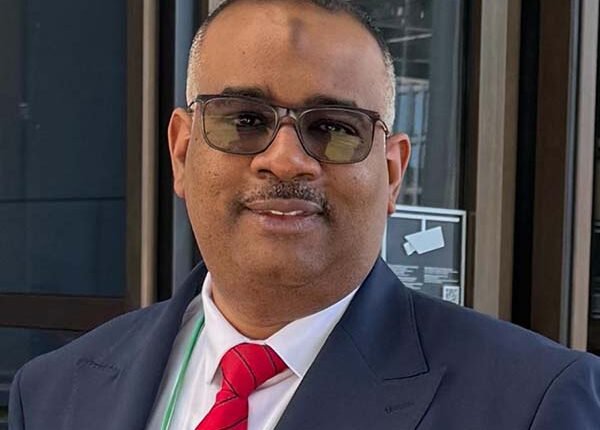
Mohannad Awad
The Emirati experience in the region was never a series of passing political manoeuvres; rather, it was an explicit attempt to build rapid influence based on money, ports, façades, and momentary alliances. Yet it was always an effort driven by desire and lacking experience—rushing ahead without proper reading, moving without sound assessment, and assuming that wealth alone could compensate for the absence of a deep state. Nowhere has this trajectory been exposed as clearly as it has in Sudan.
Despite its striking rise, the UAE has remained a state that possesses the façade but not the depth, the tools of influence but not strategic thought, money but not the political architecture required to manage highly complex regional files. When Abu Dhabi joined the UN Security Council as a non-permanent member for the 2022–2023 term, the scene appeared, on the surface, to be an achievement. In reality, it revealed the gap: a polished diplomatic presence abroad, but with no clear political school behind it—no state-produced project, no guiding vision. The sessions chaired by the UAE reflected its political reality: disciplined performance, well-ordered language, yet no intellectual impact, no initiative, no measurable imprint. A presence like a camera flash… not a light.
The UAE carried this same mindset into Sudan. A state that deals with politics as it deals with investment: quick contracts, powerful tools, variables that can be bought, and agents that can be sponsored. But it forgot that Sudan is not a “project” or a “deal”. Sudan is an expansive country, with a central army, a deep administration, a socially layered society, and a political system which, however weakened, remains rooted in decades of institutional continuity.
From 1989 until the fall of the Inqaz regime, the UAE’s relationship with Sudan was not a partnership but a relationship based on “function”. Sudan was a sanctioned state, a strangled economy, and a financial system breathing through narrow channels. The UAE—by virtue of its wealth and its image as a financial hub—became an open gateway for Sudanese funds: individual remittances, corporate liquidity, government deposits, and funds seeking a “safe haven” that found Emirati banks. But this was not an environment of cooperation; it was one of absorption. The Sudanese wealth that flowed out was not used to protect Sudan, but to manufacture Emirati financial influence without any political responsibility towards the partner.
Then came the decisive moment in 2018—the moment when the regime collapsed from within before it collapsed from without. The National Congress Party fragmented into currents: a reformist current seeking political renewal; a current rejecting Bashir’s re-nomination; a current clinging to continuity; and security actors managing a hidden struggle. The Shura Council was not a decision-making institution but an open arena of conflict. It was a golden opportunity for any state with vision: to support a current and open a transition path; to rebalance influence within the institutions of power; or to back political arrangements that would preserve the state and re-produce authority in a calculated manner.
But the UAE, in its habitual haste, failed to see the opportunity. It did not support transition. It did not support reform. It did not protect the state. Instead, it moved directly to support a force that does not represent the state: an armed actor outside the institution. This is the mistake no state with even the most basic strategic understanding would make. Every professional state knows this truth: you can buy a party, buy a decision, buy an alliance… but you cannot buy a nation through a militia. A militia is not a tool of influence; it is a tool for destroying the state.
Abu Dhabi believed Sudan could be engineered like a port or a company. It failed to grasp that Sudan is not a blank page, not a political vacuum, not a body without memory. It failed to understand that Sudan’s army is neither weak nor disposable, but the backbone of a state dating back to 1925, with its own doctrine, character, and deep roots across society. Betting on a parallel force was not merely a mistake—it was political suicide.
The Emirati slogan of “combating political Islam” was nothing more than a cover. In 2018, Sudan’s Islamic movement was not in a position of strength; it was weak, fragmented, and politically and intellectually exhausted. There was no ideological threat that required military intervention or the empowerment of a militia. What occurred was not a confrontation with Islamists—it was a confrontation with the state itself.
Behind the scenes, there was a clear desire to reshape the balance of power in Sudan:
weakening the army,
hollowing out the centre,
opening up the geography,
dismantling institutions,
and creating a vacuum that would allow the expansion of influence along the Red Sea and at vital gateways.
Whether declared or not, these objectives manifested themselves on the ground: emptied cities, inflamed peripheries, a collapsing economy, a society driven towards migration and displacement, and a state dragged to the brink of disintegration.
When the war erupted, the UAE was unprepared to grasp the magnitude of the error it had committed. The force it had backed slipped beyond control. Khartoum fell because it was struck from outside the state. Chaos spread not as the result of a natural internal conflict, but because of the injection of a power alien to the state’s structure. The entire operation then shifted from “rapid influence” to a “long quagmire” from which there is no easy exit.
Today, Sudan is fighting to restore the state. The UAE, meanwhile, is fighting to restore its image. Sudan is fighting for its existence, while the UAE faces hard questions: Why did it do this? How did it miscalculate? How did it find itself at the heart of a conflict whose maps it did not understand? And how did it allow itself to shift from a state seeking influence to one accused—consciously or unconsciously—of participating in the dismantling of a major Arab state?
Here, the true meaning of the title becomes clear:
Wealth produces a flash—but it does not produce a state.
Rapid influence creates noise—but it does not create strategy.
Money opens doors—but it does not grant wisdom.
And a state that lacks a deep political institution will fail every time it attempts to play a role larger than its true capacity.
The UAE failed in Sudan because it did not understand it.
It failed because it entered with tools that destroy states rather than build them.
It failed because it sought to shortcut history with weapons and money.
And Sudan is not a state that can be shortened—
it is a state that reorders those who try to shorten it.
For this reason, Sudan will return—because it is a state with deep roots.
But the UAE will be forced to reconsider everything it thought was influence, only to discover that it was nothing more than a fleeting flash on the surface of a sea far deeper than itself.
Shortlink: https://sudanhorizon.com/?p=10898