

The Road to Parliament
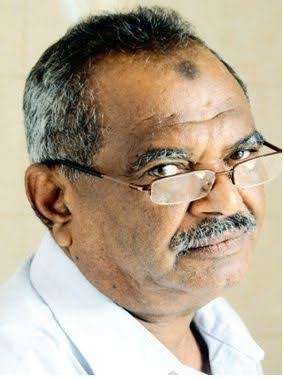
Abdullatif Al-Bouni
The Constitutional Document, signed in 2019 between the Forces of the Revolution—represented by the Freedom and Change coalition—and the Military Council, stipulated the establishment of a legislative body within 90 days of the start of the transitional period. It provided that members of this parliament would be appointed rather than elected, granting the Freedom and Change coalition 67% of its membership—effectively the lion’s share.
Pending the formation of that proposed assembly, legislative authority was vested jointly in the Sovereignty Council and the Council of Ministers, sitting together in a single chamber. What transpired, however, was that the parliament was not formed—not after two months, nor after two years. At the same time, the two councils did not exercise legislative functions as they should have. As a result, a vital pillar of governance during that period collapsed.
The absence of a legislative authority leaves the remaining two powers—executive and judicial—in a state of institutional orphanhood. The executive loses oversight and accountability; the judiciary lacks the laws it is meant to interpret and apply. Moreover, the judicial branch itself was incomplete, lacking a Higher Judicial Council and a Constitutional Court. Meanwhile, the executive branch became preoccupied with foundational matters that exceeded the capacity of a transitional period.
In my assessment, neglecting constitutional construction during the transitional period was among the principal causes of the instability that characterised that phase. The consequence was the tragic developments that dismantled the transition and culminated in the outbreak of war on 15 April 2023—an event that nearly brought Sudan itself to ruin, were it not for divine providence.
Naturally, the war created a new reality. This led to amendments to the Constitutional Document in 2025. Following the same general approach as the 2019 document, the 2025 amendment also provided for the establishment of an appointed legislative council, while maintaining that the Sovereignty Council and the Council of Ministers would exercise legislative powers until the new body was formed. However, unlike the original document, the amendment did not specify a deadline for establishing the legislative authority. More significantly, it vested the power to appoint members of the legislative council in the Sovereignty Council itself. In contrast, the 2019 document had assigned appointment authority to multiple parties—most prominently the Freedom and Change coalition by name.
Several weeks ago, reports—if one prefers, leaks—circulated suggesting the dissolution of the Sovereignty Council. Yet these leaks did not clarify where its powers would be transferred: to a president appointed by the council before its dissolution, or to the anticipated legislative council.
The proposal to dissolve the Sovereignty Council was met with coordinated opposition, particularly from parties to the Juba Peace Agreement, and was shelved—at least temporarily. Now, the idea of forming the legislative council—call it a parliament, if you wish—has resurfaced.
Lieutenant General Abdel Fattah al-Burhan, in his political capacity as Chairman of the Sovereignty Council, has formally presented the matter to the Democratic Bloc. However, he did not grant it the privileged status that the Freedom and Change coalition had enjoyed under the original document. Perhaps—though I cannot say for certain—that bloc is seeking, discreetly, to become the ultimate authority in the anticipated council.
In any event, the issue of the legislative council is now on the table. Some have enthusiastically welcomed it, viewing it as a cornerstone of constitutional construction that could place the transitional period on the right track. Others have attacked the idea, regarding it as an entrenchment of rule by a single individual or faction—namely, whoever would appoint its members. There are also those awaiting an international “formula” to determine Sudan’s internal trajectory; they would see the proposed council as obstructing such an arrangement.
Under these circumstances, it would not be surprising if the question of this council became part of the broader regional contest. One axis may endorse its formation; another may oppose it. The matter is susceptible to escalation.
A crucial question arises: if this appointed legislative council is formed, will the current Sovereignty Council become merely a ceremonial body? Historically, even in democratic periods when parliament was directly elected, the Sovereignty Council resisted becoming purely symbolic. One recalls the rivalry between Ismail al-Azhari and Muhammad Ahmad Mahjoub during the second democracy, and—albeit to a lesser degree—the tensions between Sadiq al-Mahdi and Ahmed al-Mirghani during the third democracy. May God have mercy on them all. How much more complex would such a dynamic be with a Sovereignty Council containing a formidable military component emerging from war?
Some may therefore propose—now or from within the anticipated council—the establishment of a presidential republic outright. I shall not elaborate further; the implication is clear enough.
A final word: whether the legislative council is appointed or elected, it will likely remain under the influence of the same Sudanese elite that has long been entrenched in political life. If there is a structural flaw, it lies within that elite. Let us hope that, this time, it proves us wrong—and fears God in its service to the people.
The title of this article is borrowed from a book written by President Ismail al-Azhari, in which he explained the laws and regulations governing parliaments and how they function—a practical manual of parliamentary life.
Shortlink: https://sudanhorizon.com/?p=11189