

The Peace We Seek: From Ending the War to Rebuilding the Nation
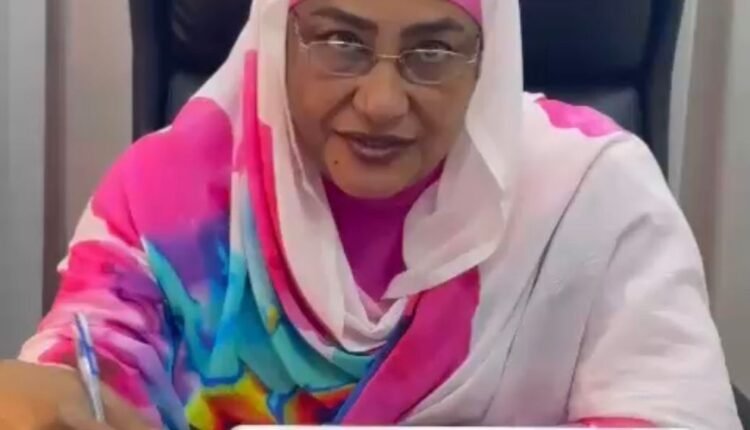
Dr Huwaida Shabbo
The question preoccupying Sudanese people today is no longer: When will the war lay down its arms? Rather, a deeper and more urgent question has emerged: What kind of peace do we want? How can it be built? And in whose interest will this peace be?
The experience of nations, as recorded throughout history, confirms that the silencing of gunfire does not necessarily signal the birth of stability. Peace built on fragile foundations quickly turns into a temporary truce, often preceding a new eruption of violence. Time and again, the world has witnessed agreements signed on paper that failed the test of reality, only to be replaced by renewed cycles of conflict.
The war that erupted in Sudan was not merely a military confrontation with an armed rebellion; it was a dramatic reflection of long-standing structural imbalances: a weak state, eroded institutions, and the absence of a unifying social contract regulating the relationship between ruler and ruled. The war, with all its humanitarian tragedies and grave violations, exposed the depth of Sudan’s crisis and the fragility of a state that, for years, existed more in form than in substance.
From this perspective, any serious discussion of peace cannot be reduced to a ceasefire or a rearrangement of forces on the ground. Rather, it must reach towards a broader and deeper horizon: redefining the relationship between state and society, rebuilding trust among political forces, addressing historical imbalances between centre and periphery, and healing a collective memory exhausted by war.
First: Context — What Has the War Revealed?
Before formulating a vision for peace, it is essential to reflect on the harsh realities revealed by the war. Any attempt at a remedy without an accurate diagnosis will remain superficial and temporary.
The first reality is that the Sudanese state—both its civil and military institutions—has never fully formed as a modern state based on a clear social contract, firm rule of law, and equitable political representation. Instead, it has often functioned as a fragile entity governed through networks of loyalty and narrow interests, where conflicts are settled by force rather than institutions.
The second reality is that social and political divisions did not arise from the war itself; they were deeply embedded within society, fuelled by years of marginalisation and poor governance. The war merely brought these fractures violently to the surface.
The third reality is that the war broke out during a fragile political transition that lacked the conditions for stability. Sudan appeared to be attempting to cross a complex phase without sufficient tools. This period demonstrated that toppling a regime does not automatically produce a mature alternative, nor does it prevent power struggles.
The most painful reality remains that the ordinary Sudanese citizen—who had no part in decision-making—has paid the highest price: forced displacement, loss of loved ones, deteriorating livelihoods, and lives suspended between internal displacement and exile.
Second: Defining Peace — Beyond a Ceasefire
Many reduce peace to the mere absence of war, but this understanding fails to grasp the complexity of the concept. Contemporary peace studies distinguish between several levels:
Negative peace: the cessation of direct violence and absence of military operations—a necessary but insufficient condition.
Positive peace: the establishment of just institutions that address the root causes of conflict and ensure social and economic justice.
Transformative peace: the deepest level, involving the reshaping of social relations, restoration of trust, and healing of psychological and collective wounds.
What Sudan requires today is not merely the cessation of fighting, but a comprehensive peace project that penetrates the depth of social and political structures and rebuilds trust between societal components and between citizens and the state.
Third: Philosophical Foundations — What Do Thinkers Say?
Human intellectual heritage offers important analytical tools for understanding the conditions under which states endure.
Ibn Khaldun linked the survival of states to what he termed ‘asabiyyah—social cohesion. When this cohesion erodes due to injustice or division, the state begins to decline. This insight is strikingly relevant to Sudan.
Jean-Jacques Rousseau argued that political legitimacy derives not from force or the ruler’s will, but from the general will—the collective interest of society. Any system that excludes large segments of the population loses its legitimacy.
John Rawls proposed the idea of justice through the “veil of ignorance”, whereby individuals design a political system without knowing their position within it, ensuring fairness for all, especially the most vulnerable.
Islamic thought also provides a moral framework, in which principles such as consultation (shura), justice, and the public good form the foundations of a just political order—values that can contribute to a balanced model of peace grounded in participation, fairness, and human dignity.
Fourth: A Memory Burdened with Pain — How Do We Address the Past?
The greatest challenge facing any peace process in Sudan is the nature of its collective memory, deeply scarred by accumulated suffering: the wounds of Darfur, the Nuba Mountains, and Blue Nile; the repression during the December Revolution; and the atrocities of the recent war.
Each side carries its own narrative of victimhood. Unless these competing narratives are addressed honestly and responsibly, buried resentment will inevitably resurface.
Here, truth and reconciliation commissions emerge as an essential mechanism—not to abolish justice, but to broaden it to include acknowledgement, accountability within a fair legal framework, and pathways towards reconciliation based on truth rather than denial.
However, reconciliation must not mean impunity. A peace that silences victims is morally unacceptable and practically doomed to fail.
Fifth: The Dilemma of Exclusion — Who Sits at the Table?
One of the most contentious issues in any peace process is who should be included—and who, if anyone, should be excluded.
In Sudan, deeply conflicting views collide. Some argue that Islamists and their allies from the former regime cannot be partners in rebuilding the country. Others contend that certain actors from the transitional period were complicit—through alliances or silence—in prolonging the war.
The difficult truth is this: excluding any major social or political current from the peace process comes at a high cost. Islamists are not merely a fallen regime but a social current present across the country. Likewise, revolutionary forces represent a broad segment of youth and women who carried aspirations for change.
Inclusion does not negate accountability. Dialogue and criminal justice processes can—and must—proceed in parallel. Political inclusion and legal accountability are not contradictions, but complementary pillars of transition.
Sixth: International Experiences — What Does the World Tell Us?
South Africa — When the victor chose reconciliation
After the end of apartheid in 1994, Nelson Mandela and his allies could have pursu
Shortlink: https://sudanhorizon.com/?p=12621