

The National Dignity Project: One Army and Guaranteed Rights
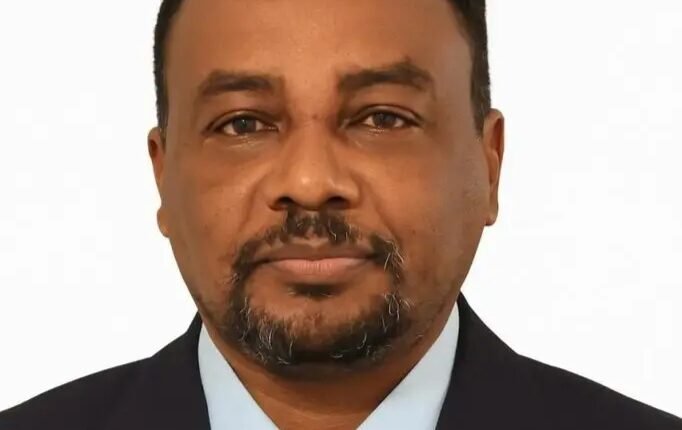
Brigadier of Police (Ret.) Omar Mohammed Osman
Yesterday I listened to the address delivered by Lieutenant General Yasser Al-Atta, Member of the Sovereign Council and Assistant Commander-in-Chief of the Sudanese Armed Forces, in which he focused on ending the phenomenon of multiple armed forces and moving towards a unified national army, alongside the activation of integration and demobilisation programmes in accordance with strict military standards.
The General emphasised that the armed forces must truly be national in character, equal in rights and duties, with no place for regionalism or racism, and fully committed to protecting citizens and safeguarding their dignity and property, for this is a sacred duty that cannot be neglected.
His remarks acquire particular significance when we recall the suffering endured by the Sudanese people during the war — the violations and humiliation inflicted by the rebel Rapid Support Forces militia, and the deep social fractures that followed. The General’s words place human dignity and the protection of citizens at the heart of the mission of the national institution, reaffirming that the state is not built merely upon authority, but upon the protection and respect of citizens’ rights.
Sudan’s experience has demonstrated that a state cannot achieve stability while more than one armed force exists outside the unified national framework. A single national army is therefore no longer a political slogan but an existential necessity for the survival of the state. The past years have also revealed the fragility of certain state institutions, showing that governance does not depend on individuals — regardless of their abilities — but on strong and enduring institutions. When institutions weaken, any political disagreement becomes liable to evolve into a national crisis.
In times of crisis, the real need for professional security institutions becomes evident, foremost among them the police forces and the General Intelligence Service. Together they form an integrated system for protecting the state and society. They also play a direct role in safeguarding human rights and human dignity, and in ensuring the continuity of public life even under the most difficult circumstances.
These institutions must work to promote the values of disciplined freedom and human rights, in accordance with both national and international law, while recognising the country’s ethnic, racial, and cultural diversity. Such principles must guide every police or security operation. The responsibility for upholding them lies first with leadership, so that they become firmly embedded in the conduct of every officer, ensuring the protection of the state without compromising the dignity of its citizens.
The war has revealed many truths. The General’s remarks highlighted the problem of multiple armed forces, the unity of the national institution, and its duty to protect citizens. Nations that are capable of learning from their experiences are those able to rebuild themselves on solid foundations, while guaranteeing the dignity of every citizen.
Today, Sudan needs a national project centred on dignity and national belonging — a project that goes beyond slogans and translates into institutional action. Such a project must redefine the relationship between citizen and state based on mutual respect, justice, and transparency.
For the deepest wound is the wound of national dignity. Unless the dignity of the individual is restored, sovereignty cannot be reclaimed, nor can Sudan be rebuilt.
We conclude with these words:
“Nations are not built with stones before the dignity of the human being is restored. Sovereignty cannot be regained unless the sense of belonging is revived. The project of national dignity is the true beginning of rebuilding Sudan — a state whose authority is feared only by those who break the law, and where no citizen is humiliated under any banner.”
Shortlink: https://sudanhorizon.com/?p=11926