

The Narrative of War and Prospects for Peace: “A Series of Articles Analysing the Political Scene and Anticipating the Future” (1-7)
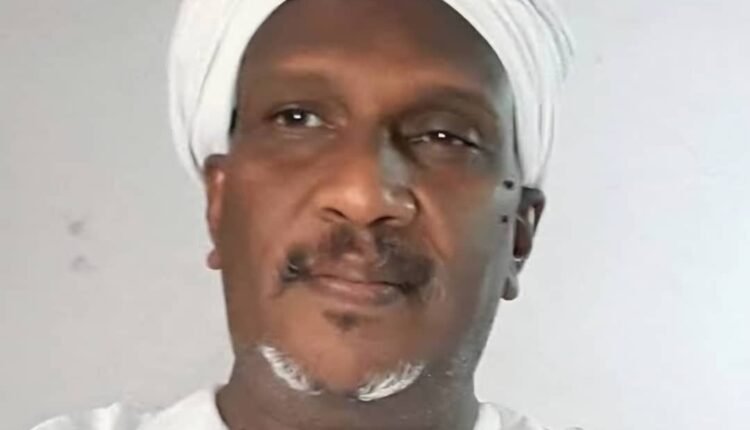
Taj Eddin Banaga
Introduction:
In late 2018, the spark of revolution ignited, intensifying at the beginning of 2019 before easing off somewhat. One of the most distinctive features of that period was the excessive violence used against a limited number of protesters, to the extent that they were pursued into their homes, resulting in casualties among the youth in various areas.
Later, a significant development occurred when protesters were allowed to enter the General Command Square and stage a sit-in, with police repeatedly attempting to disperse them. Within a week, the security committee issued a statement announcing the dismissal of President Omar al-Bashir and his regime. At that time, most members of the security committee were aligned with the Islamic movement, and what transpired was likely part of a plan aimed at misleading Islamists into believing that the change was under their control, offering an opportunity to renew their political project as occurred after the Naivasha Agreement in 2005.
This arrangement allowed protesters to enter the General Command Square and protect them from the forces attempting to disperse the sit-in until the announcement of the change. The process of removing leaders associated with the Islamists then began, starting with Awad Ibn Auf, Kamal Abdel Maarouf, Salah Abdel Khalek, Omar Zain al-Abidin, Salah Qush, Jalal al-Sheikh, and others, leading to the formation of a Transitional Military Council with new members.
Meanwhile, the Forces of Freedom and Change coalition was in a state of relative harmony, despite internal competition over who would hold complete power. Due to strong popular mobilisation against military rule, the Forces of Freedom and Change faced significant difficulty in accepting a broad partnership with the military. A trend referred to as “soft landing” emerged within it, supported by the Umma Party and Sudan Call forces, in contrast to the radical change trend adopted by the left in the National Consensus Forces coalition. Despite these differences, the partnership was ultimately accepted, and the constitutional document was signed.
Post-Sit-in Phase
After the Islamists were removed from the security committee, the sit-in was viewed by planners as a burden, as it had served its purpose with the fall of the regime. The sit-in was violently dispersed in one of the largest massacres in Sudan’s history, a crime whose details remain obscured to this day. The dispersal of the sit-in paved the way for an agreement between the military council and the Forces of Freedom and Change, as the streets could no longer thwart that partnership.
A partnership government was formed, headed by Abdullah Hamdok, with a Sovereign Council dominated by military elements despite a numerical civilian majority. Actual control remained in the hands of the military component. Although the revolutionaries were ostensibly sidelined, they retained some influence within the resistance committees, and a vengeful, hostile direction emerged within the Committee for Dismantling the Empowerment, which later played out in wide-ranging political conflicts.
In contrast, the influence of the leftist trend within the government increased, provoking the anger of Sudan Call forces, such as the Umma Party and the Sudanese Congress Party, which felt marginalised. Then came the Juba Agreement, which was outside the original planners’ calculations, bringing armed movements into power at various levels and establishing a tripartite partnership among the military component, armed movements, and the Forces of Freedom and Change.
Escalation of Internal Conflict
This partnership was not homogeneous, as each party sought to maximise its gains. The Rapid Support Forces expanded their influence militarily, economically, socially, and externally, becoming a quasi-independent entity whose decisions sometimes conflicted with those of state institutions. Conflicts manifested in the division of the Forces of Freedom and Change and the emergence of what was termed the political declaration, followed by the palace sit-in supported by some power factions.
On 25 October 2021, the head of the Sovereign Council issued decisions to dissolve the government and arrest its leaders, who were later released under a political settlement that effectively removed them from the scene. Power became concentrated in the hands of the military component, supported by some armed movements.
From Settlement to War
The sidelined civilian forces turned to the international community for support, leading to the emergence of the UN envoy Volker’s role and the revival of a transitional constitutional project, which then evolved into a framework agreement. It was notable that both the head and deputy head of the Sovereign Council signed it, signalling a clear division within the military institution, as the army and the Rapid Support Forces were no longer a single entity.
The framework agreement addressed the issue of integrating the Rapid Support Forces into the army, but the parties’ visions were sharply divergent, and mediation efforts failed to bridge the gap. Ultimately, war broke out, with extensive military movements by the Rapid Support Forces within Khartoum and around the General Command, spreading to other areas, amid indications of pre-planned strategies and expected regional and international support.
However, divine will thwarted those calculations, as the armed forces resisted the attempt and disrupted the plan, with the air force playing a crucial role in crippling the militia’s capabilities, leading to the collapse of their initial plans. Nevertheless, the militia resorted to widespread violations against civilians, storming homes, hospitals, and public facilities in barbaric scenes that shook the national conscience.
Popular Movement and Outcomes
This led to an eruption of popular will, with the Islamic current at the forefront of the responding forces, drawing on its organisational and military experience, resulting in a broad movement supporting the armed forces and contributing to the regaining of control over many areas.
With the military plan failing, attempts to impose an alternative project through a new political settlement aimed at sidelining the military institution and handing power to civilians loyal to the external project under the banner of democratic transition continued. However, the primary obstacle to this project remained the Islamic forces, prompting political and legal targeting against them and attempts to classify them as terrorist entities, both domestically and internationally, to eliminate them from the scene entirely.
Conclusion
Thus, conflicts continue, tools change, while Sudan remains a battleground for internal and external tug-of-war, where the path of war and the prospects for peace have yet to be resolved.
To be continued..
Shortlink: https://sudanhorizon.com/?p=9863