

The Media Between Witness and Forger: How Do We Stop Others from Writing Our History?
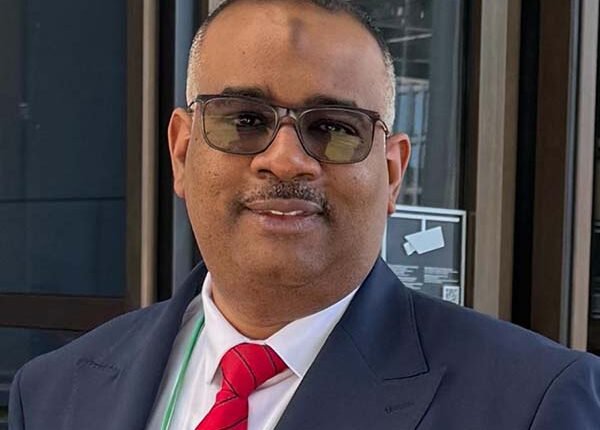
By Muhannad Awad Mahmoud
Amid the tragedy engulfing Sudan — especially in Darfur and its northern regions, where the Rapid Support Forces (RSF) are committing heinous crimes of murder, rape, looting, and forced displacement — there is an urgent need for Sudanese media and all state institutions to unite as one front in the battle for truth. The crisis has gone far beyond politics and alliances; it has become a struggle of conscience, awareness, and national dignity.
The Need for Organised Documentation
The recent horrors in El Fasher and the resulting mass displacement toward Al-Dabba in Northern State reveal the scale of catastrophe facing ordinary Sudanese. Hundreds of thousands — women, children, and the elderly — fled death carrying with them living testimonies of the atrocities they witnessed, many captured on video by the perpetrators themselves.
These recordings, though shocking, are not enough. They must be complemented by institutional and systematic documentation that ensures the evidence is gathered, preserved, and presented with professionalism and national responsibility. Proper documentation is the dividing line between a disputable narrative and an undeniable testimony. Witnesses from El Fasher now in Al-Dabba are living evidence, but only if their stories are collected and safeguarded according to recognised professional standards.
This calls for the establishment of a comprehensive national mechanism — uniting the Ministries of Justice, Foreign Affairs, Interior, and Information, along with human rights bodies, academic institutions, and civil society organisations — to form a professional committee of journalists, investigators, photographers, and lawyers dedicated to gathering evidence and recording testimonies in ways admissible before international courts.
Media as a Battlefield of Truth
Modern history demonstrates that well-resourced and intelligent media campaigns can significantly influence the global perception of conflict. One example is George Clooney’s “Save Darfur” campaign, which documented alleged genocide in Darfur through extensive interviews with refugees in twelve camps in eastern Chad. Though that campaign was later criticised for staging testimonies and political bias, it demonstrated the enormous influence of strategic media. Clooney’s recordings were used as evidence before the International Criminal Court, shaping a global narrative that blamed the Sudanese state for “genocide.”
The lesson is not in Clooney’s integrity, but in the power of organised media — a tool that can move global opinion if managed with skill and purpose.
Owning Sudan’s Narrative
Sudan must now ensure that its own story is told by its own people. The testimonies of El Fasher’s survivors in Al-Dabba are the foundation of that narrative. Without proper documentation, others will fill the void with fabrications.
During a visit to Norway years ago, I met several young Sudanese migrants who had reached Europe illegally. They recited elaborate stories of “killings and rapes in Darfur.” One young man — from Shendi, who didn’t even know where Darfur was — laughed when I asked how he learned these details. He replied, “I memorised them from friends — they make asylum easier. When I reached the ‘rape part,’ I shed a few tears.” Then, with unsettling honesty, he added, “We know they know we’re lying.”
That small anecdote exposes how unchecked falsehoods can evolve into “official records” used to condemn a nation. Such fabrications, spread over decades, contributed to the economic and political sanctions that crippled Sudan for years — depriving its people of education, technology, and growth.
Building a Professional National Archive
Sudan needs a structured national documentation project — not emotional reactions, but disciplined professionalism:
Trained teams that preserve the chain of custody for evidence.
Audio-visual documentation with precise dates and locations.
Protocols for witness protection and engagement of international legal experts to ensure admissibility.
A coherent media strategy to present findings factually and transparently — distinguishing verified evidence from ongoing investigations. Exaggeration weakens credibility; accuracy builds power.
The national media must evolve from a mere conveyor of news into a producer of evidence and shaper of public perception — locally and globally. Coordinated media teams should operate in Al-Dabba and refugee camps, gathering witness statements, mapping destruction, tracking militia movements, identifying perpetrators, and linking all findings with independent legal reports. Such a file would be irrefutable before international bodies.
Truth as the Foundation of Justice
The strength of Sudan’s narrative lies in its truth and precision. The difference between a passing tragedy and a lasting case of international justice lies in the professionalism and sincerity of documentation.
Every survivor from El Fasher now in Al-Dabba is not merely a victim, but a living document — a moral trust that must be preserved so that truth is recorded by Sudanese hands, not rewritten by others.
Conclusion: A National Duty
Unifying the efforts of media, state institutions, and civil society in a national project to document RSF atrocities is not a luxury — it is a moral and historical duty.
History will not forgive silence in the face of crime. Justice does not wait for sympathy — it demands documentation, courage, and truth.
Sudan stands today at a critical crossroads:
Either it owns its narrative and defends its dignity —
or it lets others write its history in voices that do not resemble its own.
Shortlink: https://sudanhorizon.com/?p=8677