

The Dialogue Sudan Needs
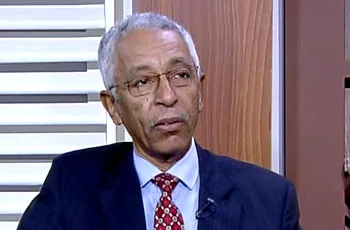
Dr Khidr Haroun
The dialogue that a large section of the Sudanese people have been calling for and looking forward to for decades is one whose ultimate purpose is to reach a consensus on how the country should be governed in a manner that satisfies all its constituent groups and makes them feel equal in their rights and duties, without discrimination based on belief, colour or region. Such a dialogue should also help address the distortions inherited from colonial rule, as well as those arising from subsequent mistakes and failures that have produced disparities in levels of development and fostered feelings of grievance and injustice—feelings that eventually developed into attempts to address them by force of arms.
Dividing such a dialogue into discussions that fall short of this objective is futile. It is like applying bandages to deep wounds in the body, which may ultimately lead to amputation and permanent disability. Perhaps the persistence of partial dialogues, not directed toward viable and comprehensive solutions, led to the situation Sudan finds itself in today—a situation that now threatens the very existence of the country as a state.
This requires a comprehensive dialogue that excludes no one, to ensure that no new group is driven to take up arms in pursuit of justice and fairness. In my view, its agenda should comprehensively address the following issues:
Geopolitics: the international and regional situation today.
The state of Sudan before the secession of South Sudan.
An examination of the objective internal causes of secession, without addressing the external role.
Whether those causes apply to other parts of the country and could lead to the same outcome, or whether they are less severe and require only remedial measures.
The present composition of Sudan.
The role of colonialism in shaping that composition.
The elements of strength that bind the nation together, and the elements of weakness that undermine those bonds.
Any dialogue that is to have a meaningful beginning must encompass all of this.
If all parties were to agree that what Sudan is suffering from today is nothing more than a set of imbalances and failures that have accompanied the establishment of the independent state since 1956 — some inherited, others deficiencies and mistakes that Sudanese people failed to address until they became deeply entrenched and difficult to remedy — then we would have to examine all of these issues, identify the sources of dysfunction, and make the dialogue final and effective. It would then open a new chapter in Sudan’s history characterised by stability and continuity, providing the foundations for development and the well-being of Sudanese citizens, both men and women.
A dialogue that fails to encompass and address these matters with courage and clarity will merely add a new failure to the old ones. It will deepen frustration, deprive the very term “dialogue” of its meaning, and turn any future call for dialogue into a cry in a deep valley that no one can hear.
If the distinguished individuals who proposed to the President of the Transitional Sovereignty Council that such a dialogue be initiated intend to make April 2019 its starting point, they will have reduced history in a seriously misleading manner and struck at the very heart of the dialogue’s intended objective — permanence and stability as foundations for development and the prosperity of Sudanese citizens — before the dialogue has even begun.
The reform required must encompass the accumulated grievances associated with the establishment of the independent state, as well as discussion of how they should be addressed and, ultimately, resolved.
The long period since independence on 1 January 1956 has involved everyone, without exception, in the country’s governance. The two major parties, the Umma Party and the Unionist Party; Arab nationalists and Ba’athists; communists and the Muslim Brotherhood; the Forces of Freedom and Change after 11 April 2019; as well as the Sudan People’s Liberation Movement–North, army leaders, and the movements led by Dr Jibril Ibrahim and Mr Minni Arko Minawi — all have been part of this history.
Here, the saying attributed to Christ is applicable:
“Let anyone among you who is without sin throw the first stone.”
No group can claim superiority over another. The logical consequence is that no one has a special privilege over anyone else. Let the dialogue therefore be a general review and a collective reckoning, excluding no one, with all issues on the table so we may overcome the stumbling blocks of the past.
I am convinced that nothing good will come from confining the matter to 2019 and returning to frameworks that have already been swept away by the April 2023 war and effectively buried beneath its dead — such as the Constitutional Document — or from endlessly debating who violated or manipulated it and then attempting to build a new era upon that collapsed wall. Such an endeavour would be as futile as trying to harvest grapes from thorn bushes.
The current crisis is rooted in the feeling among broad sections of Sudanese society that they have been excluded from the arena of political action in Sudan and lack a deep sense of belonging to the country, as though control of the national scene were the exclusive preserve of particular groups.
This feeling has roots in the past, before Sudan entered the era of the modern nation-state, in which belonging is defined through citizenship rather than race, region, or belief.
In earlier times, the state was essentially a particular region, tribe, or group of tribes, before the concept of an overarching national state—Sudan—gradually became established.
It is important here to note that the centres of power historically followed the ruling clans across different parts of Sudan. During the Funj Sultanate, which lasted more than three centuries, the capital was Sennar, and the Blue Nile region formed the state’s social base. Similarly, Al-Halfaya and Qari were areas of privilege for the Abdallab ruling clan, while the Ta’aisha had a comparable position in Omdurman during the rule of the Mahdi’s successor, the Khalifa Abdallah Muhammad Turshain.
History therefore tells us that political privilege was not historically the exclusive preserve of the people of the riverain areas, nor did they alone monopolise the splendour and fruits of power, as has become entrenched in the popular imagination.
After independence, under the concept of the nation-state, the idea of national identity became embodied in the phrase “I am Sudanese” for identification, education, travel, and securing certain rights. Yet the concept did not become sufficiently deeply rooted to safeguard the unity of the state.
Wars erupted partly because that sense of national belonging remained fragile. My view today is that no one truly wants secession — not even those who call for it — from this vast, resource-rich country. What they seek is fairness and the enjoyment of their legitimate rights to participate in managing the affairs of their own country.
When armed movements in the peripheral regions took up arms, they believed they would obtain their rights if they became rulers themselves, or if their share in governing the country reflected the extent of their revolution.
I am neither referring to nor alluding to the militia currently waging war against the state. It is merely a cat’s claw in a comprehensive aggression targeting the whole of Sudan. Rather, I am referring to the movements that previously took up arms in an attempt to seize their rights through armed force.
Thus, armed rebellion became a means of obtaining rights. Unfortunately, this represents a historical predicament that can lead to fragmentation, even where fragmentation was not the original motive for rebellion or armed resistance.
I would, however, make an exception in the case of South Sudan’s secession.
South Sudan was prevented from integrating into the culture that prevailed in the northern part of the country through colonial policies and the legacy of the slave trade during the Turkiyah. The Closed Districts Ordinances restricted such integration, while mechanisms for free and reciprocal cultural interaction—whereby each culture could learn from the other rather than through imposition, domination, and coercion—were obstructed.
The colonial authorities also imposed lower wages on southerners performing the same jobs as northerners, while the misguided policies of successive governments after independence further compounded the problem.
Partial solutions to grievances merely resolve one grievance while creating others. This is precisely what we are witnessing today. People in central, northern and eastern Sudan, and even people in Khartoum State outside the three localities that constitute the national capital, feel excluded from the sphere of political influence, with some even calling for secession.
This makes it imperative that all these issues be placed on the table during the current transitional period, in an atmosphere of clarity and frankness, so that the state can be rebuilt upon foundations agreed upon and accepted by all.
Perhaps the only conference that was characterised by inclusiveness and transparency was the Round Table Conference of 1965, convened to deliberate on a solution to the problem of the South.
Everyone participated, with guarantees extended to opponents: legal proceedings against them were suspended, and they were permitted to leave the country after the conference concluded. Among them were Akra Jadin, William Deng and others.
The conference reached an agreement on regional government for the South. Maulana Abel Alier later said that this arrangement would have been sufficient to keep the South within Sudan, even though it fell short of the demand for federalism.
Nevertheless, it was never implemented. Politicians became preoccupied with elections to establish a presidential system in 1970—a project that Nimeiri and the left swept aside after the May 1969 coup.
Yet the regional-government arrangement became the foundation for the Addis Ababa Agreement, which gave Sudan an entire decade of peace. When the agreement was abrogated in 1983, a much more devastating war began, ultimately leading to the secession of the South.
History also tells us, however, that the Sudanese state, in what remained of Sudan after the South’s departure and before the coming of the Turkiyah, was built through consensus rather than conquest.
The Funj Sultanate, whose social base was in the Blue Nile and whose capital was Sennar, formed something resembling a confederation with the Abdallab Sultanate in central and northern Sudan. It subsequently incorporated the Sultanate of the Musabba’at in Kordofan and the Abbasiyya Sultanate in the Nuba Mountains.
As for the Sultanate of Darfur, founded by Sultan Suleiman Solon (1590–1637), its founder established a corridor stretching from western Darfur toward the Nile in central Sudan, reaching as far east as the hills of Kaga. He aimed to connect Darfur with the eastern regions and bring scholars from the east to teach the principles of Islam to the people of his kingdom.
MacMichael confirmed this. When he visited Tura, the ancient capital of the Sultanate and the place where its dead were buried, in 1916, he found an area reserved for scholars. He also met a sheikh who told him that he was a descendant of Idris, whom Suleiman Solon had brought from the river region seven centuries earlier.
The Reverend J. Spencer Trimingham wrote:
“Suleiman Solon connected his kingdom with the Muslim kingdoms of the east.”
Through this undertaking, Darfur contributed significantly to communication with the east. His descendant, Ahmad Bukur, intensified those links, deepening and accelerating Islamisation throughout Sudan.
The Sultanate of Darfur consequently developed into a Muslim state until its demise in 1916. An interruption occurred in 1874, when Zubair Pasha incorporated it into the state of Muhammad Ali Pasha in Sudan. It remained part of the Mahdist State until Sudan fell into colonial hands in 1898, after which the colonial authorities formally annexed it again in 1916.
The sultans of the Funj and Darfur brought Islamic scholars and Sufi sheikhs from across the world.
In northern Nigeria, Usman dan Fodio preached of the coming of the Mahdi in Sudan fifty years before the Mahdist Revolution. From then on, large numbers of Fulani and Hausa migrated to Sudan in anticipation of the Mahdi.
The African kingdoms of Wadai and Bornu also helped strengthen Islam in Sudan. Pilgrimage routes to the Holy Lands from West and East Africa further deepened this religious influence.
There is no need to delve into the distant past by pointing out that Sudan contains more pyramids than any other country in the world. These pyramids were repositories for possessions intended for the afterlife, testifying to the role religion has played in Sudanese life since ancient times.
All of this predates the emergence of the modern concept of citizenship in Sudan. At that time, the bond connecting citizens to the state was religious, and its legitimacy was religious.
Then came the nineteenth century, bringing the Khatmiyya and Ansar orders, which divided Sudanese allegiance between them and elevated that allegiance above tribal loyalty.
When the modern age imposed loyalty to the homeland within the framework of the nation-state, and sectarian loyalty weakened, demands for citizenship rights emerged in accordance with the new understanding of national allegiance. Groups began demanding their rightful share of wealth and political power.
We have already made an allowance for the southerner who, generally speaking, did not find himself reflected in the context of independent Sudan and therefore sought to secure his rights through secession, while setting aside the external factors that deliberately contributed to the separation of the South.
Today, after the secession of South Sudan, Sudan is highly homogeneous in terms of its general culture, artistic tastes, national dress, cuisine, and a broad range of customs surrounding celebrations and mourning. These similarities are too substantial to justify breaking the partnership and dividing the country into several states.
Nevertheless, remnants of historical divisions remain between its regions.
The north and centre, for example, do not remember the era of the Khalifa Abdallah favourably. Yet, at the beginning of the Mahdist Revolution, when religious motives were predominant, and the revolution’s religious slogans had not yet been transformed into the machinery of state, some of the Mahdi’s greatest commanders were from the north — Wad Al-Najumi and Muhammad Al-Khair — while Osman Digna came from the far east. They stood on an equal footing with their counterparts from western Sudan, including the Khalifa Abdallah himself.
At that time, the concept of Sudan as a unified homeland had not yet become the standard of political allegiance. Allegiance was primarily to religion.
But the Mahdi’s early death weakened faith in Mahdism, and religious allegiance declined once the Mahdist movement became a state under his successor, Abdallah Muhammad Turshain. Tribal and regional loyalties then replaced religious allegiance.
The people of the north — foremost among them the Mahdi’s relatives — came to view the Khalifa’s state as a tribal state.
Remnants of that era survived in the familiar expressions “the people of the west” and “the people of the riverain areas”. Although these divisions had begun to fade, intermarriage and social integration had accelerated before the April 2023 war. That war continues to claim lives and rekindle the flames of ethnic and regional divisions and hatred that had begun to die down, taking them back centuries to a state resembling their darkest historical manifestations.
In light of all the foregoing, no wise leadership of a state can afford to ignore the bonds that hold its different regions together, whatever those bonds may be.
In Sudan, one such bond is the religious dimension in the formation of the modern Sudanese state. This should be recognised regardless of the beliefs or regional and international affiliations of those in leadership.
The leadership should be able to say to everyone: “This is Sudan.” We did not create it ourselves. It has been this way since time immemorial, with its component parts bound together by religious beliefs. We used to say this, and people accepted it.
This brings us to the need to incorporate geopolitics into any attempt to rescue the state from its current quagmire, without submitting completely in a way that strips our people of their distinctive characteristics merely to satisfy others’ wishes.
Neighbouring brotherly states should be reassured that no one in Sudan will be allowed to destabilise the security of its surroundings. Sudan has its own geographical position and circumstances, and these have given it distinctive characteristics. If it abandons them, the bond holding its parts together may unravel.
Sudan is situated on the frontier and is therefore vulnerable to attack. It is easy to strike at a country through concessions. What may appear to be excessive firmness in Sudan’s conduct may resemble the normal conduct of other countries in their own circumstances. Sudan is compelled to be firm in order to reach the level of security and stability that others take for granted. It is mobilising its living forces for survival and does not enjoy the luxury of the latitude available to others.
When Lord Cromer prohibited Christian missionary activity among Muslims in Sudan, and churches objected to his decision, he justified the prohibition — as translated by us in John Spencer Trimingham’s The Christian Approach to the Conversion of Muslims in the Sudan, currently forthcoming — by arguing that Egypt had reached a degree of modernity and liberalism that enabled the ordinary citizen to distinguish between what the government did and what private bodies, such as churches, did.
Sudanese society, he argued, had not reached that stage. Sudanese people would attribute the activities of the churches to the government and regard them as official acts directed against their religion. This, he feared, would cause the social order to unravel and disturbances to erupt.
For the same reason, separate carriages were designated for women on trains, marked “Hareemat”. Such arrangements remained in place even after independence, whereas Egypt did not have them.
One definition of geopolitics is knowing your own worth: understanding the capabilities, resources, and geographical position you possess, and how you can deploy them to advance your country’s interests in different arenas.
On that basis, you formulate your foreign policy while simultaneously understanding what the wider world may seek from you because of your resources and geographical position. You must recognise that the international system, the region, and your neighbours will shape how they deal with you.
You must therefore ensure that what you possess does not become a means by which you are targeted.
This requires building a strong, cohesive state willing to exchange mutual benefits in good faith, according to a win-win principle.
Sudan should begin with its Arab and African neighbours. It should take care not to arouse suspicions or fears among its neighbours regarding their security and stability.
This can be achieved through partnerships to establish major joint projects with Egypt, Ethiopia, Saudi Arabia, South Sudan, and the Gulf states, making them all stakeholders in Sudan’s stability and in the prosperity of its people and the peoples of the region. Such partnerships can help shield Sudan from harmful designs and ambitions.
Sudan should distance itself from extremism in both word and deed. During this transitional period, it should entrust the management of the state to loyal and patriotic national figures who keep all these considerations firmly in mind, so that after the transition they can establish a system of government that regards them as a long-term strategy for survival and a foundation for development — one that provokes neither jealousy nor greed.
Through consultation and the mechanisms of the Arab League and the African Union, Sudan should commission specialised expert institutions to study these matters seriously.
These are issues that lie at the very heart of the dialogue. Our fragmented and weakened political parties are not strong enough to represent these constituencies or articulate their views faithfully.
That is why we have consistently called for consulting the new aggrieved groups and obtaining their views and proposals on how their grievances can be addressed.
Through numerous writings, we have proposed the broad outlines of a solution: five or six regions, allowing each region, through democratic means, to allow its own sons and daughters to assume responsibility for government, education, development and security within a genuine federal system.
Such a system would have one strong federal army, a federal police force responsible for combating transnational crime, drugs and terrorism, a unified foreign policy, and a unified system of higher education.
Given the weakness of political parties and the security conditions that prevent them from mobilising their cadres, we believe representatives should be selected from the localities upwards, passing through the states and ultimately reaching the national level.
The focus should be on young men and women who have demonstrated courage during this war by serving their communities and their fellow citizens — in medicine, teaching, nursing and other fields — without partisan banners. Their deeds alone should speak for them.
They should be brought to the national level rather than waiting indefinitely for an elections commission to be established, for a population census to be conducted, and for electoral constituencies to be demarcated — a process known only to God as to when it might finally take place.
Let this be a uniquely Sudanese innovation: something genuinely democratic and distinctive.
It will not be entirely free from the shortcomings of tribalism or partisanship, but it will be better than either. In the years ahead, it can serve as evidence to every constituency that its representatives emerged from direct popular consultation.
And before all of this, people should be reminded that this is a rare opportunity to help determine what kind of homeland Sudan will become.
Shortlink: https://sudanhorizon.com/?p=17704