

The Communist Party Massacre (Part 1 of 3)
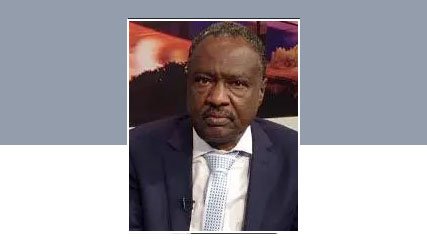
By Rashid Abdel Rahim
On this day in 1971, the Sudanese Communist Party succeeded in overthrowing President Jaafar Nimeiri’s government and seizing power for three days.
According to the author, one of the principal reasons for the coup’s initial success was the choice of “Zero Hour”. The conspirators launched their operation at 3:00 p.m., an unusual time for a military coup, given that such operations typically rely on secrecy and the cover of darkness rather than broad daylight. The timing also coincided with the end of the working day, when roads and markets were heavily congested.
However, just as the coup succeeded rapidly, it also collapsed quickly. Only three days later, a counter-operation led by soldiers and non-commissioned officers restored President Nimeiri to power. They freed him and the members of the Revolutionary Command Council, who had been detained in the Presidential Palace. Nimeiri then travelled to the Sudanese Radio headquarters to broadcast a statement announcing the restoration of his government and the end of what the author describes as a brief, skilfully executed and bloody coup.
After leaving the Presidential Palace, Nimeiri was reportedly transported in the vehicle of the renowned Sudanese singer Sayed Khalifa, who was nearby at the time of the rescue. Nimeiri is said to have appeared in a junior soldier’s uniform and, according to the author, spoke with visible anger and emotion during his radio address.
Military operations concluded relatively swiftly with the restoration of Nimeiri’s government. This was followed by an extensive campaign to apprehend officers, soldiers and coup leaders who had fled. The coup was widely identified as being led by the Sudanese Communist Party, and many of the party’s senior figures, together with those who had participated in the takeover, were arrested.
According to the author, the collapse of the coup was followed by the massacre at the Guest House on University Street in Khartoum, during which 38 detained military officers were killed. The author contends that the victims were not supporters of, nor sympathetic to, the Communist Party’s seizure of power.
The officers were reportedly killed while being held in detention, with some shot inside their rooms, others in bathrooms, and others in the prison courtyard.
Several officers were accused of carrying out the killings, including Mohamed Jabara, Al-Hardallo, and Abu Shaiba, whom the author identifies as having issued the principal orders. The Sudanese Communist Party itself was widely accused of responsibility for the massacre. The party had described its coup as a “Corrective Revolution”, claiming it sought to reverse what it viewed as Nimeiri’s government’s betrayal of revolutionary principles. In a press conference held in London after being announced as Chairman of the Revolutionary Command Council, Lieutenant Colonel Babiker Al-Nur argued that Nimeiri and the Revolutionary Command Council had themselves turned against what he described as the country’s “revolutionary democratic forces.”
The author concludes by arguing that the Communist Party was unable to mobilise broad public support during its brief period in power. Apart from a single demonstration, which he describes as attracting only limited participation, the party failed to generate the popular backing that a newly established government would have needed.
Translator’s note: This article recounts and interprets disputed historical events from the author’s perspective. Allegations regarding responsibility for the 1971 Guest House massacre remain contested in Sudanese historiography, and the translation faithfully reflects the author’s account without endorsing its claims.
Shortlink: https://sudanhorizon.com/?p=16073