

The Berlin Conference… Follow the Funding to Understand the Agenda
Khartoum – Sudanhorizon
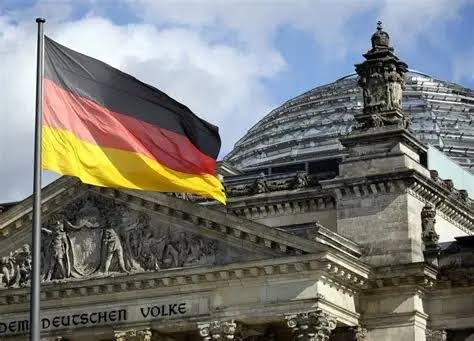
The German capital, Berlin, is set to host a conference on Sudan on 14–15 April, marking the fourth year of the war. This will be the third European edition in a series of annual conferences addressing the conflict, following those held in Paris in April 2024 and London in April 2025.
What is new?
Unlike the previous editions, the Berlin conference introduces a third track—the “civilian track”—alongside the existing humanitarian and political tracks. Organisers hope that a combination of factors will produce tangible outcomes, including recommendations that could pave the way for a “humanitarian truce”, if not a full ceasefire.
It is also notable that Washington, D.C., Paris, and London have joined Berlin in organising the conference, alongside what is known as the “Quintet”: the United Nations, the African Union, the European Union, Intergovernmental Authority on Development, and the League of Arab States. This group is focusing on the “civilian track”, particularly by bringing together factions of the Forces of Freedom and Change under one umbrella to discuss the future of the political process and civilian transition.
A flawed approach… flawed outcomes
Diplomats who previously participated in similar conferences told Sudanhorizon that the most striking feature of the Berlin edition is that it relies on the same flawed foundation as the Paris and London meetings. The Sudanese government was neither involved in the preparations nor invited—even as an observer.
According to these sources, the organisers appear to operate on a problematic assumption that effectively disregards the existence of a recognised Sudanese government. It places the Sudanese Armed Forces—constitutionally responsible for preserving the state and protecting its citizens—on equal footing with the Rapid Support Forces, which rebelled, launched the war, and committed acts classified under international and humanitarian law as grave crimes, as documented by UN experts.
A second flaw lies in restricting the “civilian dialogue” to the two blocs of the Forces of Freedom and Change (the Central Council and the Democratic Bloc), while excluding other political forces. It is well known that the Central Council faction (formerly “FFC”) rebranded after the war as “Taqaddum”, which later split into “Sumoud” and “Ta’sis”. The latter has aligned itself with the Rapid Support Forces and the Sudan People’s Liberation Movement–North, led by the rebel Abdelaziz al-Hilu.
Despite the fact that “Ta’sis” effectively supports a military option—as it is an alliance of armed groups and has established a quasi-parallel entity within Sudan—the organisers insist on treating it as a civilian actor. This raises a critical question: who is actually setting the agenda for the Berlin Conference?
Prospects for success
According to diplomatic sources, the main session on 15 April will be attended by foreign ministers from the organising countries—Germany, France, and the United Kingdom—alongside representatives of the “Quartet”: the United States, Saudi Arabia, Egypt, and the United Arab Emirates. Turkey and Qatar have also been added, while leaders or representatives of the Quintet organisations are expected to attend.
The central issue will be the pathway proposed by the Quartet since last September, focusing on securing a “humanitarian truce” agreed upon by both sides of the conflict, to allow aid delivery to civilians affected by the war—estimated by the UN at around 14 million people.
The humanitarian track… and the sovereignty dilemma
In both the Paris and London conferences, the UAE—reportedly with American backing—attempted to push an agenda critical of the Sudanese Armed Forces, portraying them as equivalent to the rebel militia, accusing them of political alignment, and holding them responsible for obstructing humanitarian access through bureaucratic means. At the same time, it opposed language, emphasising the preservation of Sudanese state institutions—an approach supported by Egypt and Saudi Arabia. As a result, the London conference failed to produce a unified final statement.
In Berlin, the humanitarian track will be discussed in light of extensive reports on famine, displacement, and violations, with calls for unrestricted access to affected populations. Critics argue that this effectively demands a dilution of state sovereignty, allowing international organisations to operate freely across Sudan without oversight.
To further mobilise international sympathy, countries hosting Sudanese refugees—such as Chad, South Sudan, Ethiopia, and Uganda—have been invited to join the main group. While higher financial pledges are expected compared to previous conferences, only around 30% of prior commitments have reportedly been fulfilled.
The potential breaking point
Sources indicate that the UAE has contributed a significant share of the funding for the Berlin Conference. In return, it is expected to advance its political agenda, shaped over the past three years, aimed at isolating Sudan’s authorities regionally and internationally, restricting the Sudanese army’s access to arms, portraying it as a militia influenced by Islamist factions, and sidelining those factions altogether.
At the same time, this approach seeks to consolidate military influence in favour of the militia and political influence in favour of its allied civilian groups—particularly “Sumoud” and “Ta’sis”.
To ensure these groups’ dominance in the civilian track, the UAE—leveraging its role as both sponsor and partner—reportedly influenced the list of participants, excluding those who do not align with its position. The majority of invitees are said to be affiliated with “Sumoud” and “Ta’sis”, while only a limited number of seats (out of approximately 40) were allocated to the Democratic Bloc.
According to informed sources, the Democratic Bloc has rejected this imbalance and threatened to boycott the conference unless the list is revised. Such a boycott would effectively strip the civilian track of its legitimacy. However, it appears unlikely that the Emirati sponsor will accommodate the organisers’ (Germany’s) request to rebalance participation by reducing its allies or increasing representation of groups aligned with the Sudanese army.
Shortlink: https://sudanhorizon.com/?p=12612