

Tanzania on a Hot Plate: Escalating Western Pressure Following the Recent Election Crisis
Sudanhorizon – Exclusive
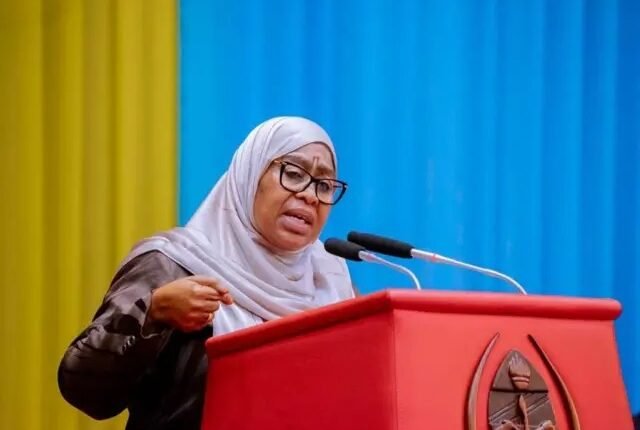
The Republic of Tanzania is currently facing the most severe political and diplomatic crisis since its independence from colonial rule in the 1960s. The political landscape is more tense and complex than ever, as domestic, regional and international pressure has intensified before, during and after the presidential and parliamentary elections of 29 October, which ended with a sweeping victory for the ruling CCM party on both the mainland and Zanzibar, resulting in the inauguration of President Samia Suluhu Hassan and Dr Hussein Mwinyi as head of the Revolutionary Government of Zanzibar.
Last week saw a flurry of statements released by several foreign governments and international organisations expressing concern over the events of 29 October 2025, including post-election unrest across parts of the country. The latest of these statements came on 5 December, when the Commonwealth Ministerial Action Group voiced grave concerns about the growing threats to democracy, the rule of law, judicial independence, human rights and democratic space in Tanzania. These concerns relate particularly to the recent elections in which President Samia Suluhu secured 98% of the vote.
During its 71st meeting — held virtually on 5 December 2025 and chaired by Malta’s Deputy Prime Minister and Minister for Foreign Affairs and Tourism, Dr Ian Borg — the group set out a list of specific conditions for Tanzania. Chief among them were: unimpeded access for former Malawian President Lazarus Chakwera to all relevant actors; lifting restrictions on freedom of assembly, expression, civil society and the media; establishing an inter-party consultative forum to agree on an electoral framework; and adopting transparent legal and administrative measures to hold perpetrators of violence accountable and properly compensate the victims. Tanzania was placed on the formal agenda of the next Commonwealth meeting in March 2026, during Commonwealth Week in London.
Among the governments and institutions issuing statements on the situation were: Belgium, Canada, Denmark, the EU Delegation, Finland, France, Ghana, Germany, Ireland, Italy, the Netherlands, Norway, Poland, Slovakia, Spain, Sweden, Switzerland, the United Kingdom, the UN Human Rights Council, the United States, and the Thabo Mbeki Foundation.
On 6 December, Tanzania’s Government Communications Unit released a statement saying that although the authorities had taken note of these statements, they were concerned about their content — particularly as the government had held what it described as a “frank meeting” with the diplomatic corps on 28 November 2025, chaired by the Minister of Foreign Affairs and East African Cooperation.
According to the government, the purpose of the discussions with ambassadors and development partners had been to clarify the situation and outline the steps being taken to manage the post-election unrest. Despite this, the government claims that some of the international statements ignored or downplayed the clarifications provided during the meeting.
The statement concluded by reaffirming Tanzania’s readiness and commitment to continued cooperation on all issues of mutual interest, urging patience as the investigation process moves forward.
Observers who spoke to Sudanhorizon note that it is clear a coordinated and escalating Western pressure campaign is underway — conducted individually by Western states, and collectively through Western blocs and institutions, led by the European Union. They believe this pressure is likely to extend to international bodies, foremost among them the UN Human Rights Council, with the ultimate aim of designating Tanzania as a “special humanitarian case”, subjecting it to the cycle of special envoys and periodic reports — measures that would burden the government and keep it under constant pressure.
Western pressure campaigns, these observers note, generally follow a phased and gradual approach, relying on continuous assessment of Tanzania’s reactions, while at the same time being careful not to jeopardise Tanzania’s growing ties with China and Russia.
Analysts of East African politics — and Tanzanian affairs in particular — point out that the Tanzanian government is highly skilled in international manoeuvring, adept at shifting between global camps. Therefore, it is strategically expected that Tanzania will quickly work to strengthen its political relations with China and Russia to counterbalance Western hostility, and expand its economic and development partnerships with major non-Western donors such as Turkey and South Korea — and possibly Middle Eastern countries and, to a lesser extent, Japan — to offset any reduction in Western aid.
Observers who spoke to Sudanhorizon do not rule out the mobilisation of rights groups and civil society organisations, especially African ones backed by the West and concentrated in Kenya and Uganda, to disrupt the Tanzanian political scene and push towards reconfiguring the country’s political landscape. The Western bloc seeks to empower opposition parties capable of challenging the ruling party. Despite Tanzania adopting multi-party politics in the mid-1980s — after heavy Western pressure — the West remains dissatisfied with the continued dominance of a single-party system since independence.
Shortlink: https://sudanhorizon.com/?p=9372