

Sudanese Prime Minister: No Final Agreement Reached on Truce
Cairo – Sudanhorizon- Sabah Moussa
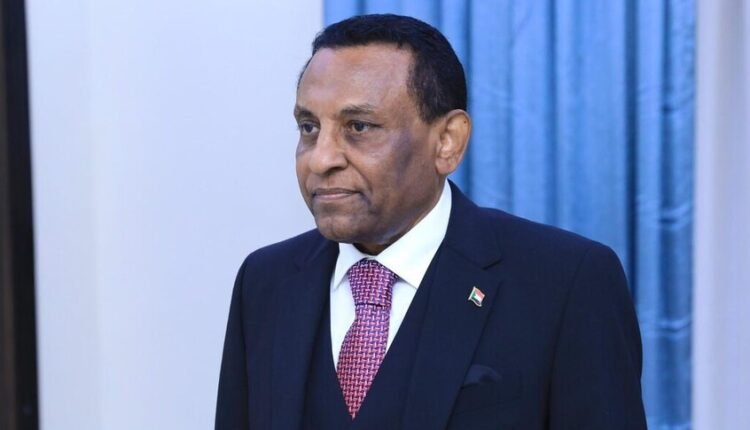
Sudanese Prime Minister, Dr. Kamil Idris, stated that during his visit to Cairo, he has reached an agreement with the Egyptian authorities based on the principle of productive partnership between the two countries.
In a meeting with a limited number of Egyptian journalists on Friday evening, Idris explained that the discussions focused primarily on the situation of the Sudanese community in Egypt and related issues, particularly education, residency, and organizing a voluntary, rather than forced, return to Sudan.
He added that the administrative policing measures recently taken by the Egyptian authorities are routine procedures implemented periodically and do not specifically target Sudanese citizens. He emphasized that reports about forced return is untrue and was promoted to incite discord, and that returning remains a personal choice for those who wish to do so.
Idris explained that the discussions also included the water issue, describing it as having security and economic dimensions. He noted that the joint agreements emphasized the need to manage the Nile Basin in a consensual manner and rejected any unilateral arrangements. They also stressed the importance of a legally binding agreement, establishing principles of transparency and information sharing between upstream and downstream countries, and cooperating to address drought and prolonged drought. Furthermore, it was agreed to continue consultations and coordination between the two countries on various issues of mutual interest.
The Prime Minister pointed out that it was agreed that Egypt would play a leading and prominent role in this process after the end of the war, as well as in Sudan’s reconstruction efforts. This includes planning for a new administrative capital in Sudan, inspired by the Egyptian experience.
In response to the Sudanhorizon’s questions, the Prime Minister stated that Egypt’s President Sisi has made a direct commitment to fully address the situation of the Sudanese community in Egypt, working to resolve the issues facing students, universities, and schools, and organizing the national Sudan School Certificate exams.
He explained that an implementation mechanism was in place for this, noting the agreement on the release and exchange of prisoners between the two countries. He emphasized that the Egyptian President was personally following up on this matter with officials, describing him as a “leader of Arab wisdom.”
He affirmed that the Sudanese government’s focus was on a comprehensive vision for reconstruction, explaining that an Egyptian technical delegation had already arrived in Sudan to rehabilitate the Shambat and Halfaya bridges and was currently preparing a technical report. He added that, given the urgent need to reconnect the capital’s cities, repair work on these bridges had commenced. He stressed that Egypt’s participation in the comprehensive reconstruction was a priority to benefit from its accumulated expertise, which he considered paramount.
The Prime Minister welcomed all initiatives aimed at ending the war, explaining that the tripartite initiative—as he put it—comprising the United States, Saudi Arabia, and Egypt, complements the Sudanese initiative. He stressed the need to reach a comprehensive and full ceasefire that leads to lasting peace, not merely partial truces.
He added that the government responds to any initiative it receives through official written channels, confirming that no final agreement has yet been reached regarding the humanitarian truce proposed by US Envoy Massad Boulos. He stated that Boulos remains in constant contact with them.
Idris denied the existence of any discord within his government, considering what is being circulated on social media in this regard to be mere rumors. He stated that Sudanese-Sudanese dialogue is the path to overcoming differences. He added that the Sudanese peace initiative has received support within the UN Security Council, the Arab League, IGAD, the African Union, and a number of regional and international organizations. He explained that the initiative aims to achieve a just and comprehensive peace that includes a ceasefire, the disarmament of militias, and the launch of a political process culminating in free elections in which the Sudanese people choose their leadership. Kamil pointed out that the initiative was specifically designed to move Sudan from a state of stagnation to a path of action. He emphasized that it is a purely national initiative that was presented to the Security Council and received a positive reception, as well as at the Munich Security Conference.
He added that it clearly defines the concept of a truce and the mechanisms for disarming the rebel militias, which include mercenaries from various countries, particularly Colombia and Ukraine. He stressed the necessity of gathering militia members and placing them in camps outside cities in preparation for their reintegration or demobilization, alongside launching a Sudanese-Sudanese dialogue that excludes no one except those who refuse to participate.
Shortlink: https://sudanhorizon.com/?p=11710