

Sudanese Minister: We Documented 5 Cases of Rape Involving a One-year-old Girls
Cairo – Sudanhorizon– Sabah Moussa
Since the outbreak of the war in Sudan nearly three years ago, the tragedy has not been limited to the sounds of gunfire and falling shells, but has extended to grave violations targeting the bodies and dignity of women and girls.
One of the most silent and brutal crimes is the systematic use of sexual violence and rape as a weapon. In conflict zones, women’s bodies have become another battleground, where sexual crimes are used as a means to humiliate communities, break their will, and impose control by force, amidst a near-total absence of protection and accountability.
The Rapid Support Forces militias have used women’s bodies as a weapon of war for the purpose of subjugation, humiliation, and control, in a bitter experience that may extend for many years, during which Sudanese women will suffer the shadows and stigma of the past.
A Bitter Reality
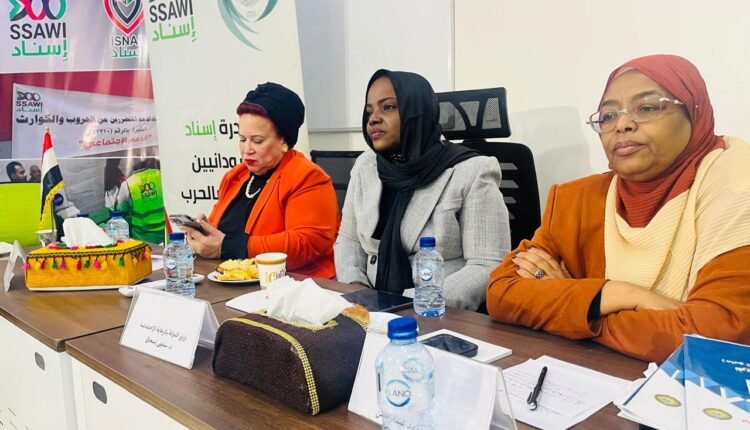
To further shed light on the patterns of sexual violence associated with the war in Sudan, and in an attempt to reveal the extent of the violations, break the silence surrounding them, and raise pressing questions about responsibility and justice amidst a humanitarian crisis that worsens daily, the Esnad Association for Supporting Those Affected by Wars and Disasters hosted the Minister of State for Social Welfare, Dr. Salma Ishaq, at its headquarters in Cairo on Tuesday.
The Minister spoke at length, detailing the bitter reality experienced by women in Sudan as a result of the brutality and violence of the Rapid Support Forces militias. She emphasized that no statement has been issued by the international community accurately and forcefully describing the sexual violence, rape, and systematic violence against women in the war in a way that truly reflects the reality. She stated that the war in Sudan is the worst humanitarian catastrophe the world has witnessed in recent times, adding that the war has resulted in forced displacement, forced migration, and a bitter reality for women. Many women have lost their jobs, and she continued that the Rapid Support Forces militias have targeted women extensively, occupying hospitals, most notably the maternity hospital.
She stressed that this targeting was the systematic oppression and humiliation of women was their weapon in this war, and stated that the international community began to address the Rapid Support Forces’ crimes following reports from Human Rights Watch and several other international organizations. She added that there was no longer the denial of the Rapid Support Forces’ violations in Darfur, as had been the case previously, describing the international community’s characterization of the crimes as “playing down” She said there was a playing down in the international community’s acknowledgment of the crimes in Sudan, and that there was always talk of two sides and forces wearing Rapid Support Forces uniforms. She emphasized that the militia is a brutal force, and no one could wear its uniform and commit crimes in its name.
Extreme Sensitivity
The minister explained that there are markets in Chad and the Central African Republic where Sudanese women were sold, and stated that there is complicity on the part of these countries. She called for communication with her regarding this matter, noting that sexual violence of all kinds occurred and that the women survivors need extensive psychological rehabilitation after these grave violations. She pointed to the immense suffering faced by the government and organizations working in this field, and said that there is extreme sensitivity surrounding working on this issue due to social traditions and legal and medical complexities. She added that there is still ongoing debate about the legitimacy and legality of abortion for rape victims, and whether it is permissible or forbidden. She emphasized that societal culture and customs remain an obstacle to addressing this issue, indicating that social welfare for women in the states may be better, and that in states like Gezira , the issue of rape and discussing it is more sensitive and difficult.
She said, “We cannot speak about cases of sexual violence for fear that the families will discredit us due to the sensitivity of the issue.”
She stressed the need of having centers to care for the children of rape so that they do not turn to crime and violence, emphasizing that sexual violence has far-reaching consequences and psychological illnesses.
She emphasized the physical nature of the situation and the need for specialized treatment to rehabilitate the victims, calling for the establishment of income-generating projects to engage women. She stated that there is a lack of resources and job losses, and that some women have been forced to seek assistance from the Rapid Support Forces for survival and protection. She noted that there is now a normalization of death and that there have been cases of suicide.
A Tragic Reality
The minister described a tragic reality facing significant internal and external challenges. She spoke of problems even in finding solutions, asserting that there has been a major failure in managing this issue due to what she termed “political stereotyping.” She said, “We have been caught between groups that oppose war and those that oppose it, and we have not been able to work effectively under these circumstances.”
Modest Numbers
In response to questions from Sudanhorizon, the minister explained that there are no precise figures for the number of rape victims. She stated that the numbers they have recorded are very modest. There were 1,844 women survivors before the fall of El Fasher, and they have identified 30 women from El Fasher and 20 from Bara in West Kordofan. In addition, the Attorney General and her team identified 1,300 survivors in the camps of Ad-Dabba and those fleeing El Fasher. She added that only 70 women have had abortions, and that these cases are registered in the system. There are 221 rape cases involving girls under 15 years old, including five one-year-olds.
She continued that 170 children arrived in Tawila without their families. She explained that the most significant challenges they face in their work are the reporting process, the quality of services, the lack of a system in some areas, and insufficient training and preparedness to receive cases. She said, “Unfortunately, some doctors have personal opinions on rape cases and do not associate their names with these cases.” She stressed the need for publications that obligate those concerned to follow the procedures in the entire system.
She stated that the government is making efforts on its own regarding services such as electricity and water, indicating that Sudan has received less than 24% of the general funding it should receive from the United Nations. She added that international organizations themselves are struggling due to insufficient funding.
Challenges and Difficulties
The attendees, including specialists, representatives of organizations in this field, and media personnel, spoke in more detail about the challenges and difficulties.
They highlighted the challenges and difficulties they face in their work, emphasizing that the sensitivity of the issue and the resulting negative reputation of families prevents access to cases and providing them with psychological rehabilitation and physical treatment. They called for concerted official and popular efforts to help survivors resume their lives, despite the difficulties they faced from the Rapid Support Forces militia. They also called on the government to develop a comprehensive plan to address these challenges and overcome them, given their significant impact on society and the dangerous consequences that threaten security and stability.
They appealed to the world’s conscience to stand firmly against these grave violations suffered by women in a country subjected to war and whose land has been violated by militias and mercenaries from abroad
Shortlink: https://sudanhorizon.com/?p=10227