

Sudanese Minister: Gulf States Import $200 Billion Worth of Food; Sudan as Historic Opportunity Ahead
Khartoum – Sudanhorizon
Sudanese Minister of Animal Resources and Fisheries, Ahmed Al-Tijani Al-Mansouri, has revealed that Gulf Cooperation Council (GCC) countries import approximately $200 billion worth of food products annually.
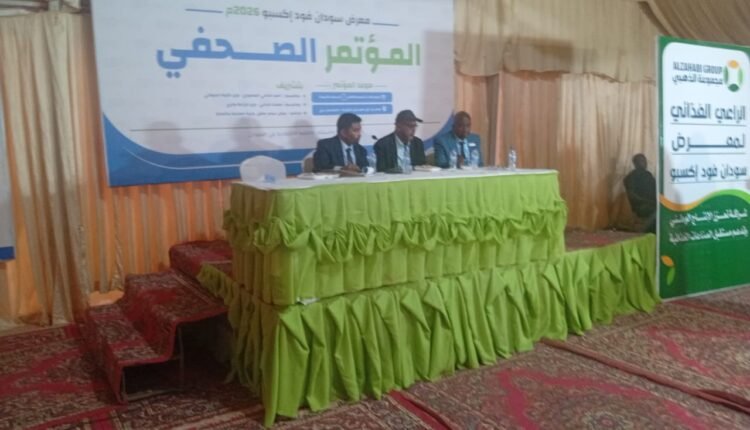
Speaking at a press conference held on Sunday to announce the “Sudan Food Expo 2026″—an international exhibition for food, agricultural products, livestock, and fisheries to be hosted at the Khartoum International Fairgrounds—Al-Mansouri emphasized that Sudan has a historic opportunity to leverage its livestock resources and its geographical proximity to these target markets.
Al-Mansouri outlined the challenges currently facing livestock exports, noting that rising costs for shipping, insurance, and transportation—exacerbated by the ongoing conflict—have impacted the competitiveness of Sudanese products. He underscored that Sudan’s proximity to Gulf markets provides a distinct advantage in reducing logistics and export-related expenses.
The Minister also presented the ministry’s five-year strategic plan for the 2026–2031 period, which aims to drive a qualitative shift in the livestock sector, boost production and productivity, foster investment, and open new markets for exports.
He explained that the plan aims to establish integrated livestock production hubs in several states, including River Nile State and the Northern State.
He noted that the implementation of these projects has already begun—most notably the livestock production hub in the Al-Ubaydiya area of Berber Locality, River Nile State.
This facility serves as an integrated ecosystem encompassing fodder production, livestock fattening, veterinary healthcare, slaughterhouses, cold storage, processing, and exporting—all of which contribute to lowering production and transportation costs, improving quality, and increasing value-added.
He emphasized the need to develop infrastructure for production and exports, establish modern slaughterhouses, and implement cold chain, packaging, and wrapping systems that meet international standards.
Furthermore, he highlighted the need to address the various fees and levies that drive up the price of Sudanese meat compared to competing products. He noted that the Ministry is coordinating with the Ministries of Trade and Finance, as well as customs authorities, to tackle these challenges and reduce the costs of fodder and other production inputs.
Mansouri revealed that 15 companies operating in the livestock sector have been identified in River Nile State. He also noted interest from investors in Qatar and the Sultanate of Oman in investing in these livestock production hubs, mentioning the signing of a memorandum of understanding with the Qatari firm “Etihad Al-Mustaqbal” (Future Union).
Efforts are underway to strengthen partnerships with the private sector, in addition to linking the livestock production hub with the University of the Nile Valley to leverage scientific research, modern technologies, and academic expertise.
He added that the plan includes the development of four production complexes for small-scale livestock farmers, in collaboration with the Agricultural Bank and Bank Al-Balad.
The initiative aims to improve cattle productivity and increase the income of farmers and their families. This will be achieved by raising the average daily milk yield per cow from approximately seven pounds to 20 pounds in the first phase, and subsequently to 40 pounds in later stages. Furthermore, the plan focuses on improving cattle breeds, enhancing nutrition, and providing veterinary care to boost meat production.
He also noted that there are programs designed to support economic and social stability in the states of Darfur and Kordofan. These programs aim to connect families with productive projects that provide sustainable income sources.
Additionally, they involve developing rangelands and securing fodder for periods of drought—by sowing forage seeds before the rainy season, then harvesting, drying, and storing the yield as bales. This contributes to ensuring a steady supply of livestock feed, reducing pressure on natural resources, and curbing conflicts over grazing lands.
The exhibition is scheduled to kick off in November 5 and goes through 8, 2026, at the Khartoum International Fairgrounds in Burri. It will be held under the theme “Together to Support National Production and Shape the Future of Food in Sudan,” with the participation of entities active in the agriculture, livestock, food processing, investment, and export sectors.
Shortlink: https://sudanhorizon.com/?p=19725