

Sudan and the AUPSC: A New Composition and a Postponed Visit
Sudanhorizon – Diplomatic Editor
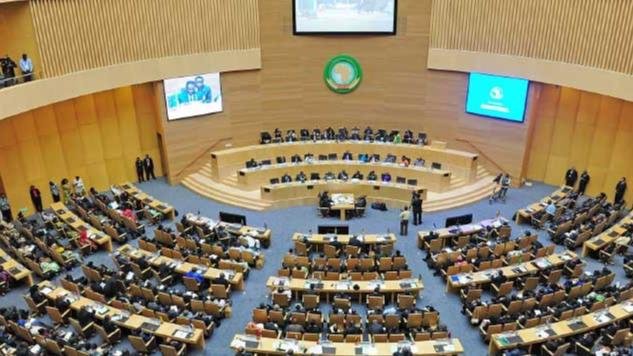
On 3 March, the term of the African Union Peace and Security Council (PSC) in its previous composition ended after 2 years in office. The Council, in its new configuration, will begin work at the start of April, and among the items on its agenda is a postponed visit to Sudan.
The visit had originally been scheduled for the second half of February, with the Council expected to assess, based on its findings, whether to lift Sudan’s suspension from the African Union. However, the visit did not take place, and Sudan’s membership remains suspended.
A New Composition with Two-Thirds New Members
The new composition of the Council, which will serve until 2028, includes Algeria, Morocco, Somalia, Uganda, Ethiopia, Eswatini, Lesotho, South Africa, Cameroon, Gabon, the Democratic Republic of the Congo, Nigeria, Benin, Côte d’Ivoire, and Sierra Leone.
Under this new configuration:
Morocco replaces Egypt from the North African region.
Somalia replaces Tanzania from East Africa.
South Africa and Lesotho replace Angola and Botswana from Southern Africa.
Gabon replaces Equatorial Guinea from Central Africa.
Benin replaces The Gambia from West Africa.
From this perspective, Sudan has lost a friend that was perhaps more sympathetic to its circumstances than others—Egypt—but it has gained Somalia and Morocco, in addition to Algeria, which was already a member.
A Postponed Visit
Sudanese hopes had risen in February that the suspension of their country’s membership in the African Union might soon be lifted. At that time, the Peace and Security Council convened at the level of foreign ministers in preparation for the 39th African Union Summit.
Sudan’s Minister of Foreign Affairs and International Cooperation, Ambassador Mohi El-Din Salem, was permitted to address the session. The minister delivered a detailed presentation outlining Sudan’s position, which reportedly received a positive response. However, the Council—then under Egyptian chairmanship—decided to postpone a final decision until after its previously scheduled visit to Sudan, intended to assess on the ground the progress made in implementing the roadmap for constitutional transition.
Yet the outgoing Council was unable to reach an agreement on carrying out the promised visit on 25 February. A new date—28 February—was proposed and initially approved, but scheduling conflicts among several members prevented it from taking place.
According to a senior diplomatic source who spoke to the Al-Muhaqqiq news website, the Sudanese side appeared to understand these logistical difficulties. It has since become clear that the visit will likely be rescheduled at a later date in coordination with Sudan, under the Council’s new composition.
Disagreement Over the Visit’s Destination
The diplomatic source also noted that one reason for the earlier disagreement over the visit concerned its destination.
The Council’s decision authorising the visit—issued under Algerian chairmanship on 4 August last year—stipulated that the delegation should travel to Port Sudan. However, after the Sudanese government returned to Khartoum in December, Sudan insisted that the visit take place in the capital rather than Port Sudan.
The Peace and Security Commission reportedly raised concerns about the absence of an internationally authorised flight route connecting Addis Ababa and Khartoum. In response, Sudan proposed sending a special aircraft to transport the delegation between Addis Ababa and Khartoum. While memoranda were being exchanged on the matter, the decision was ultimately taken to postpone the visit.
An Opportunity to Strengthen Sudan’s Case
A senior diplomat at the Ministry of Foreign Affairs and International Cooperation told Al-Muhaqqiq that the delay could, in fact, provide Sudan with an opportunity to strengthen its arguments for lifting the suspension.
The Peace and Security Council’s October 2021 decision to suspend Sudan was based on the claim that the events of 25 October 2021 constituted an “unconstitutional change of government” that handed power to the military.
Sudan, however, argues that the Council misinterpreted the concept of unconstitutional change, since the government in place on 25 October 2021 was not elected. According to Sudan’s position, what occurred was the dissolution of a partnership between a military and civilian component that had previously agreed on transitional arrangements—arrangements the military component still claims to uphold.
The diplomat suggested that the delay could benefit Sudan if the government makes effective use of the time. The postponement offers an opportunity to highlight practical steps that demonstrate the “Government of Hope’s” commitment to implementing the roadmap submitted to the United Nations Security Council, particularly its provisions regarding progress towards civilian governance.
These steps include completing key transitional institutions such as:
the judicial system, the Constitutional Court, the legislative council, and the regulation of political party activity, as well as preparing for future elections.
The delay also offers time to extend state control over broader parts of the country, expel militias from those areas, and restore normal life—especially in Khartoum State, including the return of international flights to Khartoum Airport.
Since the decision to conduct the visit remains valid in principle, it could take place in any forthcoming month agreed upon by both sides. Proper preparation, the diplomat added, could help ensure the delegation leaves with a more favourable impression, enabling the Council to adopt a positive decision restoring Sudan’s membership in the African Union, an organisation Sudan helped to found.
Other Countries on the Council’s Agenda
An expert on African affairs who spoke to Al-Muhaqqiq noted that Sudan is not the only case before the Peace and Security Council.
In total, nine countries have had their membership suspended due to what the African Union describes as “unconstitutional changes of government”. Some of these countries have engaged with the Council in transitional processes that are periodically evaluated and are making progress toward restoring civilian rule through elections.
The expert added that although there are multiple indications of political considerations influencing Sudan’s suspension—alongside shifting regional agendas—this does not negate the existence of objective factors cited by the Council to justify maintaining the suspension.
Among those factors are the extended transitional period without an agreed timetable and the failure of the current authorities to complete steps that would strengthen confidence in their intention to return power to the people through elections.
The expert concluded by noting that these steps have become key criteria for demonstrating seriousness in achieving a political transition. Through such criteria, the Council has evaluated other cases in which membership was restored—such as Gabon and Guinea-Conakry, both of which held elections that returned the same coup leaders to power. Despite this outcome, the results were accepted even though they conflicted with certain provisions of the African Charter on Democracy, Elections and Governance, which stipulates that leaders responsible for unconstitutional changes should not contest subsequent elections.
This, the expert observed, suggests that the Peace and Security Council has shown a degree of flexibility, occasionally relaxing strict regulatory provisions to ensure that the authorities in such countries become part of the solution rather than part of the problem.
Shortlink: https://sudanhorizon.com/?p=11922