

State Prestige Is Not Borrowed: A Reading of Protocol and the Reception of Sudanese Officials in the Region
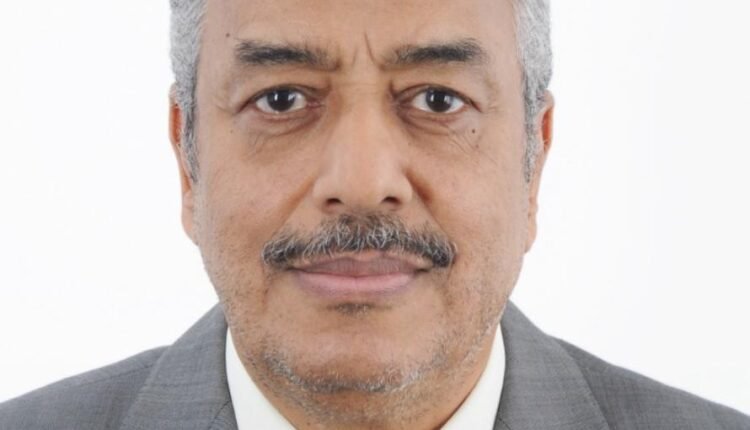
Dr Ismail Satti
Diplomatic receptions are not trivial ceremonial details, nor are they decorative scenes staged for cameras. Protocol is a silent political language through which messages are conveyed without words. Who receives you at the airport? Is the red carpet laid out? Does the guard of honour stand in formation? Is the national anthem played? Every gesture carries meaning, and every omission carries significance.
When a head of state visits another country, the honour extended is not to the individual but to the office — the embodiment of national sovereignty. Any reduction in the level of reception is therefore not read as a personal slight, but as an indicator of how the host state perceives the visiting country’s standing within the regional political balance.
This raises an uncomfortable question: why do some visits by Sudanese officials in the region appear to receive less ceremonial prominence than is customary for heads of state? Why, at times, is the head of state received at a level below that afforded to his counterparts?
Protocol as a Mirror of Political Reality
Across the region, states are ranked by their political weight and internal stability—not by their history or sentimental bonds. A stable state with functioning institutions, economic coherence and a clear strategic direction is treated as a full partner. A state facing institutional ambiguity or internal turbulence, by contrast, is approached cautiously.
Over the past seven years, Sudan has projected an unsettled image: political fragmentation, weakened institutional legitimacy, armed conflict and inconsistencies in external messaging. In such a context, diplomatic protocol inevitably reflects these realities.
The reception of Abdel Fattah al-Burhan, Kamil Idris, or any other Sudanese official is not measured by emotion, but by political calculus: the degree of recognition of institutional legitimacy, the perceived capacity to honour commitments, the level of internal stability, and the clarity of the authority with whom regional actors are engaging.
Between Symbolism and Sovereignty
Sovereignty is not a slogan recited in speeches; it is the practical ability to command respect in international relations. When state institutions erode, and internal disputes are managed through power struggles rather than consensus, the signal transmitted externally is clear: this is a state still in search of equilibrium.
Regional governments operate with pronounced pragmatism. They do not gratuitously antagonise others, but neither do they grant full symbolic parity to a state whose stability remains uncertain. A fair assessment of reception protocols must therefore begin with introspection before attributing motives of arrogance or ill will to external actors.
The Crisis Begins at Home, Not at the Airport
It is easy to react emotionally to a muted ceremonial reception. It is harder to ask: what have we done to restore the state’s prestige?
Do we have civilian institutions operating within a clear constitutional framework?
Is our external discourse coherent and consistent?
Does our economy provide negotiating leverage?
Do we project an image of cohesion — or of prolonged internal conflict?
Prestige is not imported from another capital, nor conferred by a red carpet. It is built through political stability, clarity of legitimacy, adherence to the rule of law and the ability to manage disagreements within state institutions rather than outside them.
A Measured Reading
It is neither wise to turn every protocol detail into a battle over national dignity, nor objective to dismiss its symbolic implications entirely. A diplomatic ceremony is a reflection of power balances and perceptions of legitimacy — not their causes.
If Sudan seeks a different reception in regional capitals, it must first transform its internal reality. States are received as they define themselves. When Sudan restores institutional coherence and political stability, parity will not need to be demanded; it will follow naturally.
State prestige cannot be borrowed. It must be built — deliberately, patiently and from within.
Shortlink: https://sudanhorizon.com/?p=11692