

Sometimes the Evidence Comes from the Sky
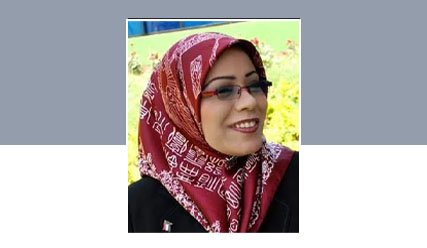
Dr Inas Mohamed Ahmed
The war has now entered its fourth year—bitter years in which millions of Sudanese have endured the full anguish of conflict: displacement, exile, and the collapse of basic services. They have lost loved ones; their property has been looted and seized; women have been violated; and crimes of arbitrary detention and abduction have targeted men, women, and children alike. Systematic killings of civilians have taken place, starvation has been used as a weapon of war, and infrastructure and civilian facilities have been continuously destroyed. The war in Sudan has thus become a stark, living image of a patient people enduring a conflict that has left no moment of their lives untouched by tragedy.
In this context, the international community has attempted to gather evidence of crimes that are as clear as daylight. The latest report of the United Nations Fact-Finding Mission, presented to the Human Rights Council in February 2026, stated that after the city of El Fasher fell under the control of the rebel militia, crimes bearing the hallmarks of genocide were committed against civilians. The report indicated that systematic killing, rape, torture, and enforced disappearance were carried out on specific ethnic and tribal grounds. It also documented statements by militia members explicitly calling for the eradication of certain ethnic groups.
According to the report, the city was besieged for 18 months, during which humanitarian aid and medical supplies were blocked. Civilians were starved and confined, leaving them unable to flee. Some died from hunger and thirst. In this context, starvation was used as a weapon to exterminate civilians—an international crime—while attacks on UN aid convoys continued, preventing assistance from reaching Darfur. Medical and humanitarian workers were not spared from killing or arbitrary detention.
This report represents one of the clearest formulations in UN language, pointing towards the commission of genocide, as well as crimes of enforced disappearance and rape.
The Fact-Finding Mission warned of the risk of further war crimes unless accountability and deterrence are enforced. It placed responsibility on the international community to protect civilians, ensure justice, prevent support to perpetrators—including arms and funding—and impose sanctions, while calling for those responsible to be referred to the International Criminal Court.
Similarly, a report by the joint African Union fact-finding mission, affiliated with the African Commission on Human and Peoples’ Rights, documented atrocities against civilians and stressed the need to hold perpetrators accountable and prevent impunity. It also called for adherence to UN Security Council Resolution 1556 (2004) on the arms embargo on Darfur.
These reports, among others, have documented real events and crimes through eyewitness testimonies, forming official records of human rights violations and crimes against humanity before the world. They constitute legal documentation for proceedings before the International Criminal Court. Yet the fractured international community has failed to translate these reports into concrete action on the ground—the reality that Sudanese people continue to face daily.
On 28 April 2026, the UN Security Council Sanctions Committee established under Resolution 1591 imposed sanctions on Al-Qoni Hamdan Dagalo and three Colombian individuals. These measures, under Chapter VII of the UN Charter, include travel bans and asset freezes. Dagalo was accused of activities threatening peace and stability in Darfur and prolonging the war through the procurement of weapons and military equipment.
The second individual, Colombian national Álvaro Quejano, founder of the International Services Agency (A4SI), was identified as running a hub for recruiting mercenaries, transferring funds, and employing drone operators, snipers, and translators. A retired Colombian army colonel, he played a central role in recruiting former Colombian soldiers to fight in Sudan as infantry, artillery personnel, and trainers.
The third individual is Claudia Viviana, owner and director of the same agency, and the fourth is Mateo Duque, a Colombian-Spanish national who manages financing operations for mercenaries, including salaries, travel logistics, and transfers from Abu Dhabi through Bosaso and Chad into Sudan.
According to reports, the first group of 172 Colombian mercenaries arrived in El Fasher in November 2024, followed by larger contingents. They were stationed in Darfur and took part in the siege. Mercenaries were also active across multiple fronts, including Khartoum, Omdurman, Gezira, White Nile, Sennar, Blue Nile, Greater Kordofan, and all Darfur states.
A statement by the British mission to the UN indicated that the United States, the United Kingdom, and France proposed these sanctions. Earlier, in February 2026, these same countries succeeded in imposing sanctions on four militia leaders for atrocities committed during the siege of El Fasher.
These actions constitute violations under the 1989 International Convention against Mercenarism, the 1977 Additional Protocol I to the Geneva Conventions, the 1977 OAU Convention, and customary international law.
On another front—from above—satellite imagery has documented the crimes of the militia. These images captured mass killings, bloodshed, and mass graves following their spread across El Fasher. They now stand as further evidence in the growing record of condemnation—far from the cameras of media outlets, as perpetrators may have believed. Yet they failed to realise that the skies are open, satellites are ever-present, recording everything—and above all stands the Lord of the heavens and the earth.
The enduring truth remains: Sudan is experiencing one of the worst humanitarian catastrophes of the modern era. As described by The Telegraph, Sudan has become the most deadly place for civilians globally, and the worst humanitarian crisis in the world. Meanwhile, The Guardian reported in April 2026 that regional competition has turned Sudan into a proxy battleground, leaving civilians as victims of a troubled global silence.
At the same time, rapid developments on the ground—including advances by the armed forces, defeats of the militia, internal fragmentation, and surrenders—raise critical questions:
Are these developments a natural fracture caused by prolonged war?
Or internal erosion signalling imminent collapse?
Or merely a tactical repositioning after successive defeats?
Whatever the case, one constant remains clear to the world:
Sudan—as a state—is moving steadily towards recovery, demonstrating that resilience comes from within, that the force of life and reconstruction is stronger than that of destruction, and that the Sudanese state is capable of overcoming adversity and reaching safety.
Above all, the will of the Sudanese people remains unbreakable.
Shortlink: https://sudanhorizon.com/?p=13357