

“Soft Conspiracy”
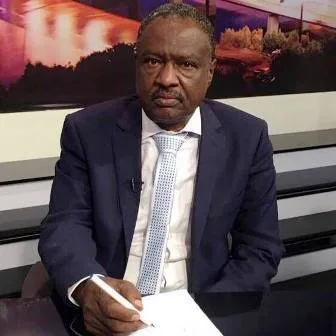
By Rashid Abdel Rahim
The United States adopts a soft tone in its discourse on Sudan, yet behind it lies a profoundly destructive intent.
Washington announced that it had taken measures to halt external support for the war in Sudan, and one such measure was designating certain Colombian individuals and companies involved in recruiting mercenaries for deployment to our country. But the decision stopped short at a crucial point: cutting off the financial flow used to fund these operations, which originates from a known state and source. The result is that those sanctioned continue their activities, and the money continues to reach them.
Moreover, the United States halted the legislative process to designate the Rapid Support Forces as a terrorist organisation.
And thirdly, it approved an intelligence-sharing programme between itself and certain states involved in the Quartet mechanism.
In short, every American step that we had anticipated—and hoped would be constructive—has instead bolstered the rebellion, empowering it through weapons, equipment, funding, and political cover.
Despite all this, some among us, even within the leadership, continue to expect decisive action from a country that has done nothing in recent months except tighten the noose around Sudan.
Throughout this period, we have failed to recognise the importance of responding with our own external outreach—towards states with whom we can build mutual interests and alliances—to strengthen our position within regional organisations and international institutions. Many of these positions have already been undermined, most notably within the African Union, whose stances have faltered under the weight of political money and influence.
Internally, we continue to witness measures that contribute to this suffocating pressure, driven by an exaggerated fear of the outside world—especially the United States. This fear has resulted in the restriction of the very forces capable of decisively confronting the rebellion, particularly through limiting the continuous human mobilisation supporting the army.
Islamist and national forces have been weakened as a result of stripping away the means that enabled their defensive role, after the Resistance Committees and popular mobilisation units were emptied—by force—of their effective leadership and membership who had been engaged in mobilisation, recruitment, and guarding towns and civilian sites.
In place of this, we have begun to see dangerous signs of disorder, including the use of weapons for personal gain by those entrusted with them.
The consequence of this sidelining will be the weakening of the armed forces at a critical moment, when we have lost important positions and cities, and the rebellion has regained momentum. This weakening is compounded by a failure to understand the significance of external manoeuvres aimed at undermining our army’s strength, as the rebels are likely to receive increased financial and military backing.
The Sudanese people remain certain that their army is fully capable of confronting all forms of foreign conspiracy—both subtle and overt—and will restore balance and expedite the liberation of the entire country from the Janjaweed.
Yet the grim reality is that these conditions will prolong the war and increase both human and material losses, at a time when our country is already severely exhausted—economically, socially, and internationally.
The path to reform is clear:
It begins with restoring internal balance by moving beyond the campaign to label national and Islamist forces as terrorist groups hungry for power. These forces could easily have accepted the Rapid Support Forces’ offer to join them in seizing power and sharing rule.
Their rejection of the rebels was based on a fundamental truth: the RSF is nothing more than a hired gun—for sale to the highest bidder. And today, it is indeed being sold to foreign states, organisations, and transnational criminal networks engaged in arms trafficking and the drug trade—narcotics that were used extensively during the sit-in, when drugs were distributed and scattered across Nile Street and other major avenues filled with promising Sudanese youth.
Sudan is not a trivial state that can be defeated by movements driven by greed for wealth or power—whether this comes from the rebellion and its aligned political forces, or from external actors coveting our resources.
It is time to put an end to the painful scenes of our soldiers and officers fleeing to other countries with their weapons and equipment after losing their positions. Our homeland is far too great to endure such circumstances.
Shortlink: https://sudanhorizon.com/?p=9449