

PM’s Political Advisor: The US Will Designate the RSF as a Terrorist Organisation This December
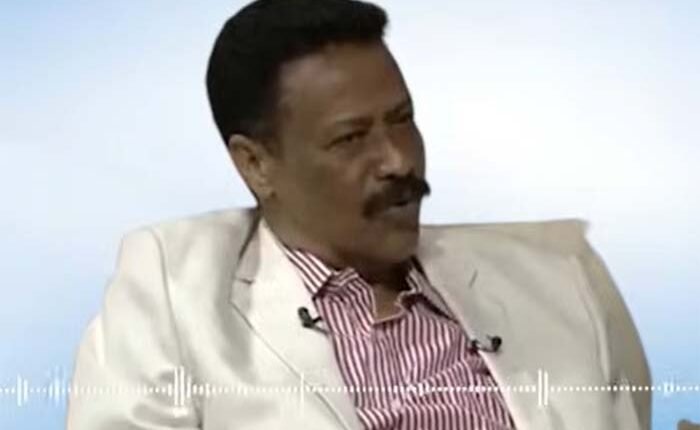
Cairo – Sudanhorizon– Sabah Moussa
Mohamed Mohamed Khair, the Prime Minister’s Political Advisor, has confirmed that the United States will designate the Rapid Support Forces (RSF) militia a terrorist organization by the end of coming December.
In exclusive statements to Sudanhorizon news website, Khair said that the United States will maintain its political and economic relations with the UAE and will justify its designation of the RSF as a terrorist organization to the UAE by stating that it is based on a legal and judicial order that cannot be disregarded.
He asserted that this decision will be issued specifically on December 18th, and that if it does not happen, he “will retire from political life completely and devote himself to being full fledged Barcelona fan”.
The Prime Minister’s advisor clarified that the Sudanese government is not in contact with the Quartet, stating that the Quartet is the one communicating with the government, presenting proposals and steps that are then considered and responded to. He added that the government’s stance towards the Quartet is based on its openness to the world.
He noted that the government listens to offers presented to it for resolving the crisis, emphasizing that once the government agrees to negotiate, there will be Rapid Support Forces, the UAE, and other support.
He stressed that promoting the idea that the government has already agreed to negotiate is a ploy to portray it as encouraging division within the national ranks. He believes the best solution currently available is for the army to continue its victories, and stated that the government does not want to isolate any political faction, but is responding to the will of the Sudanese people.
At the same time, Khair explained, that the war in Sudan had entered its third phase, a phase radically different from the previous ones. He stated that the international community had become a cornerstone, its role evident in international institutions, the Quartet, and the UN resolutions that went unheeded, as well as in the extensive activity of human rights and international organizations.
He added that, most importantly, there was the movement of people in the Western world. He pointed out that the war in its first phase appeared to be a conflict between two generals, when in fact it was not. It was a war waged by the Central Council for Freedom and Change in close alliance with the Rapid Support Forces and with the UAE playing an undeclared role.
He added, “I want to establish the prevailing narrative about who fired the first shot.” He continued, saying that all evidence indicates that what happened on April 15th was a military coup with political cover provided by the Central Council for Freedom and Change.
He cited statements made by its spokespersons, such as “either the framework or war,” and Mariam al-Sadiq’s statement about alternative options to the framework. He concluded that the intention was clear: to change the regime in alliance with the Rapid Support Forces.
Khair argued that the second phase of the war was characterized by the influence of specialized American media outlets. He specifically mentioned an investigative report by The New York Times, which he described as closely linked to US intelligence. He stated that the newspaper’s investigation revealed UAE support for the militias through satellite imagery of Chadian border crossings and the Umdjarass airport. He added that the UN Panel of Experts deemed this investigation credible and referred it to the Security Council.
He asserted that this was an American effort, not undertaken by institutions, but rather with direct support from the American deep state. He pointed to the army’s military victories during this phase, including the liberation of central Sudan and Khartoum.
He considered the UAE’s clear intervention in the war and its support for the militias with drones, advanced weaponry, and mercenaries to be the defining characteristic of the war’s third phase, which led to the fall of El Fasher.
He observed that Western governments refrained from criticizing the UAE due to their vested interests. He noted that these same Western governments simultaneously unleashed their own populations, who condemned the UAE and disseminated widespread reports that impugned Abu Dhabi’s moral standing. He concluded that this is precisely what is happening now, explaining that Western governments seek to maintain their influence. He said that these governments are simultaneously putting the UAE in confrontation with Western nations, but that this requires a moral stance from these countries.
Shortlink: https://sudanhorizon.com/?p=8641