

PM Political Advisor: Sudan Muslim Brotherhood Designation Only Increases Hits in Search Engines
Cairo – Sudanhorizon– Sabah Moussa
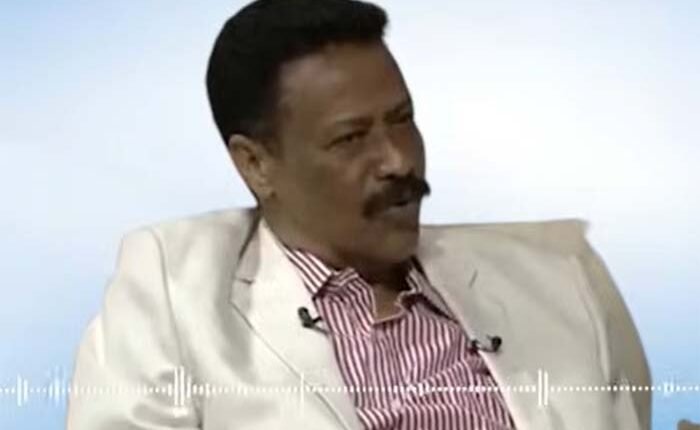
The Prime Minister’s political advisor, Mohamed Mohamed Khair, stated that Washington’s designation of the Muslim Brotherhood in Sudan as a terrorist organization will only lead to an increase in the number of media outlets.
In an exclusive statement to Sudanhorizon, Khair added that just as a US-Israeli-Iranian war would lead to higher oil prices, the designation of the Muslim Brotherhood in Sudan as a terrorist organization will increase the number of media outlets due to the surge in searches for information about the Islamists identified by the US decision. He wondered as to why the Rapid Support Forces (RSF) supporters, from their bases in Khartoum and other capitals, haven’t immediately seized power in Sudan, given their claims that Islamists started the war and continue to fuel it.
Khair continued, saying that this was their opportunity and they should now be on the battlefields fighting what remained of the Islamist movement to prove that this decision had real practical effect. However, he added, they were still—as he put it—begging for media attention and spouting empty rhetoric, which he asserted demonstrated that the decision lacked any real substance.
Khair pointed to the jubilation of the militia supporters over this decision against the Islamists and Ali Karti. He defended Karti, stating that it was during Karti’s tenure as Foreign Minister that diplomatic relations between Sudan and Iran were severed. He also noted that Karti had opted for turning back Iranian ships and improved relations with Saudi Arabia and the Gulf states. Khair argued out that the group most influenced by Iran was that of the late Sheikh Hassan al-Turabi, now represented by his successor, the Secretary-General of the Popular Congress Party, Dr Ali al-Hajj. He added that if the American decision was spurred by close relationship with Iran, then the target was undoubtedly Ali al-Hajj, not Karti, emphasizing that al-Hajj is an extension of Iran’s ideology and that Iran is his inspiration.
Khair explained that Karti, upon assuming the Ministry of Foreign Affairs, seriously addressed the issue of relations with the United States. He noted a significant American response, including correspondence between Karti and then-Secretary of State Hillary Clinton, whom he met in Washington. He added that during Karti’s tenure, US Congressman John Kerry, then Chairman of the Senate Foreign Relations Committee, visited Khartoum.
Khair further stated that a plan of action was proposed at that time, which included lifting sanctions on Sudan and removing its name from the list of state sponsors of terrorism. A technical committee was formed to follow up on this matter during Karti’s time, and it was later signed by former Prime Minister Abdalla Hamdok that the sanctions were lifted. Khair emphasized that Karti was far from being an advocate of ties with Iran among Islamist political leaders and that he prioritized relations with the Gulf states over relations with Iran.
Khair believes the US decision to designate Islamists in Sudan as terrorist organizations is the last resort of the US President’s Special Envoy, Massad Boulos who acts in coordination with the UAE. He considers it a “stray” shot that misses its mark and targets no one, and may even be a tear gas canister. He stated that this is Boulos’ last remaining attempt to blackmail Abu Dhabi. He described Boulos as a mere “broker,” and that it reflects his floundering amidst the preoccupation with the Iranian war. Khair asserted that the decision will have little impact and will not lead to any qualitative or fundamental shift in the crisis. He said that the forces supporting the Rapid Support Forces will remain active on television channels and social media, while the forces supporting the Sudanese Armed Forces (SAF), whether Islamists or nationalists, will continue their liberation project, and the SAF will remain unified.
Khair described the American decision as a “cliché” devoid of any value, adding that if the United States truly wanted to support the Rapid Support Forces and their supporters, it should clearly side with them in a way that would have a tangible impact on the ground. He continued: “The situation will remain the same, Baraa group will remain, and the army will advance, new units will join it, and the scope for completing its mission will expand.”
He concluded by saying that if this decision were to be based on other developments resulting from the war, then the Rapid Support Forces would be the most deserving of such a designation.
Shortlink: https://sudanhorizon.com/?p=12047