

OFAC Sanctions and Diplomatic Bullying
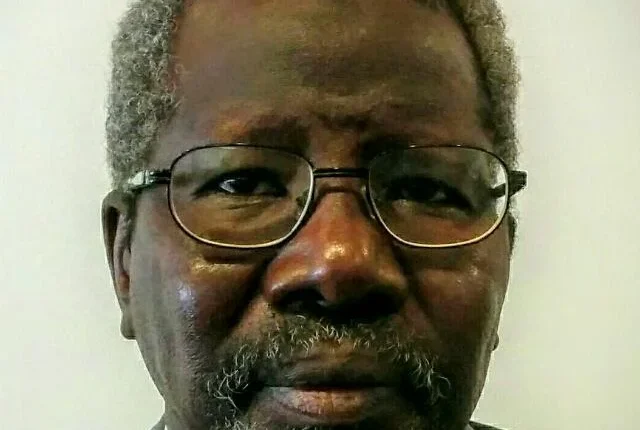
Dr Hassan Issa Al-Talib
The American sanctions imposed by OFAC (the Office of Foreign Assets Control) represent, the author argues, a form of diplomatic bullying. In this view, they are instruments used by the US presidency to harm real or perceived enemies and competitors, while simultaneously intimidating potential supporters. The author likens this approach to the biblical warning attributed to Pharaoh in addressing Moses: “If you take a god other than me, I will surely imprison you.”
The first use of such sanctions in the United States dates back to 1950, when President Harry Truman imposed measures during the Korean War, targeting China and North Korea.
Criticism of the Mechanism
One of the arguments frequently raised by critics is that the mechanism does not adhere to recognised governance standards or widely accepted principles of justice. According to this view, the sanctions function more as political and media pressure than as instruments grounded in consistent legal frameworks.
By 2025, the number of individuals and entities subject to OFAC sanctions reportedly exceeded 17,000 worldwide. Among those sanctioned were senior officials and leaders, including:
Vladimir Putin, President of Russia
Sergey Lavrov, Russian Foreign Minister
Sergey Shoigu, Russian Defence Minister
Vyacheslav Volodin, Speaker of the Russian Parliament
Sanctions have also been applied to other political figures, including Gustavo Petro, President of Colombia; Emmerson Mnangagwa, President of Zimbabwe, along with members of his family and government; and Karim Khan, Prosecutor of the International Criminal Court, following his decision to pursue charges related to alleged genocide involving Israel. According to the account presented in the article, sanctions in that context extended to members of the Court and restrictions on entry into the United States.
OFAC sanctions have also targeted the Rwandan army and senior commanders, as well as leaders of various political movements and governments whose policies or conduct diverged from those of the United States or the administration of President Donald Trump.
Accusations of Selective Application
Critics of the sanctions regime argue that it has been applied selectively. They point, for example, to the suffering of civilians in Gaza, where casualties have reportedly exceeded 70,000 deaths and nearly 300,000 wounded, as well as to documented allegations of war crimes in Iraq and Afghanistan. According to this perspective, such cases demonstrate inconsistencies in how accountability mechanisms are pursued internationally.
Legal Questions in International Law
From an international law perspective, the author argues that sanctions imposed by OFAC are unilateral measures within the exclusive purview of the United States government. They are not based on binding authority from the United Nations Charter, international courts, the Geneva Conventions, or internationally recognised human rights frameworks.
Instead, critics maintain that such measures depend largely on the US president’s executive decisions, without the formal judicial processes typically associated with criminal accusations—such as trials, evidence procedures, or defence rights.
Sanctions therefore function largely through secondary pressure: third parties—such as banks, companies, and institutions—are discouraged from dealing with sanctioned individuals or entities under the threat of losing access to the US market and financial system.
Economic Effects and Alternatives
The most immediate effects of sanctions usually include restrictions on access to the US dollar and entry into the United States. In response, sanctioned states sometimes attempt to reduce reliance on the dollar by shifting to alternative currencies such as:
the Chinese yuan,
the Russian rouble, or
local currencies used in trade with partner countries.
Some analysts point to emerging alternatives such as the BRICS economic grouping, which now includes more than twenty participating countries and promotes the use of national currencies and alternative financial mechanisms to facilitate trade and investment.
Supporters of this approach believe such frameworks could gradually reduce dependence on the US dollar over the coming decade, particularly given the group’s combined economic output—estimated at roughly 30% of global GDP—as well as its large population and consumer markets.
A Frequently Cited Example
Among the cases often cited by critics to illustrate the perceived inconsistency of sanctions policy is that of Ahmed Al-Sharaa, Syria’s current president. According to the account presented here, he had previously been accused by the United States of terrorism while operating under the nom de guerre “Abu Mohammed Al-Jolani”, during the Iraqi insurgency following the 2003 invasion of Iraq. At that time, the United States reportedly offered a $10 million reward for his capture.
However, in July 2025, sanctions against him were lifted by presidential decision, and he was publicly described by President Trump as “a strong and courageous man,” with calls for international partners to support his leadership.
Critics point to such shifts as evidence that sanctions policy can be highly political rather than purely legal.
Conclusion
From this perspective, OFAC sanctions represent a significant challenge to what critics describe as the principles of international justice and the rule of law. Leaders or governments seeking to operate outside the framework of US influence—without the backing of another major power—may find themselves vulnerable to such measures.
In the author’s view, this dynamic reflects a broader global reality in which political power and international influence shape the application of sanctions. As he concludes, those who observe such developments may draw lessons from them, while ultimately “God remains sovereign over His affairs.”
Shortlink: https://sudanhorizon.com/?p=12126