

No “Backstage” to Al-Nur Qubba’s Defection
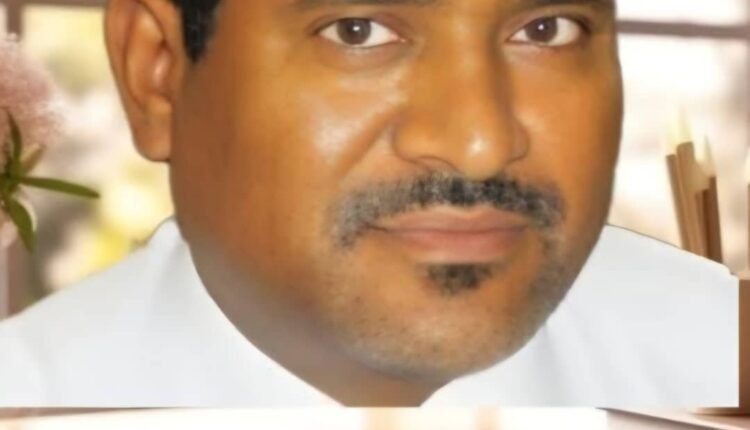
Dr Hassan Mohammed Salih
On 21 April 1997, the Sudanese government signed what became known as the Khartoum Peace Agreement with the South Sudan Independence Movement led by Riek Machar, alongside the Sudanese African Parties Union, the Equatoria Defence Forces, and other factions.
Al-Zubair Mohammed Salih led the government delegation, then First Vice President of the Republic. He met Machar and his forces deep in the forests of southern Sudan—forces heavily armed and, as described, steeped in hostility and the language of hatred.
The government delegation consisted of a small number of individuals, all in civilian dress, including the Vice President’s personal guards, carrying only light weapons. The significance of that meeting—held before the formal signing in Khartoum—was not merely to deliver a message of peace or surrender to a single leader, but to communicate directly with all fighters, demonstrating genuine intent to achieve peace regardless of the difficulties or risks involved.
What transpired in that forest was never publicly disclosed. What became visible only after the agreement was signed was Machar’s emergence as President of the Southern Sudan Coordinating Council, along with others who assumed ministerial positions, such as Arok Thon Arok and others.
What happened during that first encounter in the forest was difficult, yet it remains an important lesson for anyone seeking to reintegrate armed groups into the homeland. This is particularly relevant to what has recently occurred with Major General Al-Nur Qubba of the Janjaweed militia, who joined the Sudanese Armed Forces—arriving directly from the desert to the town of Al-Dabba in Northern State.
There, he was received into a markedly different environment: sleeping on a proper bed, seated in comfort, drinking cooled Nile water, dining with cutlery, and surrounded by the amenities of settled life. Within hours, he met the Chairman of the Sovereign Council and Commander-in-Chief of the Armed Forces in a public embrace.
This scene drew mixed reactions. Some welcomed the return of fighters to the nation’s fold. In contrast, others saw the warm reception—without preconditions—as diminishing the sacrifices of the Sudanese people, disregarding the blood of martyrs, and overlooking the grave crimes attributed to the Rapid Support Forces, including looting, killing, and atrocities reported in places such as El Geneina and El Fasher.
What the late Vice President Al-Zubair Mohammed Salih did was far more perilous. He went into the forests without a ceasefire in place, without prior notice to Machar’s thousands of fighters. The environment quickly reflected the harsh spirit of the jungle—tense, volatile, and unpredictable. Armed groups gathered around the small delegation, hurling insults and intimidation.
Yet, through his experience and deep understanding of southern Sudan’s social and military landscape, Al-Zubair managed to defuse the situation, assert control, and achieve his objective: securing a commitment to peace talks. He asked Machar to address his troops, discipline was restored, and no further hostile behaviour occurred until the delegation safely departed, having agreed on a date—21 April 1997—for signing the agreement in Khartoum, which later took place with significant regional and international حضور (presence).
One of the most important lessons from that experience was the need for strong coordination between security institutions and military intelligence in managing armed groups entering urban environments under peace arrangements.
Today, what we are witnessing—the surrender of commanders and fighters from the Dagalo militia—is a positive and welcome development. However, it must be managed carefully from security, social, and strategic perspectives to achieve its ultimate goal: ending the war and securing peace by dismantling the rebellion through all available means, including defections.
This requires that returning fighters be received and processed outside cities, given the record of misconduct associated with some of these forces during the war—ranging from looting homes to organised theft. There are also concerns that some may present themselves as defectors while pursuing ulterior motives.
Urban areas, by their nature, provide fertile ground for infiltration—whether into criminal networks, sleeper cells, or groups aligned with the rebellion within neighbourhoods, institutions, and markets.
Recent professionally produced videos showing individuals in RSF attire declaring a return to Omdurman may carry a dangerous message. Even if filmed elsewhere, such as Nyala, and unrelated to Al-Nur Qubba’s forces, they could be intended as psychological warfare—encouraging disorder in the capital and other cities without visible military formations.
In conclusion, just as the Chairman of the Sovereign Council has established a committee—headed by Lieutenant General Ibrahim Jaber—to prepare the capital for the return of citizens, there is a need for a dedicated security and military committee to organise and manage the reintegration of those leaving the rebellion.
Such a committee would address the “backstage” realities of these defections—before individuals appear publicly—ensuring their credibility, safeguarding national security, and maintaining public confidence in the process.
Only then can these returns truly serve their purpose: peace for the nation and stability for its people.
Shortlink: https://sudanhorizon.com/?p=13258