

Ministry of Livestock: RSF Militias’ Presence in Darfur and Kordofan Impedes Exports
Interview by Hala Hamza
The livestock sector is considered one of the sectors most affected by the war waged by the Rapid Support Forces(RSF) militias, now in its third year. The militias have destroyed numerous vital facilities and infrastructure, paralyzing exports and production for nearly a year.
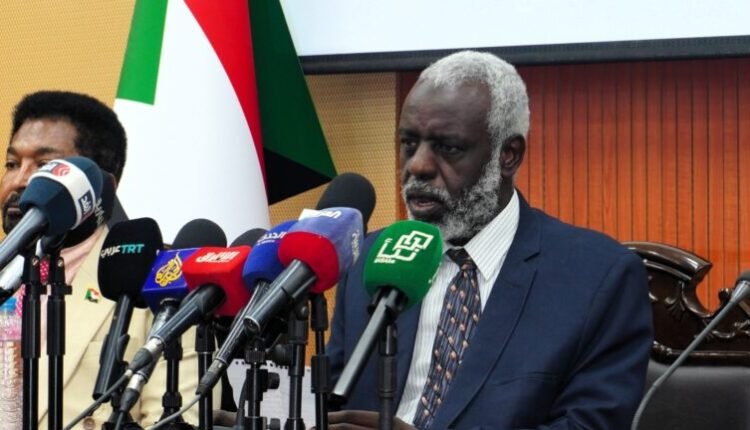
Sudanhorizon interviewed Dr. Ammar Al-Sheikh, Undersecretary of the Ministry of Livestock and Fisheries, focusing on a number of issues and inquired about concern to specialists in the livestock production sector and the wider economic community. Following is the full text of the Q&A:
Q- Dr. Ammar, what is the reason for the lack of an accurate livestock data? The last census was conducted in 1972, which is now over 50 years old. What is the Ministry basing its plans on, given that the statistics are outdated?
–
A- The reason is the lack of sufficient funding to conduct a comprehensive census. The Ministry relies on committee reports to estimate livestock numbers, which are based on the results of the last animal census, along with recent statistics from some states, particularly Sennar, Khartoum, River Nile, and North Kordofan (before the western part was annexed to West Kordofan). The lack of funding is hindering the comprehensive livestock census.
– You previously told “Sudanhorizon ” that a study was conducted six months ago on the war’s impact on the sector. What are the details?
– The livestock sector has been severely affected by the war, sustaining significant losses. These losses have been concentrated on facilities and herds. The Central Veterinary Laboratory ceased vaccine production after its buildings and equipment were vandalized. All livestock research centers also ceased operations due to sabotage and theft of equipment. Furthermore, the Ministry of Livestock headquarters and its affiliated units were damaged and their contents stolen. Poultry, dairy, and fish farms, especially in Khartoum and Gezira states, were also affected
But one of the most important recommendations included in the study is the need to restore critical capacities as quickly as possible, specifically within one year of the study. Therefore, the Ministry has worked to rehabilitate the Central Veterinary Laboratory to resume vaccine production and is also collaborating with producers’ organizations to restore production capacity in the dairy, poultry, and fish sectors. The Ministry has made significant progress in this rehabilitation, and we are hopeful that the situation will be as desired one year after the study.
– What is the fate of livestock exports from the production areas currently under the control of the Rapid Support Forces militia in Darfur and Kordofan?
– The militia’s presence in the Darfur and Kordofan states remains an obstacle to livestock exports. We have prepared reconstruction studies… and these are the facilities most damaged by the war.
– What is your plan for developing the sector?
– The Ministry’s strategic plan has been submitted to the Council of Ministers. It includes several key areas for developing livestock in Sudan. Among the most important of these areas are: animal health, improving pastures and feed, fish production, digital transformation, extension services, addressing the issues of pastoralists, developing exports and their environment, and implementing modern standards, with a focus on the Livestock Production Cities project to develop livestock production and veterinary services.
– Have you prepared a study detailing the total cost of rebuilding the sector? What are the specific figures?
– We haven’t prepared just one study, but several. For example, the equipment and machinery proposals have been submitted to various organizations, and the facilities proposals have been submitted to different entities.
– Are there any external efforts underway to attract foreign funding and investments to revitalize the sector and open new markets?
– Yes, there are external efforts to attract funding for livestock production cities. These efforts also include discussions with some countries that have requested meat imports. God willing, the situation regarding funding for livestock production cities and meat exports to several countries will become clearer in the coming days.
– The war has created significant security instability and fueled the smuggling of livestock, especially camels. What is the current status of this phenomenon? Has it been resolved, and what is the level of coordination with security agencies on this issue?
– Smuggling has not stopped, whether of live animals or animal products. Among the most significant reasons for this are the open borders and the preoccupation of security forces with the ongoing war. Despite the commendable efforts of anti-smuggling departments, smuggling continues and will not cease unless all the underlying causes contributing to its spread are addressed. We have prepared a dossier for the Saudi Food and Drug Authority to resume meat exports to Saudi Arabia.
– Media outlets recently reported on meat shipments being sent to the UAE. Is this true?
– The Ministry of Livestock and Fisheries is responsible for ensuring that exported shipments of live animals and meat are healthy, disease-free, and conform to export quality standards. Issuing licenses and determining export destinations falls under the purview of other entities. In other words, the Ministry prepares the meat or livestock according to export specifications, ensuring compliance with health standards. Determining the export destination is the responsibility of other authorities.
– What is the Ministry’s stance on previous agreements with the UAE, given the government’s explicit accusation that it is funding the militias RSF against the country?
– The Ministry does not determine its stance with other countries independently of the Cabinet and the Ministries of Foreign Affairs, Industry, and Trade. The policy established by the Cabinet regarding relations between countries governs all ministries, with the Ministry of Foreign Affairs at the forefront. Any agreement concluded by the Ministry of Livestock with any country must be approved by the Ministry of Foreign Affairs. The Ministry has no prior agreements with the UAE.
– What has the Ministry done to end what is known as the “paper mafia”?
– To eradicate this phenomenon, the combined efforts of several entities are necessary, including the Bank of Sudan and the Ministries of Trade and Livestock. I hope this will happen soon. The Ministry of Livestock cannot eliminate this phenomenon alone.
– The sector’s contribution to the GDP, and how will the general budget be financed?
– We are awaiting the Central Bureau of Statistics’ announcement of the livestock sector’s contribution to the GDP for 2025. But before the war livestock contributed 20% to the GDP and 55% to the agricultural sector’s GDP. I expect an increase in the livestock sector’s contribution to both the overall GDP and the agricultural sector’s GDP.
– What is the allocated budget for the livestock sector in the current 2026 budget, and what is the level of implementation and adherence to it during the first quarter of the year?
– We have requested the Ministry of Finance and National Economy to fund the Ministry of Livestock’s budget for this year. While there is no specific allocated amount for the ministry this year, the Ministry of Finance has committed to funding all essential activities, with the possibility of funding other activities if funds become available.
– There are reports of corruption in livestock exports and quarantine facilities, with accusations that the latter are collecting illegal fees. Official authorities are currently investigating these allegations. How accurate are these claims?
– Any fees collected by force and without prior agreement are considered corruption and are unacceptable. I met with some exporters twice, once in Suakin and once in Al-Qadarif, and none of them complained that livestock officials had extorted fees from them. Most complaints come from fees and levies imposed by local authorities and border crossings.
– There are complaints about the lack of rotation among the doctors at the Suakin quarantine station. What is your comment on this?
– If there is a malfunction or corruption, the complainant should present their evidence. If it is proven to be true, anyone proven corrupt or negligent will be replaced and held accountable. Otherwise, it is considered defamation and the unethical mudslinging that has characterized the political and service sectors in Sudan. This is a serious problem, and I pray that God heals us all from it.
– What is the Ministry’s position on the Livestock Bank, given that it specializes in the livestock sector and was established on the assets of the Livestock and Meat Marketing Corporation, but was transferred to the Rapid Support Forces militia before the war? Is it fulfilling its role in supporting the sector?
– The Livestock Bank is currently not supporting the sector, and we all hope that the desired change will be brought about by its new board of directors, and that it will return to achieving the goals for which it was established, namely developing the livestock sector and focusing on financing its various projects. I hope that this era will be a successful and sound one with the bank’s return to the sector.
– There is criticism regarding the continued operation of unregulated meat stalls in the slaughtering and selling areas, in an unsanitary environment. Producers have warned that this hinders exports. What measures have been taken to ensure meat safety?
– Many procedures must be implemented to produce healthy meat in all states of Sudan. The Khartoum State government has formed a committee for this purpose, and I wish it success.
At the federal level, we are in the process of taking measures in cooperation with the Ministry of Federal Governance to ensure the safety of meat production, slaughter, and distribution.
Two years have passed since meat exports to Saudi Arabia were halted due to the Saudi Food and Drug Authority’s requirement for tests confirming the absence of cholera contamination in meat. These tests were to be conducted by a laboratory holding ISO 17025 certification (following the Sudanese Ministry of Health’s declaration of a cholera outbreak).
– Even after the Ministry of Health declared Sudan free of the disease months ago, meat exports to Saudi Arabia have not resumed because no laboratory in Sudan possesses this certification. What is your comment on this?
– The Ministry has been in continuous contact since then to implement all these requirements and then submit the file to the Saudi Food and Drug Authority to resume meat exports. TÜV Austria has exerted considerable effort to complete the file, and it is nearing completion, God willing.
– The Standards Authority announced that its laboratories have obtained this certification a few days ago. What will the Ministry do to expedite the process?
– Following the sabotage of the Central Veterinary Laboratory, the Ministry lost its reference laboratory for testing. The Port Sudan Veterinary Laboratory, the Kassala Veterinary Laboratory, and the Ministry of Health Laboratory in Port Sudan were selected as alternatives, and this was included in the report prepared with the assistance of TUV.
– When will meat exports to Saudi Arabia, the largest market for Sudanese meat, resume?
– We are awaiting a response from the Saudi Food and Drug Authority. If approved, we will resume meat exports to the Kingdom. It should be noted that several slaughterhouses are qualified to handle this.
Shortlink: https://sudanhorizon.com/?p=12824