

Liberal Democratic Party Leader Proposes Roadmap to Turn Sudanese-Sudanese Dialogue into an Inclusive National Process
Khartoum – Sudanhorizon
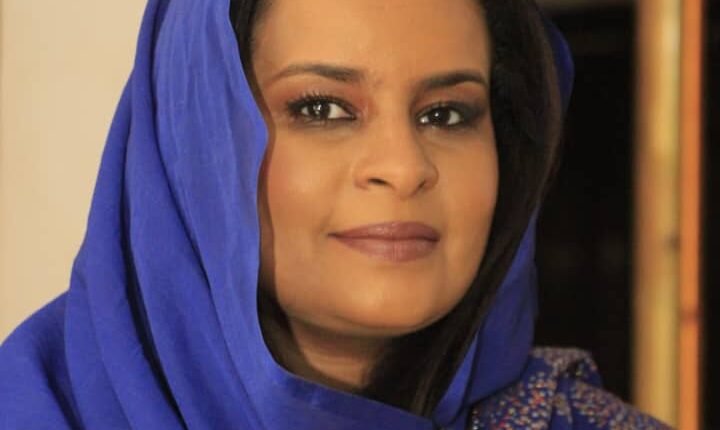
Dr. Mayada Swar Al-Dahab, leader of the Liberal Democratic Party, has put forward a proposed national roadmap for Sudanese-Sudanese dialogue aimed at transforming the call for dialogue into an institutionalized and inclusive political process leading to an end to the war, the re-establishment of the state, and placing the country on a path toward peace, stability, and democratic transition.
Swar Al-Dahab said the proposal followed consultations with political leaders, national figures, and individuals engaged with Sudanese affairs. It also draws on previous visions and proposals presented by the National Founding Platform concerning state reconstruction and the political process.
She affirmed that dialogue represents an opportunity to restore national initiative and open an inclusive Sudanese-led path that transcends polarization and division, while placing Sudan’s interests, state unity, and sovereignty above partisan and political calculations.
The roadmap proposes a gradual process beginning with creating a favorable political, legal, and security environment, providing guarantees for participants and safeguarding freedom of expression, assembly, and political communication. It also calls for facilitating the participation of Sudanese citizens abroad, followed by broad internal and external consultations ahead of a founding consultative conference.
Under the proposal, the initial initiative group would be transformed into a national preparatory committee tasked with developing an initial framework for the dialogue, establishing participation criteria, identifying political, civil, and community forces and independent figures, engaging with Sudanese actors inside and outside the country, identifying the main issues proposed for discussion, and preparing for the founding conference.
The founding conference would aim to approve the governing principles of the dialogue, its rules of procedure, participation criteria, the size of the National Dialogue Committee and the mechanism for selecting its members, as well as the agenda, timetable, and relationship with the Quintet mechanism.
The roadmap proposes establishing a National Dialogue Committee comprising at least 15 members, selected on the basis of competence, integrity, independence, and experience in dialogue and negotiation management. It would also take into account political, geographic, and social diversity, as well as representation of women and youth and expertise in peace, constitutional affairs, justice, and state-building.
The committee would oversee the dialogue, organize its sessions, establish specialized committees, prepare a national transitional document, lay the foundations for rebuilding state institutions, and propose the structure of the transitional period, the constitutional and political framework, and principles for elections. The final outcomes would then be submitted to a General National Conference for approval.
The proposal stresses that the state should be a “facilitator and guarantor, not the organizer of the dialogue.” Its role would be limited to providing protection, guarantees, logistical support, and facilitating participants’ movement, while respecting the independence of the National Committee and refraining from imposing participants, an agenda, or outcomes.
It also calls for the role of the Quintet mechanism—which comprises the African Union, IGAD, the Arab League, the European Union, and the United Nations—to be limited to facilitation, technical support, mediation when necessary, coordination of regional and international initiatives, and the provision of political guarantees, without negotiating on behalf of Sudanese people or imposing solutions or outcomes on them.
The proposed dialogue agenda includes issues of peace, unity and peaceful coexistence; freedoms and fundamental rights; national identity and the social contract; transitional justice and social reconciliation; the return of internally displaced persons and refugees; reconstruction and economic reform; reform of state institutions and the justice system; as well as the transitional period, constitution, elections, and the peaceful transfer of power.
The roadmap states that participation should be open to those who commit to Sudan’s unity and sovereignty, reject the use of violence to achieve political objectives, oppose the creation of parallel state structures, and respect human rights and the rules of dialogue. It emphasizes that political participation does not grant immunity from accountability for crimes.
The roadmap proposes seven stages for implementing the process. These begin with creating a conducive environment over four to six weeks, followed by the formation of the preparatory committee and internal and external consultations, then the founding conference and formation of the Dialogue Committee. This would be followed by a national dialogue lasting three to four months and ultimately a general conference to approve the outcomes, with the possibility of adjusting the timelines according to political and security developments.
Swar Al-Dahab said the success of the dialogue requires genuine political will, legal and security guarantees, freedom of expression and assembly, broad Sudanese participation, transparency in the formation of committees, and rejection of exclusion and power-sharing based on quotas. She also called for regional and international support that respects Sudanese ownership of the process.
The roadmap concludes that the success of the dialogue does not begin with naming the National Committee, but rather with agreement on the mechanism for selecting it and the rules governing its work. It considers the fundamental challenge to be the transition from crisis management to building a solution, from fragmented initiatives to an organized national process, and from competition over power to a project for rebuilding the state.
It affirms that the roadmap is based on the following formula: broad participation, lean institutions, and independent Sudanese decision-making.
Sudanhorizon will publish the details of the proposal in a separate section of the news website.
Shortlink: https://sudanhorizon.com/?p=17496