

Khartoum—What’s It Like? Ask Me Again
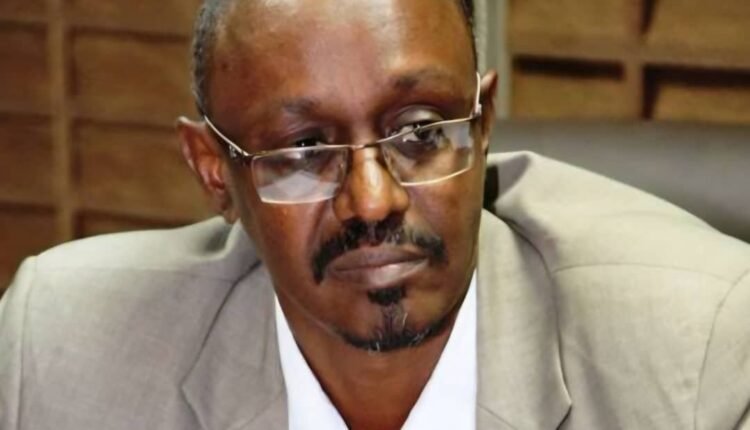
Mohamed Abdelrahim Jawish
Calls have been pouring in from my friends—and from my children’s friends too—ever since I returned to Khartoum. They all ask just one question: “What’s Khartoum like?”
At first, I dodged the question to avoid giving a snap judgment—the initial “choke” of coming back after nearly three years away. Now that I’ve passed my third week back, I can offer my own considered answer.
First, let me be clear: I’m talking about Khartoum the city—or Khartoum locality—not the entire Khartoum State (the so-called tri-capital). I’m not responsible if anyone misunderstands that.
The city is preparing to observe its first Ramadan after liberation—but without the familiar scent of hilu mur, which once perfumed the air in Rajab and Sha‘ban. You’re entitled to ask: why, when Ramadan is so close? Quite simply, Khartoum is now the largest gathering of bachelors imaginable. And since when have bachelors bothered making ābrī? It could probably win a global competition for the world’s biggest city of single men. But this is a strange world—organising competitions for cities in everything except the one thing we might actually win at. What can you do? Double standards… is that all?
Most of those who have returned left their families behind. They’ve come as advance scouts—or, if you like, the stage crew preparing the scene.
These are unique days in the life of this city, and they won’t last long. Anyone who misses them—I honestly don’t know what they’ll tell their grandchildren.
The city feels as if it has travelled through time. Its population is roughly what it was before 1956 (happy now, Da‘ama and Sumud wa Thamud?). You can walk down a residential street and meet only two or three people. The city goes to sleep after the evening prayer and dinner—literally. Khartoum at night now is unlike any Khartoum I’ve ever known.
So, if you’re a fan of late nights and parties and your resolve to change has been wavering, now’s your chance to rush to Khartoum—you’ll change whether you like it or not. And if you’re striving to secure the first or second row in prayer, know this: in most mosques now, the last row is the second row.
People in Khartoum now deal with one another with warmth, affection, and empathy—as if bound by family ties. Perhaps they’ve absorbed the values of the villages they were displaced to. Perhaps the spirit of competition has faded—this city was once among the most densely populated in Sudan, even Africa. Or perhaps hardship brings people together. Whatever the reason, life here now is sweet. Nearly a month in, I haven’t seen a single shakla or flare of temper—and I haven’t even heard of one. And if you need an official transaction at the civil registry or any other institution, you get the feeling they’re happier than you are to provide the service. When the Khartoum Water Authority came to fix a broken pipe in our neighbourhood, they were happier than the residents themselves. It seems the devil left with the “readiness” or got stuck on Epstein Island—then love spread across Khartoum. Who was it who used to say, “There’s mercy in the crowds”? Please—call him.
My friend Yasser asks, “Is Khartoum safe?”
Yes—safe. You walk around fearing nothing but God and mosquitoes. If you come now, don’t forget a mosquito net.
“What about traffic accidents?”
With complete confidence: traffic without accidents. And traffic police who greet you with a smile wherever you go. (Smile back—it’s Khartoum.)
Electricity workers and engineers spread joy wherever they go—lowering a transformer, raising poles, stringing cables. People rejoice as if electricity were arriving for the very first time.
Didn’t we say Khartoum is travelling through time? Sometimes it travels back to before ’56; other times it jumps years ahead. If we ran a global survey right now on knowledge of household solar power systems, Khartoum’s residents would be in first place, with no competition. Anyone can talk to you about inverters and their types, lithium and non-lithium batteries, panels, costs, installation angles—and advise you on the best options. And yes, we joke about it too.
Many of its residents will blame me for revealing their happiness—and I worry they’ll hold me responsible if queues return.
One of the easiest things right now is to find a house to live in Khartoum if you don’t already have one. Just tell three friends outside Sudan that you need a place while you get settled—you’ll receive at least five offers.
A friend, with a hint of apprehension about returning, asked me: “So—what’s Khartoum got now?”
I told him: you enter without a visa, stay as long as you like without residency, every shop sells Sudanese products, and you pay directly from your bank.
So—go on. Ask me again.
Shortlink: https://sudanhorizon.com/?p=11086