

Is There a Return Once Again, or Is It Impossible?
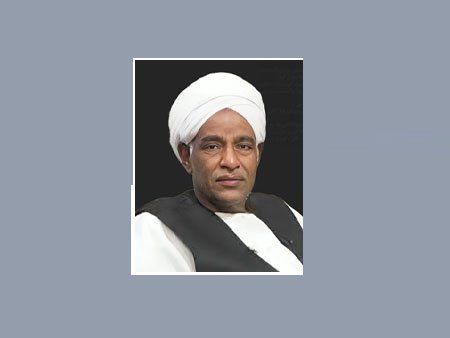
Mahjoub Fadle Badri
Lieutenant General Al-Naeem Khidir Mursal remarked sarcastically on the phenomenon of the militia’s use of drones to target specific items of infrastructure in some cities, after the army forced its remnants to flee hastily from positions they believed they could hold. The army came at them from where they least expected, struck terror into their hearts, and they fled in panic, unable to benefit from anything they had amassed. Defeat closed in on them.
General Al-Naeem said: “This is their end!! The end of the ‘shakla’ is flinging stones.”
The meaning is clear: when two boys fight, and one is unable to overpower his rival in a direct scuffle (shakla), he runs away and starts hurling stones from a distance, trying to preserve what remains of his dignity.
And since the militia has no dignity—and knows with certainty that it will never defeat the army, no matter how much external support it receives—it has resorted to stone-throwing from afar. It did not heed the words of the wise old sheikh who once asked one of his neighbours, seeing him utterly exhausted, “What is wrong with you?” The man replied, “The būn have pelted me, Sheikh.” The sheikh answered, “Those who pelt you with stones are not to be fought.”
This was advice the militia needed to hear before listening to the Qahata and their Volker.
When security was restored in the national capital, Khartoum, the government returned. Before that, many services had already resumed, and citizens began voluntarily returning to their homes, towns, and villages. The lie about the army’s use of chemical weapons collapsed. The Qahata then rushed to Western capitals to recycle their falsehoods. Still, their patrons pointed out to them that the return of citizens to areas they themselves claimed had been bombarded with chemical weapons refuted their allegations, since such returns constitute conclusive proof that the claims are untrue.
Time and again, the Commander-in-Chief of the Sudanese Armed Forces, Lieutenant General Abdel Fattah al-Burhan, has demonstrated the army’s innocence of this accusation. The world has seen Al-Burhan walking among the people without protection or guards, further astonishing observers by drinking a cup of the popular aradeeb beverage without any testing or security procedures. The finest comment I read on the scene of Al-Burhan drinking a cup of aradeeb from the hand of a street vendor was by Major General Osama Mohamed Ahmed, who said:
“Praise be to God that President Al-Burhan drank the aradeeb from a glass cup—and not from a ‘kūz’!!”
The return of the government, the return of citizens to Khartoum, and the reopening of Khartoum Airport—quite apart from the army’s victories on the Kordofan fronts and elsewhere—have all combined to make voluntary return a truthful image of how close the end of the war has become. This is what troubles the Qahata, echoing in their minds the line from a popular song, the lingering question:
“Is there a return once again, or is it impossible?”
Shortlink: https://sudanhorizon.com/?p=10896