

Inside Sources: Ethiopia is Building a Secret Camp for Training RSF Militia
Sudanhorizon- Reuters
Sudanhorizon is hereby republishing the important report, which was published by Reuters on Tuesday, given the vital importance of the documented information it contains
Reuters has found that Ethiopia is hosting a secret camp to train thousands of fighters from the paramilitary Rapid Support Forces fighting the Sudanese Army in neighboring Sudan, in the latest sign that one of the world’s bloodiest conflicts is attracting regional powers from Africa and the Middle East.
The camp represents the first direct evidence of Ethiopia’s involvement in the Sudanese civil war, which may represent a serious development as it provides the Rapid Support Forces with a large supply of new troops as fighting escalates in the south of the country.
Eight sources, including a senior Ethiopian government official, said the UAE funded the construction of the camp and provided military trainers and logistical support for the site, which was also stated in an internal memo issued by the Ethiopian security services and a diplomatic cable verified by Reuters.
Reuters could not independently verify UAE participation in the project or the purpose of the camp. The UAE Ministry of Foreign Affairs, in response to a request for comment, said that it is not a party to the conflict and is not participating “in any way” in the hostilities.
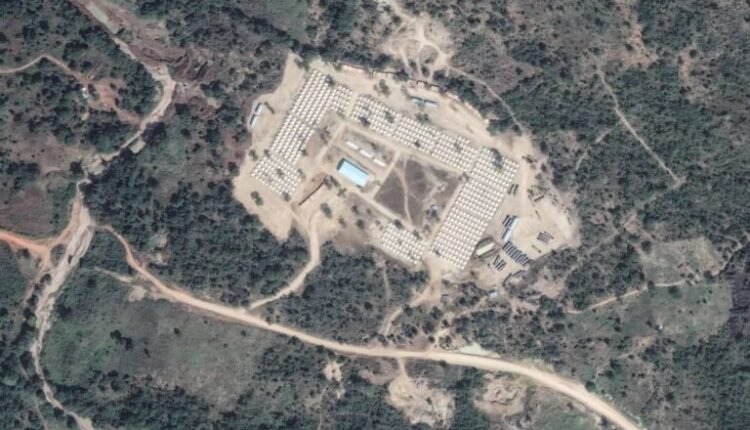
Reuters spoke to 15 sources familiar with the camp’s construction and operations, including Ethiopian officials and diplomats, and analyzed satellite images of the area. Two Ethiopian intelligence officials and satellite images provided information confirming the details contained in the security memo and telegram.
There were no previous reports about the location and size of the camp, or detailed statements regarding the UAE’s involvement in the matter. The images show the extent of the new expansion, which has occurred over the past few weeks, in addition to the construction of a ground control center for drones at a nearby airport.
Satellite images indicate that activity increased in October at the camp, which is located in the remote Benishangul-Gumuz region in the west of the country, near the border with Sudan.
Spokesmen for the Ethiopian government, the Ethiopian army, and the Rapid Support Forces did not respond to detailed requests for comment on the findings of this report. On January 6, the UAE and Ethiopia issued a joint statement that included a call for a ceasefire in Sudan, in addition to celebrating the relations that they said serve to defend each other’s security.
The Sudanese Armed Forces did not respond to a request for comment.
In early January, 4,300 fighters from the Rapid Support Forces were receiving military training at the site, and an Ethiopian security services memorandum seen by Reuters stated that “the UAE is providing them with logistical and military supplies.”
The Sudanese army previously accused the UAE of supplying the Rapid Support Forces with weapons, an accusation that is credible to United Nations experts and American lawmakers.
Abu Dhabi has been a strong supporter of the government of Ethiopian Prime Minister Abiy Ahmed since he took office in 2018, and the two countries have established a military alliance in the past few years.
Six officials said that the recruits in the camp are mostly Ethiopians, but there are also citizens of South Sudan and Sudan, including those belonging to the Sudan People’s Liberation Movement-North, a Sudanese rebel group that controls territory in neighboring Blue Nile state. Reuters was not able to independently verify the identity of those in the camp or the terms or conditions of recruitment. A senior leader of the Sudan People’s Liberation Movement-North, requesting that his identity not be published, denied the presence of forces from the group in Ethiopia.
The six officials said the recruits are expected to join the Rapid Support Forces fighting Sudanese soldiers in Blue Nile State, which has become a battlefront in the struggle for control of Sudan. Two officials said hundreds had already crossed in the past few weeks to support paramilitary forces in Blue Nile.
The internal security memo stated that General Getachew Godena, head of the Defense Intelligence Department of the Ethiopian National Defense Forces, was responsible for setting up the camp. A senior Ethiopian government official and four diplomatic and security sources confirmed Getachew’s role in launching the project.
Getachew did not respond to a request for comment.
Camp Constrcution:
Satellite images and a diplomatic cable revealed that the camp was established in a bushy area in a neighborhood called Minji, about 32 kilometers from the border, and is located in a strategic location at the meeting point between the two countries and South Sudan.
The first signs of activity in the area began in April,2025, with the clearing of brush and the construction of buildings with metal roofs in a small area north of the camp area, where work began during the second half of October 2025.
The diplomatic cable, dated November, described the camp as accommodating 10,000 fighters, and stated that activity began in October 2025, with the arrival of dozens of Land Cruisers, heavy trucks, Rapid Support Forces units, and Emirati trainers.
Two officials said they saw trucks bearing the logo of the Emirati logistics company Gorica Group heading through the town of Asosa towards the camp in October. The company did not respond to a request for comment.
Reuters was able to match the time frame specified in the diplomatic cable with satellite images. Airbus Defense and Space images show that tents began filling the area in early November after initial preparation work.
Several excavators are shown in the pictures.
A photo taken by the American space technology company Vantor on November 24 reveals more than 640 tents in the camp. According to an analysis of satellite images by the military intelligence company Jane’s, each tent can comfortably accommodate four people with some equipment, so the camp could accommodate at least 2,500 people.
Janes said it could not confirm that it was a military site based on its analysis of the photos.
Two senior military officials said new recruits were spotted heading to the camp in mid-November.
The two officials, who eye-witnessed the convoys, told Reuters that a convoy of 56 trucks loaded with trainees drove through the dirt roads in the remote area on November 17. The two officials estimate that each truck carried between 50 and 60 fighters. They added that two days later they saw another convoy of 70 trucks carrying soldiers heading in the same direction.
A photo taken on November 24 shows at least 18 large trucks at the site. According to a Reuters analysis, the size, shape and design of the vehicles match models frequently used by the Ethiopian army and its allies to transport soldiers. Reuters was unable to independently verify what the trucks were carrying or confirm whether they were the same ones the two military officials had seen in the convoys a few days earlier.
Vantur photos show that development continued in late January, including grading and new excavation in the riverbed north of the main camp and dozens of shipping containers lined up around the camp, which are shown in a photo taken on the 22nd of the same month. A senior Ethiopian government official said construction of the camp was continuing, but did not provide details about future construction plans.
An Ethiopian government official said that the machinery used to build the training camp, including bulldozers and excavators, is transported daily through the neighboring town of Asosa.
Asosa Airport:
The airport, 53 kilometers from the camp, has been witnessing new construction since August 2025. Satellite images show a new hangar and paved areas near the airport runway known as aprons, as well as what Wim Zwijnenberg, a military technology expert at the Dutch peace organization PAX, described as a ground control station for drones and a satellite capture device. According to a Reuters review of available images, the drone support infrastructure shown in the images resembles equipment at two other drone bases in Ethiopia.
A senior official in the Ethiopian government and a senior military official said that the Ethiopian army intends to transform the airport into an operations center for drones, in addition to at least five other centers for those drones that they know exist throughout Ethiopia.
A diplomatic source said that the renovation of the airport is part of a broader plan by the Ethiopian army to shift air bases towards the western side of the country to confront potential new threats on the border with Sudan and protect important infrastructure such as the Ethiopian Renaissance Dam.
Three officials and diplomats from the region expressed concern about the proximity of the camp in Mingi to the huge dam, the largest hydroelectric dam in Africa, for fear that it would be damaged or targeted if clashes broke out in the region. The new camp is located about 101 kilometers from the dam. The government, which owns the dam, did not respond to a request for comment.
A Western military analyst, a regional security expert, and a high-ranking Ethiopian official said that construction work at the airport is linked to the increased presence of the Rapid Support Forces in the region. The analyst and expert said that the airport has become an effective tool in supplying the Rapid Support Forces across the border in Sudan.
The prominent Ethiopian government official and security analyst stated that the UAE also paid the costs of renovating the airport. Reuters could not independently verify the source of funding for the airport.
Months after Ethiopian Prime Minister Abeiy Ahmed came to power, the UAE pledged to provide aid and investments worth a total of three billion dollars in a gesture of confidence and support for the newly appointed leader, while allocating one billion dollars to the Central Bank of Ethiopia with the aim of alleviating the severe shortage of foreign currency in the country.
The UAE and Ethiopian Air Forces signed a memorandum of understanding in 2025 to develop the two countries’ air and defense capabilities, according to news reports at the time.
** Contribution in the report by Alexander Jadush, Nafisa Al-Taher and Ahmed Shalabi from Cairo and David Lewis from London – Prepared by Doaa Muhammad and Noha Zakaria for the Arab Bulletin – Edited by Mahmoud Salama.
Shortlink: https://sudanhorizon.com/?p=11140