

In Response to Ambassador Obeid’s Article: Our Social Culture Shapes Our Institutions and Policies (2/2)
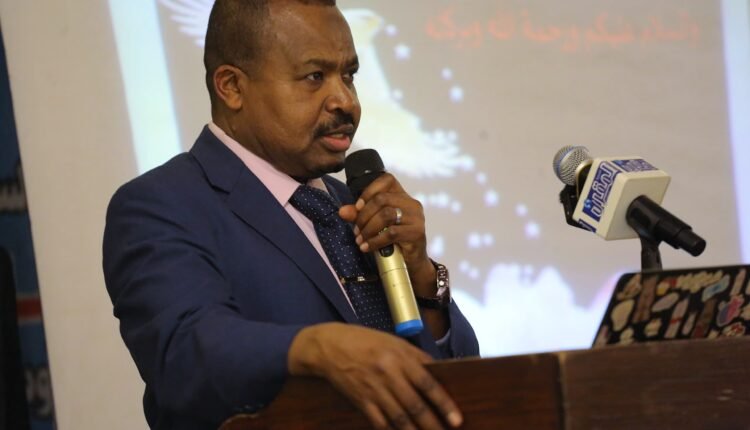
Professor Ibrahim Mohamed Adam
The conflicts among successive governments, as noted in the previous article (by Ambassador Obeid Murawih), contributed significantly to the paralysis of state institutions and became a driving force behind the recurring cycle already described. On 24 November 1965, the Constituent Assembly dissolved the Communist Party. The party challenged this decision before the Constitutional Court, which ruled that the Assembly’s actions were invalid.
(Observe, dear reader, that the institution was called the “Constituent Assembly”—a name that resurfaced after the fall of Nimeiri, and even today, as we write these articles, we continue to speak of “transition” and a “return to founding principles”.)
The Communist Party did not accept the ruling and filed another case before the Supreme Court, which issued a decision dissolving the party on 18 March 1967. The party then turned to political action, culminating in the May 1969 coup led by Jaafar Nimeiri, under the patronage of party leader Abdel Khaliq Mahjoub—who had initially opposed the idea of a coup but later supported it—bringing the entire structure crashing down on all.
A similar pattern was repeated by the National Islamic Front, which, after being excluded from the same Constituent Assembly, carried out the 1989 coup. Its leader, a constitutional law professor, became the architect of that coup, only to be later sidelined by his own allies and protégés. The regime itself eventually collapsed in April 2019.
Therefore, if we are to address the present and chart the future, we must not ignore the bitterness of the past. Rather, we must place it on the table for honest examination, through mechanisms akin to truth and reconciliation, as seen in South Africa, Rwanda, and Burundi.
If we revisit the question posed by the southern politician mentioned by Ambassador Al-Obaid Ahmed Mrouh—regarding the role of national governments in addressing pre-independence conditions—the same question may now be directed at southern politicians about the state of their country after secession, which can hardly be described as a successful model.
Formal education is a fundamental driver of value transformation—something we urgently need in order to reshape societal ethics and build sustainable institutions capable of implementing sound policies. This process must begin at the earliest stages of schooling. In developed countries, each pupil is assigned a desk on their first day, in alphabetical order, and it remains theirs throughout their time at school. They are responsible for maintaining it—an early lesson in preserving public institutions.
In some countries, students and teachers clean their schools together. This was once practised in many public schools in Sudan but has declined sharply, particularly with the rise of private education, which may not emphasise such values. Students must also learn the value of time—through structured timetables and class periods of around forty minutes—instilling discipline in daily life. Civic education and voluntary work should also be part of the curriculum; in some countries, such participation is mandatory for graduation.
Universities today have become centres of partisan political activity. The Ministry of Higher Education should establish a unified framework for student activity and reactivate university policing systems. In many institutions, a student who violates regulations is brought before the dean by campus security. The absence of such arrangements has contributed to the spread of student violence, often fuelled by political groups—particularly those linked to armed movements—fostering a culture of hostility rather than respect for differing opinions.
The state may even consider prohibiting political activity within universities altogether, given its role in prolonging academic disruption and delaying students’ progress—especially in public universities.
I was pleased to see Dr Yasser Yousif refer to the book Why Nations Fail by Daron Acemoglu and James Robinson. The essence of that work is that it is institutions—not geography or history—that determine whether nations prosper or fail. Inclusive institutions, openness, and the rule of law drive development, while extractive systems concentrated in the hands of elites lead to instability.
Pluralistic political systems, characterised by peaceful transfers of power, represent the most advanced form of governance. Yet Sudan’s party experience has failed to embody such principles. Leadership within parties rarely changes except through death, overthrow, or fragmentation. This applies across the spectrum—from traditional parties such as Umma and the Democratic Unionist Party to ideological parties such as the Communist Party and Ba’athists, as well as armed movements, many of which have become familial in structure.
Political parties are, nonetheless, indispensable to modern societies. While they may contribute to division and conflict, the alternative—tribal or regional alignment—poses an even greater threat to national unity.
In today’s interconnected world, shaped by globalisation, alliances, and competing interests, Sudan’s fragmented party landscape has created openings for external actors to influence decision-making through small, externally backed groups.
Each party claims legitimacy and superiority, measuring itself against selective criteria—such as electoral history, organisational reach, ideological appeal, or leadership capacity. Yet many young people today are disengaged from traditional parties, having seen little in the way of meaningful programmes or intellectual contributions that would inspire them to follow in the footsteps of previous generations.
The future lies in political organisations that respond to their aspirations for freedom, renewal, and meaningful participation—parties that compete on ideas and programmes, not patronage. Only through such maturity can peaceful transfer of power be achieved, closing the door to external opposition movements that often prove more destructive than internal challenges.
One of the core problems of Sudanese political parties is their failure to distinguish between opposing a government and opposing the nation itself. This confusion has opened the door to foreign interference. Historical evidence—and current realities—show political activists lobbying foreign institutions against their own country.
The economic sanctions imposed during the era of the National Congress government were largely the result of such actions. These sanctions harmed the Sudanese people as a whole, not merely the government. I recall personally being unable to conduct basic banking transactions abroad, resorting to services such as Western Union—with only one branch in the entire country—only to find that even that was inadequate for institutional payments.
Ironically, some individuals later boasted of their role in facilitating such sanctions, while others admitted to deliberately obstructing development in regions like Darfur for political ends. One can only wonder at the extent of such contradictions.
We have focused on political and institutional reform and the rule of law because these form the foundation for economic, social, and cultural progress. I conclude with the words of Mahathir Mohamad, who, when asked how Malaysia achieved its transformation, replied that it was not due to personal brilliance, but teamwork—and a focus on three key pillars: education, scientific research, and the rule of law.
Unfortunately, all three remain deeply challenged in Sudan today.
And God is our helper.
Shortlink: https://sudanhorizon.com/?p=12547